
Process automation for SMEs: turn repetitive work into hours saved
Process automation for SMEs: turn repetitive work into hours saved
Why automation is now a practical decision for small businessesFor years, automation felt like something reserved for large corporations with dedicate...
Why automation is now a practical decision for small businesses
For years, automation felt like something reserved for large corporations with dedicated IT departments. That has changed. Cloud tools, open APIs and affordable integration platforms have brought process automation within reach of small and medium-sized enterprises (SMEs) in Lleida, Barcelona, Tarragona and Girona. The question is no longer whether a small company can automate, but which tasks are worth automating first.
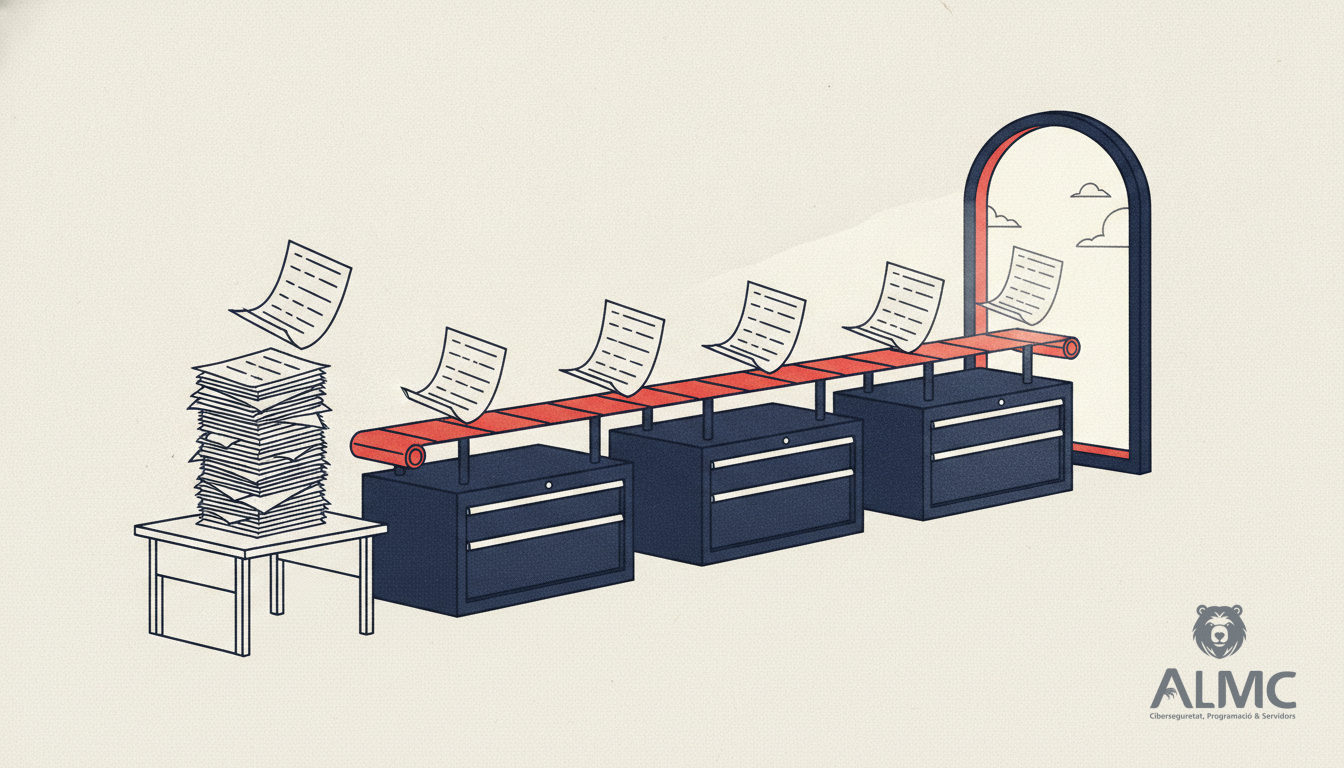
The starting point is usually the same: teams spend a surprising share of their week on work that adds little value. Copying data between applications, chasing approvals by email, exporting spreadsheets to build reports, sending the same confirmation message again and again. None of these tasks is difficult, yet together they consume hours and create room for error.
What process automation actually means
Process automation is the practice of connecting the tools a business already uses so that information moves between them without manual intervention. When a form is submitted, a record is created, a colleague is notified and an invoice is drafted — automatically, in the right order, with the right data.
This is where platforms such as n8n come in. Rather than replacing your existing software, they act as the glue between it: your CRM, your accounting package, your email, your ecommerce platform, your project management tool. Each connection is a workflow, and each workflow is a small piece of reliability built into your daily operations.
- Integrations link applications so data is entered once and reused everywhere.
- Workflows define the sequence of steps, conditions and notifications that follow.
- Triggers decide when a workflow starts: a new order, a form submission, a scheduled time or a status change.
Where SMEs see the fastest returns
Not every process deserves automation. The best candidates share three traits: they are repetitive, rule-based and frequent. In our experience working with businesses across Catalonia, a handful of areas tend to deliver results quickly.
- Lead handling. Enquiries from a website form, WhatsApp or a marketplace are routed to the right salesperson, logged in the CRM and acknowledged within minutes.
- Invoicing and administration. Order data flows into the billing system, and reminders are issued automatically when payment terms pass.
- Customer communication. Order confirmations, delivery updates and follow-ups are sent without anyone composing them by hand.
- Internal reporting. Figures from several platforms are consolidated into a single weekly summary instead of being assembled manually.
- Onboarding and HR. New team members receive accounts, documents and checklists in a consistent sequence.
Each of these can save a few hours a week. Combined, they often free up the equivalent of a working day — time that can go back into sales, customer service or product work.
Automation and usability go hand in hand
One lesson stands out from working with growing companies: automation only pays off when people actually use it. A workflow that nobody trusts, or that is hidden behind a confusing interface, quickly gets bypassed. Staff return to spreadsheets, duplicate information and build their own workarounds.
That is why a good automation project starts with how people work, not with the technology. Clear naming, sensible notifications, visible logs and a simple way to pause or adjust a workflow all matter. When a system is understandable, adoption follows, and the hours saved are real rather than theoretical.
Data protection and GDPR
Automation means data moving between systems, so compliance has to be designed in from the start. Under the GDPR, businesses handling customer or employee data must know where it is stored, who can access it and how long it is kept. Practical measures include limiting the fields each workflow touches, using encrypted connections, keeping an audit trail of automated actions and reviewing third-party processors. For SMEs in Spain, this is also a matter of trust: clients expect their information to be handled carefully.
How to get started without disrupting the business
The most successful projects begin small. Choose one process that is clearly repetitive and clearly painful. Map it on paper, identify the tools involved and automate a single step. Measure the time saved, then extend the workflow. This incremental approach keeps risk low and gives the team confidence in the new way of working.
From there, automation tends to grow naturally. Once a business sees that data can flow reliably between its applications, it starts to spot opportunities everywhere — in customer service, in logistics, in finance. The goal is not to automate everything, but to remove the friction that stops people from doing their best work.
At ALMC, we help SMEs in Lleida and across Catalonia design and implement automations with n8n and other integration tools: connecting applications, building workflows and measuring the productivity gains. If your team is still copying data between screens, there is probably an hour or two to be won every week.
Related
- n8n Automation Guide: Streamline Your Business Workflows in 2026
- How Much Does Process Automation Really Cost? A 2026 Guide for SMEs
- Best WordPress SEO Plugins 2026: Expert Comparison for Spanish Sites
- Chatbot IA
Put these ideas into practice
Talk to ALMC about a solution for your business. Explore your options or contact our team.