
How to Automate Customer Service with AI Without Losing Control
How to Automate Customer Service with AI Without Losing Control
Why Email Overload Is a Real Business ProblemFor any small or medium-sized business in Spain, the inbox has become both a lifeline and a time trap. In...
Why Email Overload Is a Real Business Problem
For any small or medium-sized business in Spain, the inbox has become both a lifeline and a time trap. In sectors like ecommerce, hospitality, or professional services, teams often face a daily flood of messages: product queries, order status, complaints, supplier spam, invoices, and confirmations. Without a system, opening the email client in the morning can eat up the most productive hour of the day just sorting and replying to routine messages.
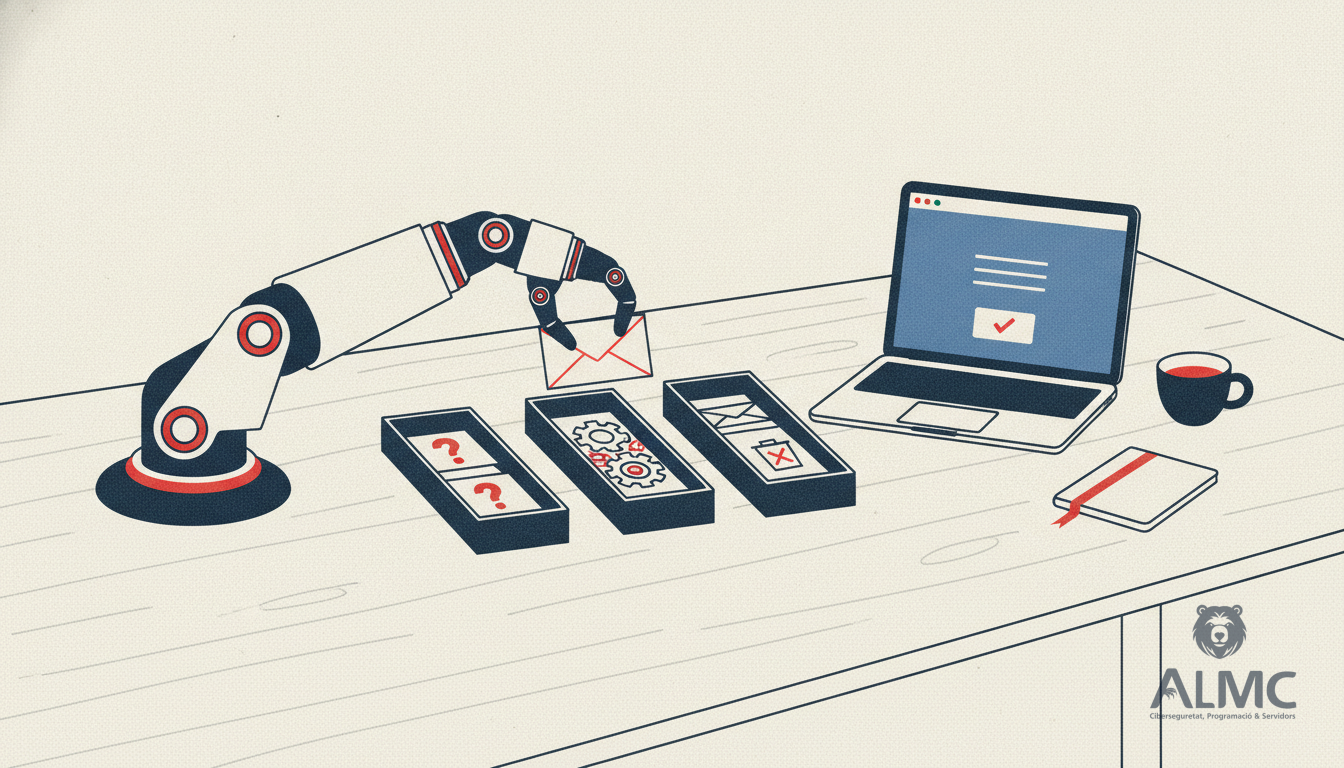
The real issue isn't that emails are difficult to answer. It's that they arrive mixed together, and you can't tell which ones need urgent attention until you open each one. For a business owner in Barcelona or Lleida, that lost hour is precious. The good news is that artificial intelligence can now handle the heavy lifting of triage and drafting, but the key is to keep a human in the loop.
The Human-in-the-Loop Approach: AI Prepares, You Decide
Many automation tools promise to send replies automatically, and technically they can. But is that wise? If an AI misinterprets a customer's tone or context and sends an inappropriate response, the damage can be significant. In the Spanish market, where personal relationships and trust are paramount, a single misstep can cost you that customer. That's why a growing number of SMEs adopt a human-in-the-loop model: the AI reads, classifies, and drafts, but a human reviews and hits send.
This is not about distrusting technology. It's about knowing where AI adds value (speed, volume, first draft) and where human judgment is irreplaceable (sensitive cases, tone, final decision). For example, a customer complaining about damaged goods deserves a personalised apology and solution, not a generic automated reply. The AI can flag it as high priority and even suggest a draft, but the business owner should decide the final wording.
How an AI Email Assistant Works in Practice
Let's walk through a typical workflow that you could implement with tools like n8n, Make, or a dedicated AI email assistant. The core idea is simple: a trigger checks for new emails, filters out the obvious noise, and lets an AI model classify the rest.
- Step 1: Scheduled check. Every few minutes, the system scans the inbox for unread messages. This runs even when you're not at your desk, so nothing waits until morning.
- Step 2: Noise filtering. Newsletters, supplier spam, order confirmations, and automatic notifications are set aside without bothering you. This alone can reduce the visible volume by half.
- Step 3: AI classification. The remaining emails are sorted into categories: simple FAQ, complex query, or ignorable. The AI also assigns a priority level, such as low, medium, or high.
- Step 4: Drafting for simple queries. For routine questions (e.g., "Do you have this product in stock?"), the AI generates a complete draft reply and saves it to your drafts folder. You just review and send.
- Step 5: Flagging complex cases. For complaints or unusual requests, the AI does not draft a full reply. Instead, it marks the email as important and provides a summary of what it's about, so you can handle it personally.
- Step 6: Logging everything. Every email is recorded in a spreadsheet with date, sender, subject, category, topic, urgency, and the reason for the AI's decision. This creates a valuable data trail.
This workflow ensures that no email is missed, and that urgent matters surface immediately. The AI does the repetitive work, but the human remains in control of customer communication.
The Hidden Gem: The Activity Log
Most demos focus on the chatbot or the auto-reply feature. But the real goldmine is the log that records every interaction. For a business owner, this log provides insights that were previously buried in the inbox or in your head. You can see at a glance how many frequent questions arrive per week, which suppliers send the most spam, or if there's a spike in complaints.
This data drives better decisions. For example, if you notice many customers asking the same question about delivery times, you might update your website or FAQ page. If complaints about damaged packaging increase, you can address the issue with your logistics provider. The automation saves you time, but the log gives you the intelligence to improve your business continuously.
Why This Matters for SMEs in Catalonia and Spain
In regions like Catalonia, with its strong commercial tradition and many family-run businesses, customer service is often the differentiator. Yet, small teams struggle to keep up with digital communication. Adopting an AI email assistant is not about replacing staff; it's about freeing them from repetitive tasks so they can focus on what matters: building relationships, solving complex problems, and growing the business.
Moreover, with GDPR in force, it's crucial to handle customer data responsibly. An AI system that processes emails must comply with data protection regulations. By keeping a human in the loop and logging activities, you maintain transparency and accountability, which are essential for compliance.
Getting Started: From Manual to Automated
You don't need a huge IT budget to start. Many no-code platforms offer templates for email automation. Begin by identifying the most repetitive email types you receive. Then, design a simple flow that filters and drafts replies for those. Test it with a small volume, review the drafts, and gradually expand.
Remember, the goal is not to let the AI run your customer service on its own. The goal is to give you back hours each week while ensuring every customer feels heard. With a human-in-the-loop approach, you get the best of both worlds: efficiency and empathy.
Conclusion: Take Back Your Inbox
Email doesn't have to be a daily burden. By implementing an AI assistant that sorts, prioritises, and drafts, you can reduce the time spent on routine messages by a significant margin. And because you keep the final say, you never risk your reputation on an unchecked algorithm. For SMEs in Spain, this balanced approach is the smart way to embrace AI in customer service.
If you're ready to reclaim your mornings and improve your response times, consider exploring AI email automation tailored to your business. The future of customer service is not about machines taking over; it's about machines doing the groundwork so humans can shine.
Related
- EU AI Act 2026: What It Means for Your Business and Team
- How to Learn Digital Marketing with No Prior Experience
- How to Choose a Digital Marketing Master's That Boosts Your Career
- Automatización
Put these ideas into practice
Talk to ALMC about a solution for your business. Explore your options or contact our team.