
Automating Process Automation for Pending Invoices in SMEs
Automating Process Automation for Pending Invoices in SMEs
Why pending invoices matter for your SMEIn the daily hustle of running a small or medium-sized enterprise (SME) in Spain, it's easy to overlook invoic...
Why pending invoices matter for your SME
In the daily hustle of running a small or medium-sized enterprise (SME) in Spain, it's easy to overlook invoices that haven't arrived yet. But these pending invoices—goods or services received without the corresponding supplier invoice—must be recorded in your accounts to comply with the accrual principle. Ignoring them can distort your financial statements and lead to unpleasant surprises at tax time. For SMEs in Lleida, Barcelona, Tarragona, or Girona, staying on top of these transactions is crucial for accurate bookkeeping and smooth cash flow.
The accrual principle: why you can't wait for the invoice
Spanish accounting regulations, specifically the General Accounting Plan (Plan General de Contabilidad or PGC), require expenses to be recognised in the period they are incurred, regardless of when the invoice arrives or when payment is made. This means if you've received a service or goods, you must record the expense and the corresponding liability immediately, using supporting documents like delivery notes, contracts, or purchase orders. Delaying this until the invoice arrives can artificially understate your expenses and overstate your profits, painting a misleading picture of your company's financial health.
Pending receipt vs. pending payment: know the difference
It's important not to confuse invoices pending receipt with invoices pending payment. A pending receipt invoice means you've received the goods or services but not the invoice; the expense and liability are recorded provisionally. A pending payment invoice, on the other hand, has been received and accounted for, but you haven't paid it yet. Mixing these up can lead to accounting errors and cash flow mismanagement.
How to record pending invoices: accounts and entries
The PGC provides specific accounts for these transactions within group 4 (creditors and debtors for commercial operations). For goods, you typically use account 4009 (Suppliers, invoices pending receipt or formalisation). For services, account 4109 (Creditors for services pending receipt or formalisation) is used. The accounting entry involves debiting the appropriate expense account and crediting the pending invoice account. When the actual invoice arrives, you reverse the provisional entry and record the final invoice with VAT details. This ensures your accounts remain accurate throughout the process.
VAT treatment: when can you deduct?
For VAT (IVA in Spain), you can only deduct input VAT once you have a valid invoice that meets all legal requirements. Therefore, while you must accrue the expense for accounting purposes, the VAT deduction is postponed until the invoice is received. This timing difference means you need to track pending invoices carefully to claim VAT correctly in your periodic returns (e.g., quarterly).
What if the invoice arrives after year-end?
If the invoice arrives after the fiscal year has closed, you may need to adjust your accounts in the following year. Depending on the amount and materiality, you might need to recognise a prior-year adjustment. This is why it's vital to estimate and record pending invoices before closing the books, using the best information available. Failure to do so can lead to penalties or restatements.
Manual tracking: a recipe for errors
Many SMEs still manage pending invoices using spreadsheets or paper-based systems. This approach is time-consuming, error-prone, and difficult to scale. As your business grows, the number of pending invoices can multiply, making it hard to keep track. Missed invoices can result in overstated profits, incorrect VAT claims, and cash flow surprises. Moreover, during audits or tax inspections, incomplete records can lead to fines and reputational damage.
Automation: the smart solution for SMEs
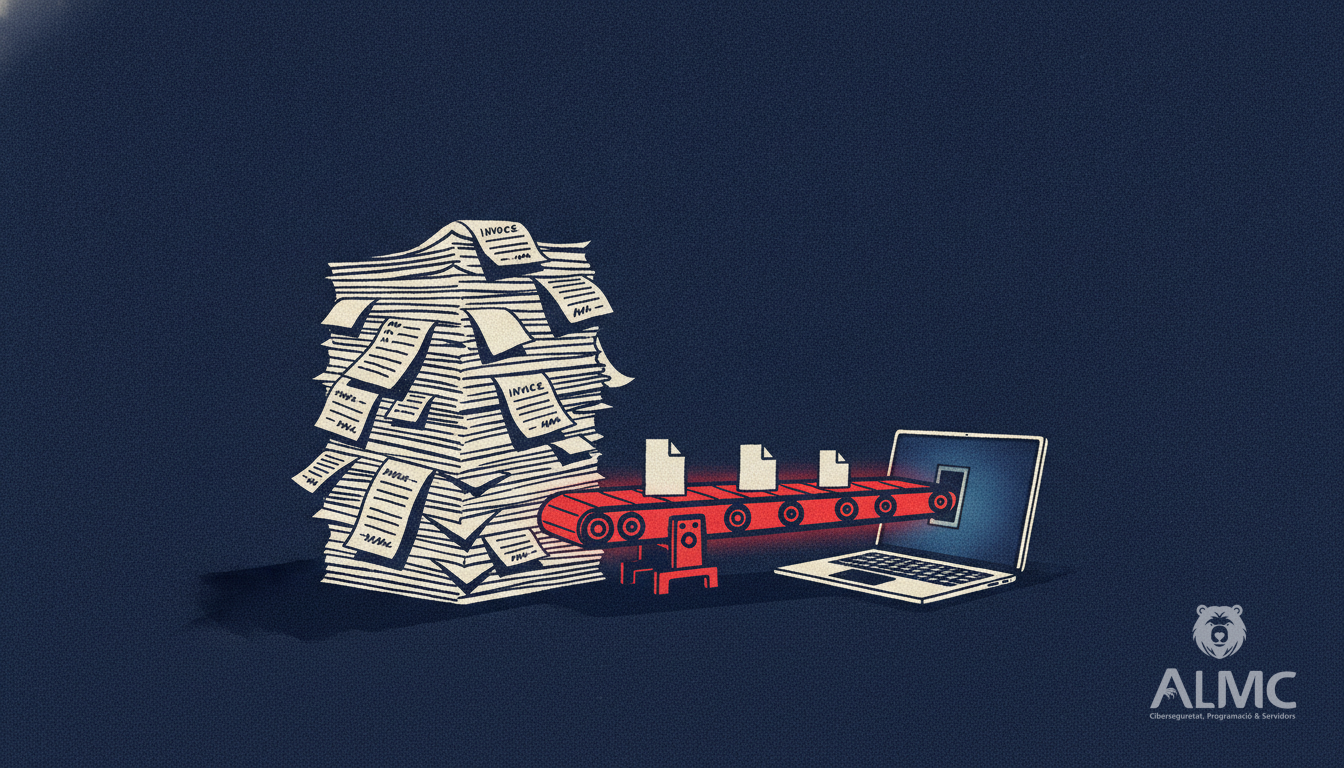
This is where process automation comes in. By integrating your accounting software with your procurement and communication tools, you can automate the capture, approval, and recording of pending invoices. For instance, using platforms like n8n, you can create workflows that automatically extract data from purchase orders or delivery notes, create provisional entries in your accounting system, and alert you when invoices are overdue. This not only saves hours of manual work but also reduces errors and ensures compliance with the accrual principle.
Automation also helps with VAT tracking. You can set up reminders to follow up with suppliers for missing invoices, and once received, the system can automatically match them with the provisional entries and update VAT records. This seamless integration means your books are always up-to-date, and you're ready for any tax inspection.
Key benefits of automating pending invoice management
- Time savings: Eliminate manual data entry and reconciliation, freeing your team to focus on strategic tasks.
- Accuracy: Reduce human errors in recording expenses and VAT, ensuring compliance with Spanish regulations.
- Real-time visibility: Get instant insights into outstanding liabilities and cash flow projections.
- Scalability: Handle growing volumes without adding administrative overhead.
- Audit readiness: Maintain a clear audit trail with digital records, simplifying inspections.
Getting started with automation
To implement automation for pending invoices, start by mapping your current process: how do you receive goods/services, how do you record them, and how do you follow up on missing invoices? Identify repetitive tasks that can be automated, such as data extraction, entry creation, and reminders. Then, choose an automation platform that integrates with your existing tools—your accounting software, email, and ERP. Many SMEs in Catalonia are turning to local digital agencies like ALMC for tailored automation solutions that fit their specific needs and budget.
Conclusion: stay ahead with automation
Managing pending invoices doesn't have to be a headache. By understanding the accounting principles and leveraging automation, your SME can ensure accurate financial reporting, optimise cash flow, and stay compliant with Spanish regulations. Whether you're in Lleida or Barcelona, embracing automation is a smart step towards greater efficiency and peace of mind. So why not explore how automating your invoice processes can transform your business today?
Related
- n8n Automation Guide: Streamline Your Business Workflows in 2026
- How Much Does Process Automation Really Cost? A 2026 Guide for SMEs
- Best WordPress SEO Plugins 2026: Expert Comparison for Spanish Sites
- Chatbot IA
Put these ideas into practice
Talk to ALMC about a solution for your business. Explore your options or contact our team.