
Ecommerce in Catalonia: Building an Online Shop That Sells
Ecommerce in Catalonia: Building an Online Shop That Sells
Why a webshop alone is no longer enoughLaunching an online shop has never been cheaper. Making it actually sell is another matter. Across Catalonia —...
Why a webshop alone is no longer enough
Launching an online shop has never been cheaper. Making it actually sell is another matter. Across Catalonia — from Barcelona's Eixample to family businesses in Lleida, Tarragona and Girona — we see the same pattern: a shop goes live, a few orders arrive from friends and existing customers, and then the curve flattens. The technology worked. The commercial engine did not.
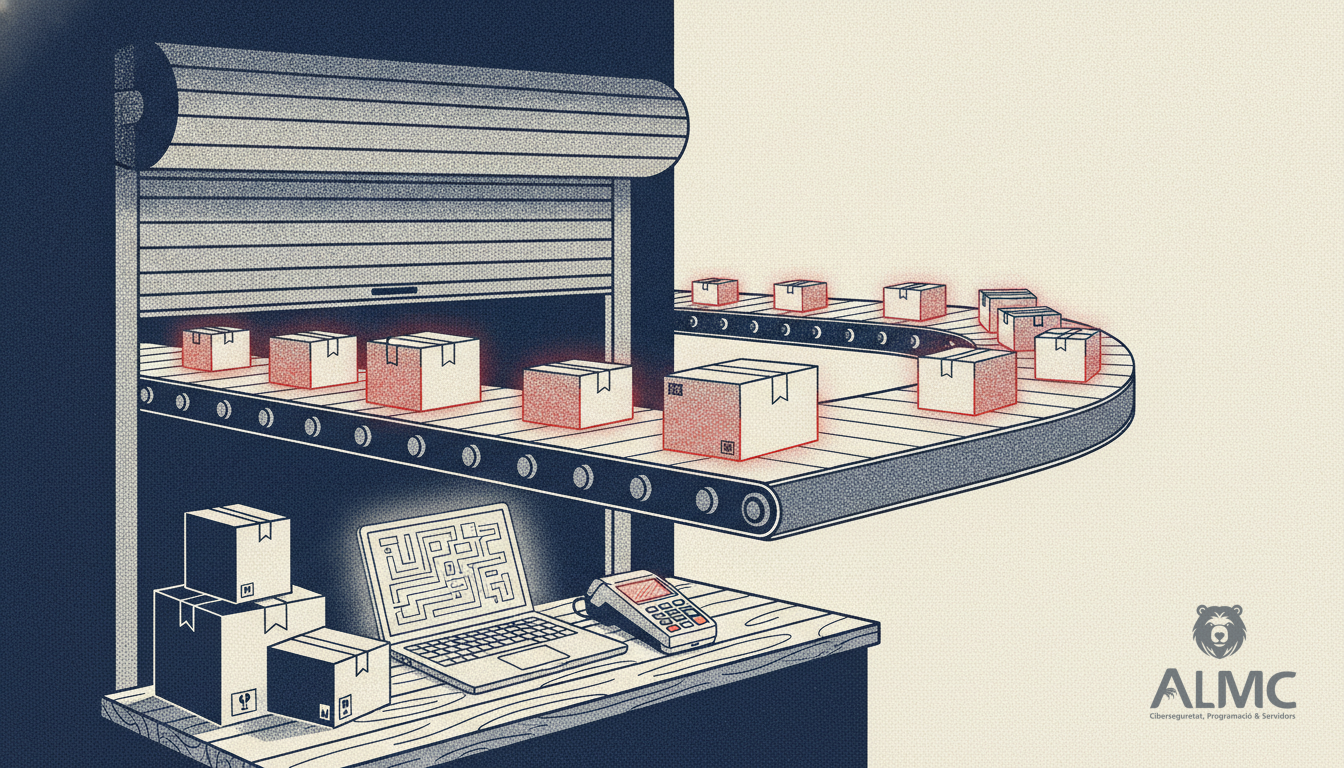
An ecommerce project is not a website with a basket bolted on. It is an operating system for selling: catalogue, stock, payments, shipping, taxes, analytics and customer service, all working together. When one of those pieces is improvised, the whole thing leaks revenue quietly.
PrestaShop or WooCommerce? Ask your business first
The platform debate is often framed as a matter of taste. In practice it is a matter of fit, and both options are strong when they are configured properly.
- PrestaShop suits retailers with large, structured catalogues, multiple combinations, tiered pricing or B2B needs. Its back office is built for commerce from the ground up, and it handles heavy product data well.
- WooCommerce shines when content and commerce live together, when the team already works comfortably inside WordPress, or when the roadmap includes editorial, SEO-driven growth.
The mistake is choosing a platform and then treating it as a template. A standard theme installed in an afternoon will look acceptable and convert poorly. A tailored build — clean product architecture, sensible category logic, checkout reduced to the minimum number of steps — is where the difference in revenue is made.
The conversion details that decide the outcome
Most abandoned baskets in Spain are not lost because of price. They are lost because of friction. Shipping costs that appear only at the final step, a checkout that demands account creation, forms that fail silently on mobile, or delivery estimates that feel vague all push the buyer away.
Practical improvements we apply to online shops in Catalonia and across Spain:
- Show shipping cost and delivery windows on the product page, not at the end.
- Offer guest checkout alongside account creation, and keep the form to the fields you genuinely need.
- Make mobile the primary design target — in Spain, most ecommerce traffic arrives on a phone.
- Write product copy that answers real objections: sizes, materials, compatibility, returns.
- Instrument the funnel with analytics and events so decisions are based on data rather than opinion.
None of these are exotic. They are simply the difference between a shop that is technically online and one that is commercially open.
Payments, logistics and legal reality in Spain
Selling in euros to Spanish and EU customers brings specific obligations. Payment methods should match local expectations: cards, Bizum where relevant, and wallets such as Apple Pay or Google Pay that shorten the final step. Logistics need clear carriers, realistic cut-off times and transparent return policies.
On the legal side, GDPR compliance is not optional. Cookie consent, privacy notices, data processing records and secure handling of customer data must be built into the shop from day one, not patched in after a complaint. Invoicing also matters: Spanish businesses need systems that integrate cleanly with electronic invoicing requirements and accounting workflows, so that growth does not create an administrative backlog.
Do not automate what you have not yet understood
Artificial intelligence is now part of the ecommerce conversation, and it deserves a measured place in it. The temptation is to bolt AI onto every process because it is available. The more useful discipline is to start from the business problem: is there a decision that would improve with better information, a task that consumes disproportionate time, or a customer question that repeats endlessly?
If the answer is yes, AI can help — product recommendations, support triage, demand forecasting, content assistance. If the answer is no, a simpler rule or a better process will usually outperform a pilot project. Not every experiment deserves to reach production, and a shop that scales is one where each tool earns its place.
Building the full stack, not just the front end
A durable online shop rests on infrastructure that is chosen deliberately: hosting sized for traffic peaks, caching, backups, monitoring, security patching and a maintenance routine. Campaigns, seasonal sales and Black Friday traffic expose weak foundations immediately. The front end is what customers see; the stack behind it is what keeps them buying.
For retailers and brands in Lleida, Barcelona, Tarragona and Girona, the goal is not simply to have an online shop. It is to have a sales channel that can be measured, improved and scaled — one where every euro invested in traffic has a fair chance of returning as revenue.
Related
- WooCommerce vs PrestaShop: Which Ecommerce Platform Wins in 2025?
- CRO for Ecommerce: Turning WooCommerce and PrestaShop Templates into Sales Engines
- Agentic Commerce: How AI Agents Are Rewriting the Rules of Online Shopping
- Desarrollo web
Put these ideas into practice
Talk to ALMC about a solution for your business. Explore your options or contact our team.