
Second-Hand Marketplaces: A New Channel for Ecommerce Growth
Second-Hand Marketplaces: A New Channel for Ecommerce Growth
Resale has stopped being a nicheFor years, selling used goods online was the territory of classifieds sites and informal peer-to-peer listings. That p...
Resale has stopped being a niche
For years, selling used goods online was the territory of classifieds sites and informal peer-to-peer listings. That picture has changed. Large furniture and homeware retailers are now building resale directly into their own digital operations, turning second-hand stock into a structured sales channel rather than an afterthought. A well-known Swedish home furnishings brand has been rolling out its own second-hand marketplace across Europe, and has signalled a pilot in Spain and Portugal that would let customers sell eligible items straight back to the company while their listing is still live.
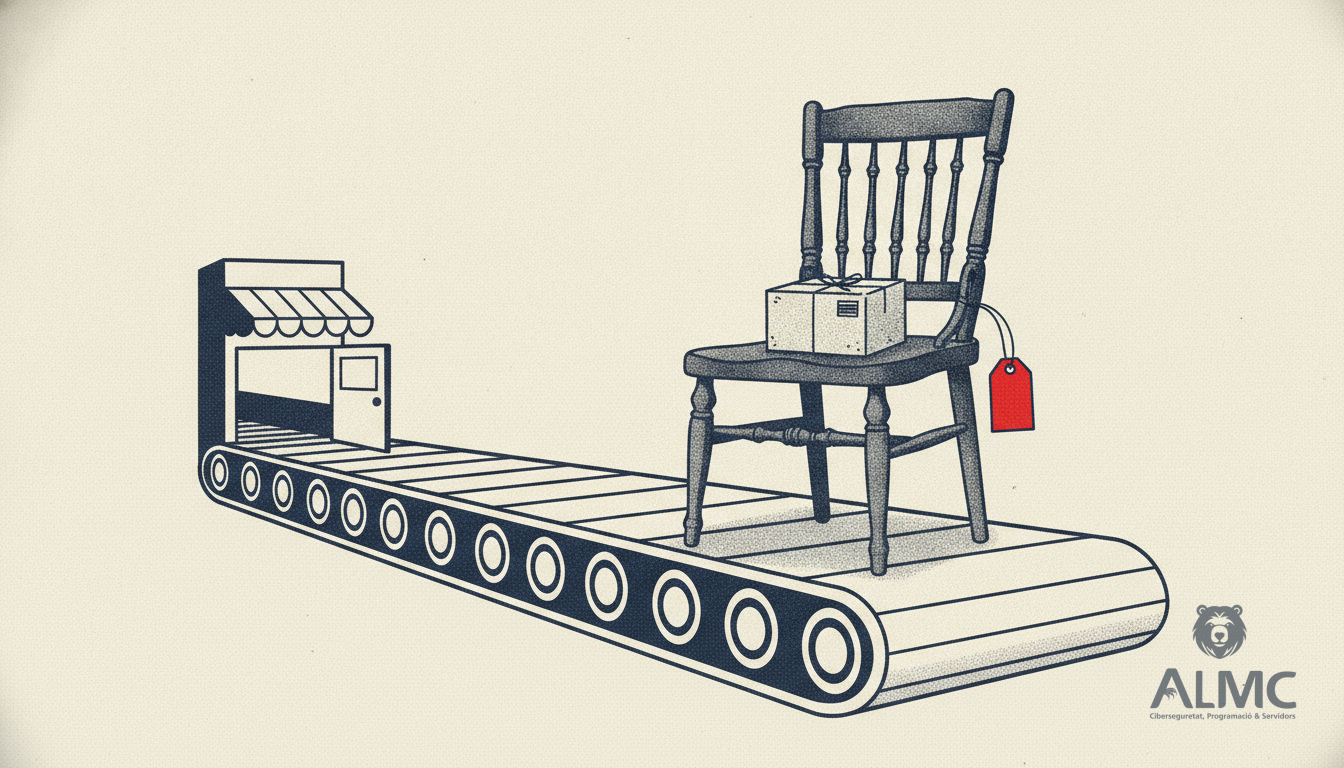
The detail worth noting is not the geography but the mechanics. Sellers get a choice: wait for another private buyer, or accept a direct offer from the retailer and drop the item off in store. That single design decision removes the most common friction in resale — the uncertainty of finding a counterpart — and it is exactly the kind of thinking that any online store in Catalonia should be studying.
What the numbers actually tell us
Reported activity on that platform runs into millions of visits and tens of thousands of listings across the markets where it operates. Those figures describe interest and inventory, not completed transactions, and it is important not to read them as revenue. Still, they point to something commercially relevant: a meaningful share of users engaging with the resale channel were new to the retailer's loyalty programme or had reactivated a dormant account.
In other words, second-hand is functioning as an acquisition and retention tool, not merely a sustainability gesture. For a small or mid-sized merchant in Lleida, Tarragona, Girona or Barcelona, that reframes the question. Resale is no longer something you do to look responsible; it is a way to bring people into your ecosystem and keep them there.
Why this matters for independent online stores
Most businesses reading this will not be operating at the scale of a multinational. That does not make the model irrelevant — it makes it more accessible. A resale or trade-in flow can be built on the same stack you already use to sell new products, provided the architecture is planned properly. The practical implications are worth spelling out:
- Catalogue complexity. Used items are single units, not stock with a fixed SKU count. Your product model needs to handle condition, photos supplied by the seller, and one-off availability.
- Payments and refunds. Buying back an item means issuing credit or payment, which touches your accounting and, under Spanish and EU rules, your invoicing obligations.
- Logistics. Collection points, in-store drop-offs and courier integration all have to be decided before launch, not after.
- Data protection. Any peer-to-peer element involves personal data, so GDPR-compliant consent, retention and deletion policies are non-negotiable.
Choosing the right platform for the job
This is where platform choice stops being a technical detail and becomes a commercial one. PrestaShop and WooCommerce are both perfectly capable of supporting a resale channel, but they solve different problems. PrestaShop tends to suit merchants who want a structured back office, multi-store management and a mature ecosystem of European modules. WooCommerce gives more flexibility when your catalogue logic is unusual or when you need to connect the shop tightly to a content or CRM system.
Neither will deliver results out of the box. A second-hand section bolted onto a standard template usually fails, because the buyer journey is different: trust signals matter more, condition descriptions carry more weight, and returns policies need to be clearer than for new goods. Conversion optimisation here is not about a prettier button — it is about removing doubt at every step.
What to do before you commit
A sensible sequence looks like this. First, decide whether you are running true peer-to-peer listings, a buy-back scheme, or both, since each has different legal and operational consequences. Second, model the unit economics: what you pay for a used item, what you resell it for, and what the handling cost is. Third, design the flow so that a seller can list an item in a few minutes on a mobile phone, because that is where most of this activity happens. Fourth, measure properly — listings, offers, completed sales and repeat rate — rather than celebrating traffic.
The broader lesson from the current wave of resale expansion is that ecommerce is no longer a single linear funnel from new product to customer. It is becoming circular, and the merchants who build for that reality early will find themselves with a channel their competitors have not yet opened. Whether you sell furniture, fashion, electronics or equipment, the question is no longer whether second-hand belongs in your online store, but how well your platform is prepared to handle it.
Related
- WooCommerce vs PrestaShop: Which Ecommerce Platform Wins in 2025?
- CRO for Ecommerce: Turning WooCommerce and PrestaShop Templates into Sales Engines
- Agentic Commerce: How AI Agents Are Rewriting the Rules of Online Shopping
- Desarrollo web
Put these ideas into practice
Talk to ALMC about a solution for your business. Explore your options or contact our team.