
AI Agents in Ecommerce: What Online Shops Can Learn
AI Agents in Ecommerce: What Online Shops Can Learn
From dashboards to agents: a quiet shift in ecommerce operationsFor years, ecommerce teams have been told that data is the answer. The result, in most...
From dashboards to agents: a quiet shift in ecommerce operations
For years, ecommerce teams have been told that data is the answer. The result, in most Spanish online shops, is a wall of dashboards nobody has time to read. Orders, stock, delivery times, returns, support tickets: everything is measured, and almost nothing is acted upon quickly enough. A recent move in the last-mile logistics sector points to a different approach, and it deserves attention from anyone running an online store in Catalonia or beyond.
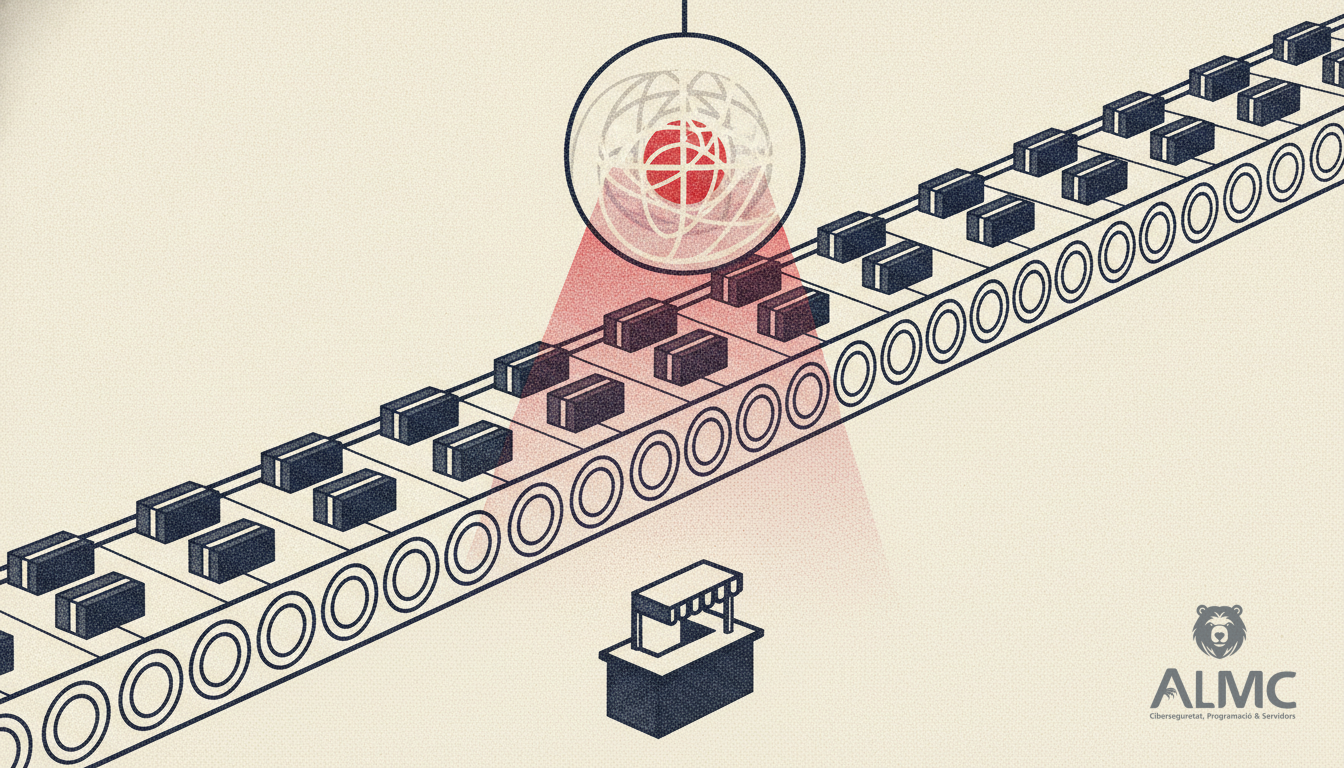
A Barcelona-based sustainable delivery company has put two in-house AI agents to work alongside its traffic controllers and riders. One watches the operation around the clock and flags anything that deviates from the norm. The other answers questions in plain language, so a controller can ask which area of Barcelona is accumulating the most restaurant waiting times this week and get an answer on the spot. The interesting part is not the technology itself, but the division of labour it creates: the machine watches, the human decides.
Why this matters for your online shop
If you sell online, your operation has the same shape as a delivery fleet. You have a stream of events, a handful of people who can act on them, and a limited number of hours in the day. The gap between what is happening and what your team knows about it is where margin quietly disappears.
Think about the questions you ask every week. Which products are about to run out of stock before a campaign? Which carrier is underperforming in Tarragona? Which checkout step is losing the most customers on mobile? Today, answering those questions usually means exporting data, building a report and waiting. An agent-based approach flips that: you ask, and the answer arrives with context attached.
- Monitoring: an agent that watches stock levels, payment failures, delivery delays and unusual return patterns, and alerts the right person before the problem grows.
- Querying: a natural-language layer over your ecommerce data, so marketing, sales and support can all ask their own questions without waiting for an analyst.
- Acting: routine responses such as pausing a campaign when stock is low, or triggering a proactive message when a delivery is delayed.
The foundation still has to be solid
None of this works on a fragile store. AI agents are only as useful as the data they can read, and most ecommerce platforms were never designed to expose their operations in a clean, structured way. This is where the choice of platform stops being a technical detail and becomes a business decision.
PrestaShop and WooCommerce are both perfectly capable of feeding an agentic layer, but only when they are set up properly: consistent product identifiers, clean order states, reliable stock synchronisation, structured event logs and a checkout that does not lose data along the way. A bespoke build on either platform, tailored to how your shop actually sells, will always outperform a generic template that was never configured for this level of visibility.
Conversion is still the metric that pays the bills
It is easy to get excited about automation and forget the basics. An agent that tells you a delivery is late is useful; a checkout that converts better in the first place is more profitable. The two work together. Better monitoring reduces the operational noise that distracts a team from optimisation, and better conversion data gives the agents something meaningful to reason about.
In practice, this means treating your online store as a product rather than a project. Test the checkout on real devices, in real conditions, with real payment methods used in Spain. Measure where customers drop off. Fix the friction before adding intelligence on top of it. A store that converts at a healthy rate and knows why is in a far better position to benefit from AI than one that is simply guessing.
People, process and the GDPR question
The logistics example above is explicit about one thing: the technology exists to support the people doing the work, not to replace them. The same principle applies to ecommerce. Agents should remove the tedious part of the job, finding out what is happening, so that your team can focus on why it is happening and what to do about it.
There is also a compliance dimension that Spanish and European shops cannot ignore. Any agent reading customer data, order histories or delivery information is processing personal data under the GDPR. That means clear purposes, sensible retention periods, data minimisation and a processor agreement with any tool that touches customer information. Building this in from the start is far cheaper than retrofitting it after an incident.
What to do next
You do not need to build your own AI agents this quarter. You do need a store that could support them when the time comes. Start by auditing three things: the quality of your product and stock data, the reliability of your checkout, and the speed at which your team can answer operational questions. If any of those three is weak, that is where the next improvement should go.
For shops in Lleida, Barcelona, Girona and Tarragona, the competitive pressure is not coming from the shop down the street any more. It is coming from operations that see problems in seconds and act on them in minutes. Getting the platform right, whether that means PrestaShop, WooCommerce or a tailored build, is how you close that gap without losing sight of the customer on the other side of the screen.
Related
- WooCommerce vs PrestaShop: Which Ecommerce Platform Wins in 2025?
- CRO for Ecommerce: Turning WooCommerce and PrestaShop Templates into Sales Engines
- Agentic Commerce: How AI Agents Are Rewriting the Rules of Online Shopping
- Desarrollo web
Put these ideas into practice
Talk to ALMC about a solution for your business. Explore your options or contact our team.