
Own Your Payments: What Vinted's Move Teaches Online Shops
Own Your Payments: What Vinted's Move Teaches Online Shops
Why payment ownership is back on the ecommerce agendaMarketplaces have long treated payments as plumbing: necessary, invisible and best outsourced. Vi...
Why payment ownership is back on the ecommerce agenda
Marketplaces have long treated payments as plumbing: necessary, invisible and best outsourced. Vinted's decision to move part of its European wallet balances into its own payment entity signals a shift in that thinking. The company is not abandoning its long-standing payment partner, but it is clearly bringing more of the money flow under its own roof. For anyone running an online shop in Catalonia or elsewhere in Spain, the lesson is not to copy a marketplace giant. It is to ask a simpler question: who controls the moment money leaves your customer's account?
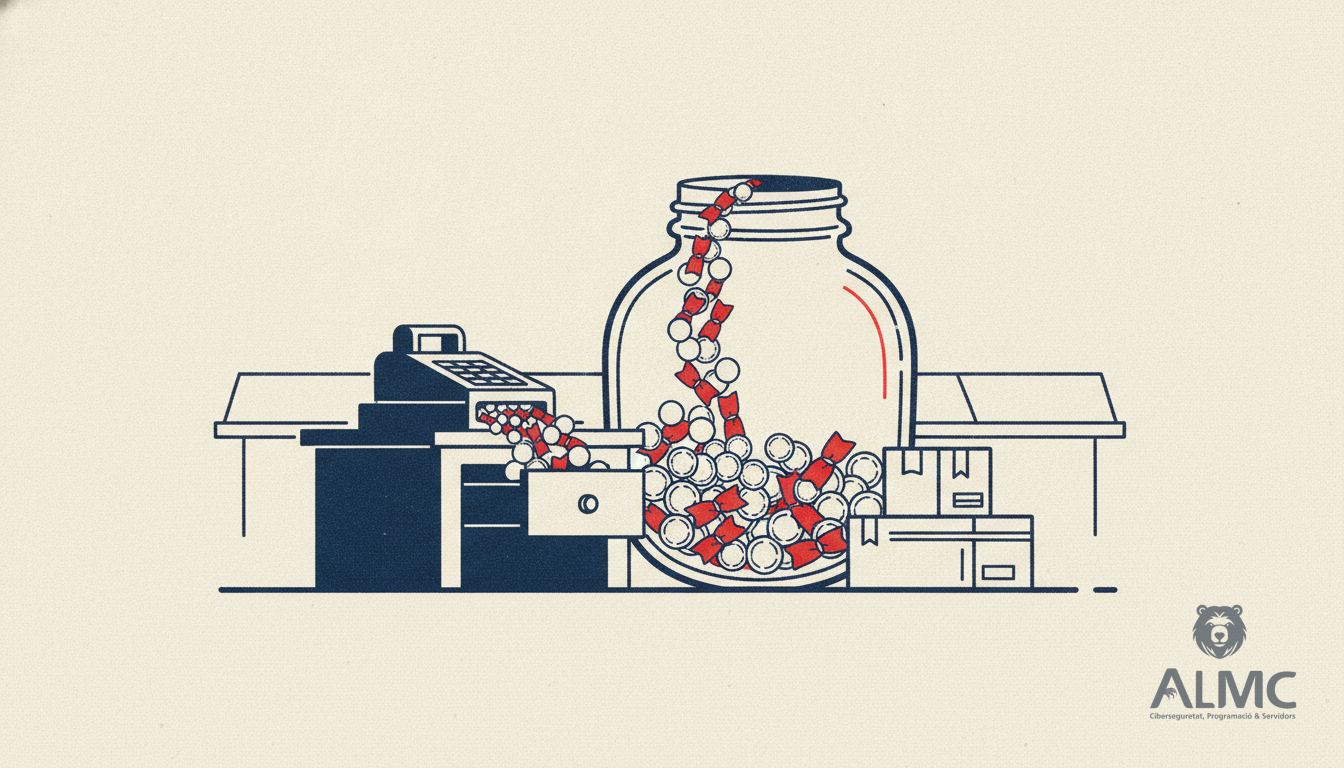
That moment sits at the very end of the funnel, yet it shapes everything before it. A checkout that stalls, a payment method your buyer does not recognise, or a wallet that takes days to settle can undo months of work on product pages and campaigns. Payments are not the last step of the purchase. They are part of the product.
What Vinted actually changed, and what it did not
The headline is straightforward: certain European wallets, including available balances and funds still pending from ongoing transactions, are being migrated to the platform's own payment subsidiary. The move is scheduled from early October 2026 and affects a subset of users whose wallets were previously managed by an external provider. Crucially, the relationship with that provider continues, and the two structures are expected to work alongside each other.
This hybrid approach is worth noting. Vinted is not building every layer of the payment chain from scratch. It is taking on the parts that touch its users most directly, while keeping authorised partners for processing and specific operations. The exact split of responsibilities has not been fully detailed, which is itself a useful reminder: internalising payments is not a single switch, it is a gradual reallocation of risk, cost and control.
The wallet is a retention tool, not just a balance
On marketplaces, a digital wallet does double duty. It holds a seller's earnings until a transaction is confirmed, and it lets that money circulate again inside the platform through new purchases. The longer funds stay in the ecosystem, the more likely they are to be spent there. That is why deciding who manages the wallet matters far beyond technical processing. It touches the relationship with sellers, the speed of payouts and the design of the buying experience.
For a smaller ecommerce operation, the equivalent is store credit, gift cards, subscriptions or a loyalty balance. If you already offer any of these, you are running a wallet of sorts. The question is whether it is integrated with your checkout or bolted on as an afterthought.
Regulation is part of the build, not an obstacle
Running payment services internally brings obligations. Vinted's payment entity operates as an authorised electronic money institution supervised by a national central bank, with rules covering balances, transfers and identity verification. That means internalising payments is not merely a change of supplier. It requires compliance work, security controls and safeguards for customer funds.
Most shops in Lleida, Barcelona, Tarragona or Girona will never need that licence. But they still face the same underlying duties under GDPR: lawful processing of payment data, clear information about who holds funds and for how long, and a documented record of how refunds and chargebacks are handled. Choosing a payment stack you understand is a compliance decision as much as a commercial one.
What this means for your own online shop
You do not need to become a payment institution. You do need to treat the checkout as a strategic surface. A few practical priorities:
- Offer the methods your buyers actually use. In Spain, cards, Bizum and popular wallets cover most expectations. Missing one can cost the sale at the final click.
- Keep the checkout on your domain. Redirects to unfamiliar pages create doubt. A native checkout on PrestaShop or WooCommerce keeps the trust you built on the product page.
- Measure the last step. Track abandonment by payment method, not just overall. The data usually shows one method quietly leaking revenue.
- Think about settlement speed. Faster payouts improve cash flow and let you reinvest in stock and campaigns without waiting on a slow cycle.
- Document your data flows. Know which provider stores what, for how long, and under which legal basis. It makes audits and customer requests far less painful.
Conversion is a stack, not a plugin
A payment provider alone will not fix a weak store. Conversion depends on the whole chain: page speed, product information, shipping clarity, returns policy, trust signals and the final payment step working together. This is where a tailored ecommerce build earns its keep. A PrestaShop or WooCommerce store configured around your catalogue, your margins and your customer journey will outperform a generic template with a payment module dropped in.
The Vinted case is ultimately about control. The platform is choosing which parts of the financial infrastructure it wants to own and which it prefers to rent. Every online shop makes a version of that decision, at a smaller scale, every time it picks a payment stack. The shops that get it right tend to be the ones that treat payments as part of the customer experience rather than an administrative detail.
Related
- WooCommerce vs PrestaShop: Which Ecommerce Platform Wins in 2025?
- CRO for Ecommerce: Turning WooCommerce and PrestaShop Templates into Sales Engines
- Agentic Commerce: How AI Agents Are Rewriting the Rules of Online Shopping
- Desarrollo web
Put these ideas into practice
Talk to ALMC about a solution for your business. Explore your options or contact our team.