
Retail media and the future of your online store
Retail media and the future of your online store
Retail media is no longer a buzzwordFor years, retailers in Catalonia and across Spain saw their online stores as a simple sales channel: a catalogue,...
Retail media is no longer a buzzword
For years, retailers in Catalonia and across Spain saw their online stores as a simple sales channel: a catalogue, a checkout and a courier. That view is now outdated. Retail media has turned the ecommerce platform itself into an advertising surface, and the brands selling alongside you are willing to pay for the visibility your traffic already generates.
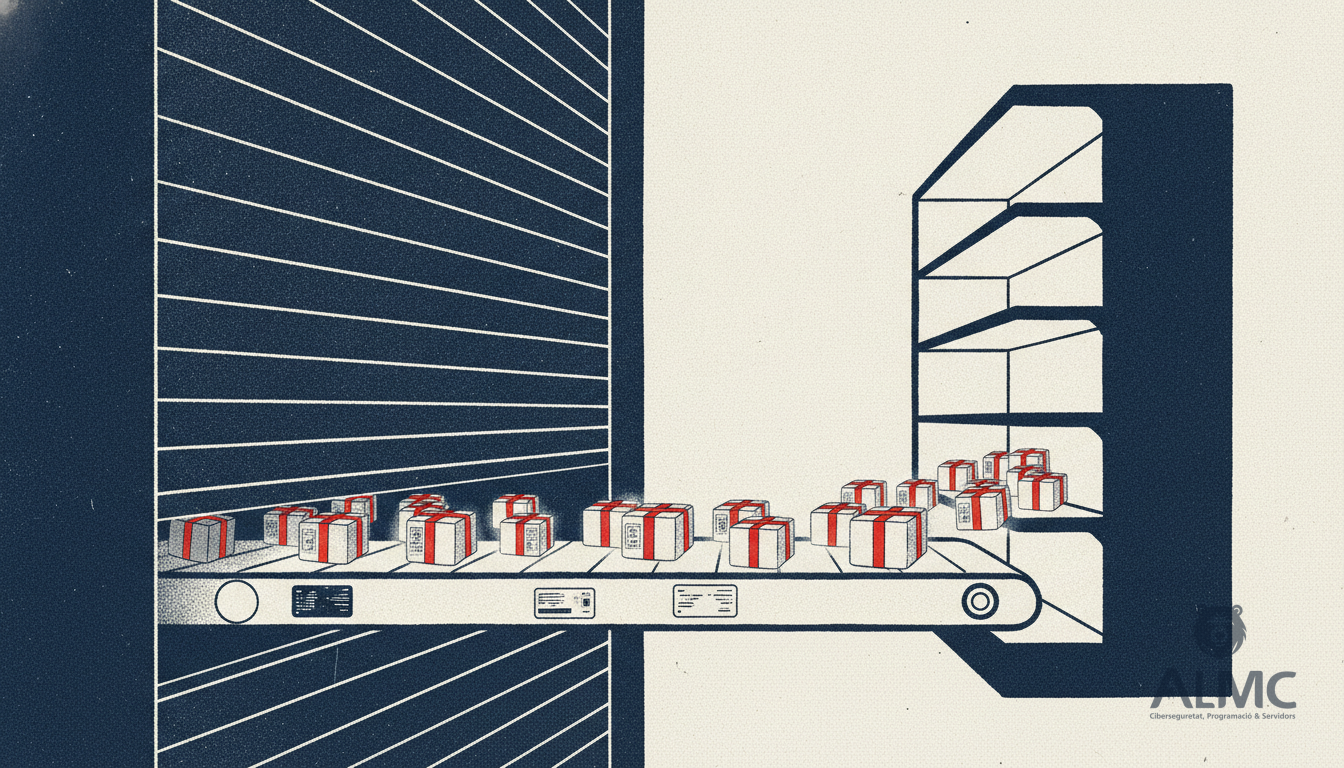
In practice, retail media means monetising the attention that passes through your online store. Sponsored product placements, promoted banners on category pages and on-site search ads are the most common formats. The logic is straightforward: if shoppers already trust your store and search within it, a relevant sponsored result can convert far better than a generic display ad on a third-party site.
Why this matters for small and mid-sized merchants
You do not need to be a national marketplace to benefit. A specialised shop in Lleida selling agricultural equipment, or a Barcelona brand in sustainable fashion, can build a modest but profitable retail media layer on top of its existing catalogue. The key advantages are:
- First-party data. You know what your customers browse, search and buy, which makes advertising more accurate and more valuable to partners.
- Higher relevance. Ads appear at the exact moment of purchase intent, not weeks before it.
- New revenue. Supplier-funded placements can offset part of your marketing and platform costs.
- Stronger supplier relationships. Brands increasingly expect measurable visibility, not just shelf space.
None of this requires a huge team. It requires a store built on a platform flexible enough to support sponsored placements, reliable tracking and clean data — and that is where the underlying technology matters.
PrestaShop and WooCommerce as retail media foundations
Most Spanish and Catalan merchants run on PrestaShop or WooCommerce, and both can be extended to support retail media without abandoning the existing store. PrestaShop offers a mature module ecosystem and a structured catalogue that suits larger assortments and multi-supplier setups. WooCommerce, built on WordPress, is lighter and integrates naturally with content marketing and SEO strategies.
Whichever you choose, a retail media layer depends on solid foundations: fast page loads, structured product data, consent-compliant analytics and a checkout that does not leak conversions. Without those, sponsored placements simply add noise to a store that is already losing sales. With them, every improvement in conversion rate multiplies the value of the advertising inventory you can sell.
Conversion optimisation comes first
It is tempting to chase advertising revenue before fixing the basics. We recommend the opposite. Before opening your store to sponsored content, make sure that:
- Product pages load quickly on mobile, where most Spanish shoppers now browse.
- Search and filtering return relevant results, since retail media often lives inside on-site search.
- Cart abandonment is measured and addressed, not ignored.
- Checkout is short, clear and offers the payment methods local customers expect, including Bizum-style instant payments.
Each of these points raises the baseline conversion rate. That baseline is precisely what makes your advertising inventory attractive: a partner will pay more to appear in a store that converts well than in one that does not.
Data, consent and GDPR
Retail media runs on data, and in Spain that means GDPR compliance is non-negotiable. Audience segmentation must be built on properly collected consent, with clear information about how browsing and purchase data is used. Anonymised or aggregated reporting is often enough for advertisers, and it reduces legal risk considerably. A well-configured consent management setup also protects you from the reputational damage of a data incident, which no advertising revenue can compensate.
A realistic roadmap
For a merchant in Barcelona, Tarragona, Girona or Lleida, a sensible sequence looks like this. First, audit the current store and fix conversion blockers. Second, structure product data so that categories, attributes and search behave predictably. Third, implement analytics and consent properly. Fourth, pilot sponsored placements with one or two trusted suppliers. Finally, measure results and expand only what works.
Retail media is not a shortcut to growth, but it is a natural extension of a well-built ecommerce operation. The stores that will profit from it are the ones that already treat their platform as a product to be improved continuously — and that is exactly the kind of online store we help build and optimise every day.
Related
- WooCommerce vs PrestaShop: Which Ecommerce Platform Wins in 2025?
- CRO for Ecommerce: Turning WooCommerce and PrestaShop Templates into Sales Engines
- Agentic Commerce: How AI Agents Are Rewriting the Rules of Online Shopping
- Desarrollo web
Put these ideas into practice
Talk to ALMC about a solution for your business. Explore your options or contact our team.