
Online store payments: building trust that converts
Online store payments: building trust that converts
Why the checkout is where online stores are won or lostEcommerce in Spain has moved well past the experimental stage. Online sales now run into the te...
Why the checkout is where online stores are won or lost
Ecommerce in Spain has moved well past the experimental stage. Online sales now run into the tens of billions of euros each year, and a clear majority of companies with more than ten employees already buy or sell over the internet. Yet growth has not erased a stubborn residue of doubt: a small but persistent slice of Spanish consumers still say they do not fully trust buying online. That hesitation rarely appears on the homepage. It shows up at the payment step, where a shopper decides in a few seconds whether your online store deserves their card details.
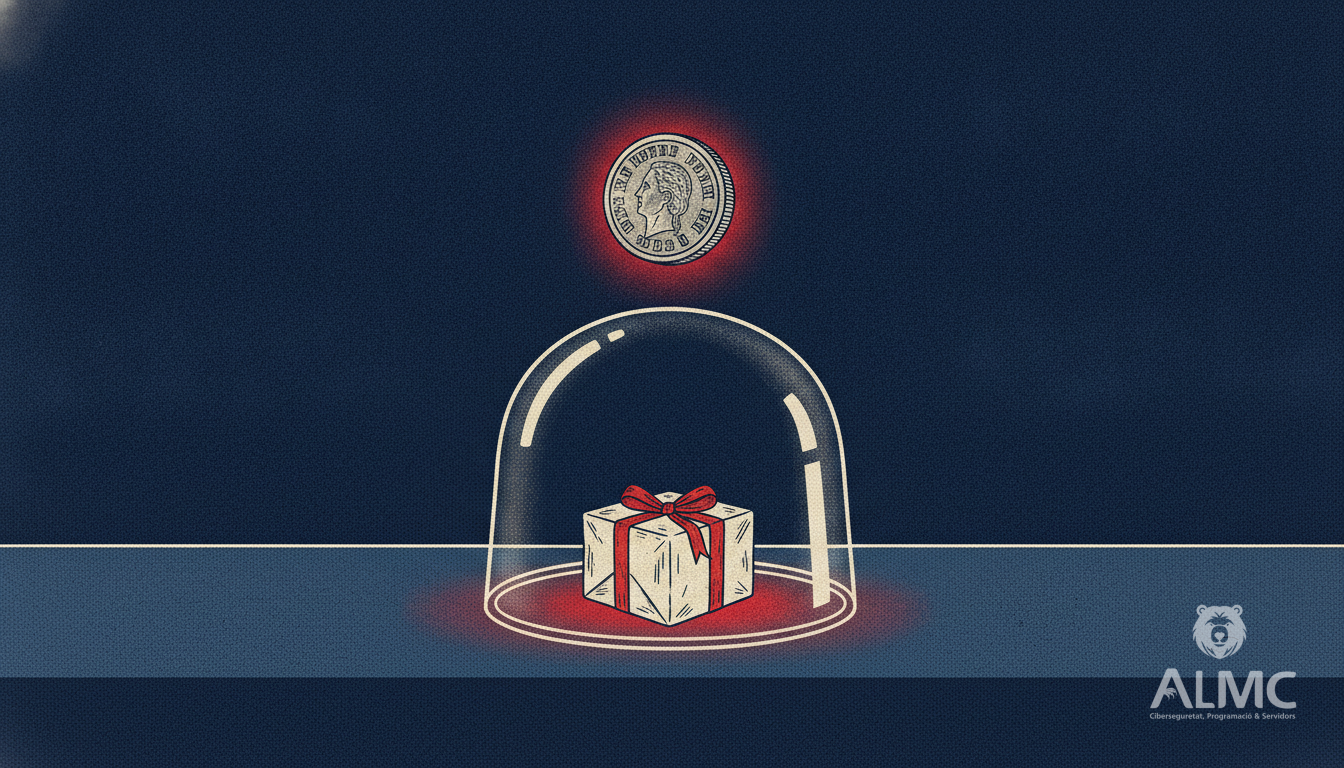
For shops and brands selling in Barcelona, Lleida, Tarragona, Girona or anywhere else in Catalonia, the lesson is straightforward: conversion is not only a design problem. It is a trust problem, and trust is engineered into the payment flow, the platform underneath it and the way you communicate guarantees.
The escrow model, explained without the jargon
One of the more interesting developments in the Spanish market is the arrival of escrow accounts aimed at digital platforms and marketplaces. The idea is old in trade and new in ecommerce: a neutral third party holds the buyer's money until the agreed conditions are met. In practice it works in four movements.
- Buyer and seller agree the terms: amount, product or service, delivery deadlines.
- The buyer pays, and the funds sit in a protected account instead of landing directly with the seller.
- The seller is notified that the money is secured and proceeds with delivery.
- Once delivery is confirmed, the funds are released and settled to the seller. If either side breaks the agreement, the operation can be cancelled and the money handled according to the pre-agreed rules.
Why does this matter for an online store? Because it shifts risk away from the shopper without leaving the merchant exposed. The buyer knows the money will not vanish; the seller knows the money already exists. For marketplaces with many independent vendors, that double guarantee is often the difference between a listing that converts and one that gets abandoned.
What a modern payment layer actually includes
Escrow is only one piece. A payment infrastructure fit for a serious ecommerce operation tends to bring several capabilities together, and it is worth checking them against your own stack:
- Digital onboarding with KYC checks. Vendors are registered and verified automatically, which speeds up activation while keeping you on the right side of anti-money-laundering rules.
- Wallets per seller. Virtual accounts let the platform separate commissions from the funds belonging to each vendor, keeping reconciliation clean.
- Multiple payment methods. Cards, bank transfers via payment initiation services, and alternative wallets such as Apple Pay and Google Pay, so the shopper pays the way they prefer.
- Automated money flows. Fewer manual steps means fewer errors, less operational risk and a finance team that is not chasing mismatches at month end.
- A unified control panel. Sales, refunds, balances and settlements visible in real time for both the platform and its sellers.
None of this is exotic. What is uncommon is having it integrated coherently rather than bolted together from five different providers.
GDPR, euros and the Spanish reality
Any payment or identity process you add to an online store in Spain has to sit comfortably with the GDPR. KYC data is personal data, and storing it means defining a lawful basis, limiting retention and being transparent in your privacy notice. Escrow arrangements also touch on consumer protection rules, so the terms of cancellation and refund need to be written in plain language and visible before checkout, not buried in a PDF.
Prices, of course, in euros, with taxes shown clearly and no surprises at the final step. A shopper in Lleida and a shopper in Girona should see exactly the same conditions, and so should a buyer in France or Italy if you ship across the border.
Where the platform choice comes in
All of the above depends on the foundation. A payment provider can only do so much if the store itself is slow, fragile or hard to extend. This is where the choice between PrestaShop and WooCommerce matters, and it is not a religious debate: it is a question of catalogue size, team skills, integrations and how much custom logic your checkout needs.
PrestaShop remains a strong fit for retailers with large catalogues and complex back-office requirements, especially in France and Spain where the ecosystem is deep. WooCommerce suits brands already living inside WordPress, where content and commerce need to share the same space. Either can be made to work beautifully, or badly, depending on how it is built.
A properly built online store covers the whole stack: a fast, secure theme, clean product data, a checkout with as few frictions as possible, analytics that tell you where people drop off, and payment integrations that support the methods your customers actually use. Conversion optimisation is not a one-off project either. It is a cycle of measuring, testing and adjusting, from the product page down to the confirmation email.
Practical steps for shops that want to sell more
- Audit your checkout on a real phone, on a real mobile connection, and count the steps.
- Make delivery times, return policy and payment security visible before the payment page.
- Offer at least one payment method beyond cards, and show the logos clearly.
- If you run a marketplace, evaluate whether escrow or a wallet structure reduces disputes.
- Document how you handle customer data, and keep that documentation current.
- Track abandonment reasons, not just abandonment rates.
Trust is cumulative. Each of these details adds a little, and together they turn a hesitant visitor into a returning customer. That is the real objective behind any ecommerce project: not simply to have an online store, but to have one that sells, reliably, in a market where the shopper has plenty of alternatives and very little patience.
Related
- WooCommerce vs PrestaShop: Which Ecommerce Platform Wins in 2025?
- CRO for Ecommerce: Turning WooCommerce and PrestaShop Templates into Sales Engines
- Agentic Commerce: How AI Agents Are Rewriting the Rules of Online Shopping
- Desarrollo web
Put these ideas into practice
Talk to ALMC about a solution for your business. Explore your options or contact our team.