
Online stores that sell: logistics, conversion and the right platform
Online stores that sell: logistics, conversion and the right platform
Why a webshop is only as strong as its weakest linkLaunching an online store is easy. Making it sell profitably, month after month, is a different dis...
Why a webshop is only as strong as its weakest link
Launching an online store is easy. Making it sell profitably, month after month, is a different discipline altogether. In Catalonia and across Spain, we see many merchants invest heavily in design and advertising while leaving two critical pillars unattended: the platform underneath and the logistics behind it. When either fails, conversion suffers, returns rise and the brand loses trust.
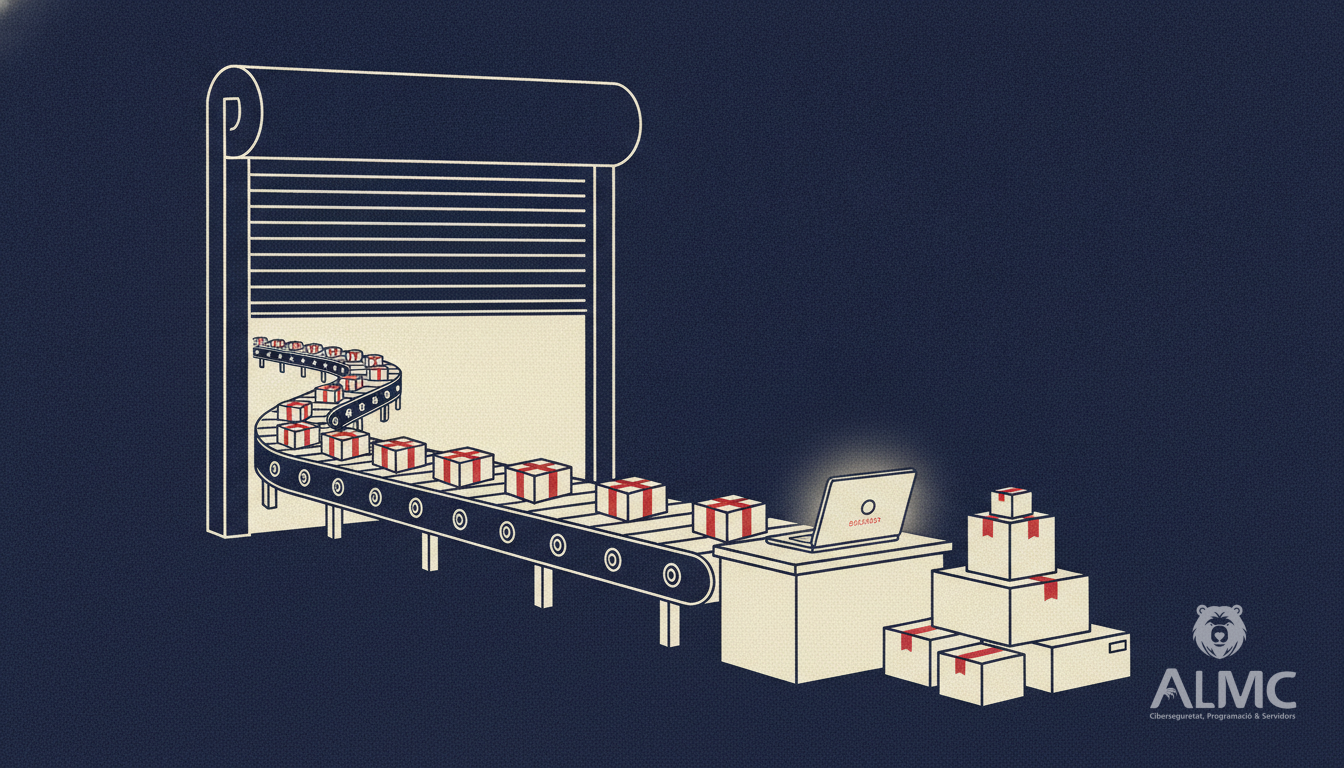
At ALMC.es we build online stores that genuinely sell: tailored PrestaShop and WooCommerce deployments, conversion optimisation and the full stack needed to compete in ecommerce. But technology alone is not enough. The smarter approach is to design the store around the entire customer journey, from the first click to the parcel arriving at the door.
The logistics signal: capacity is a conversion factor
Last-mile operators are expanding aggressively in Spain, and that matters for any merchant selling online. When a carrier opens a new hub and multiplies its sorting capacity, delivery times shorten and peak-season bottlenecks ease. For a shop in Lleida, Tarragona, Girona or Barcelona, that translates into fewer delayed orders, fewer support tickets and better repeat purchase rates.
The lesson for ecommerce owners is straightforward: your checkout promise is only as credible as your fulfilment chain. If you advertise 24-hour delivery during a sales campaign, your carrier must be able to absorb the volume. Before scaling traffic, audit your logistics partner's coverage, peak capacity and cold-chain or healthcare handling if your catalogue requires it.
Choosing the right platform: PrestaShop or WooCommerce?
There is no universal winner. The right choice depends on catalogue size, internal team, integration needs and growth plans.
- PrestaShop is a strong fit for Spanish and European merchants who want a mature ecommerce-native back office, multi-store management and a wide ecosystem of local payment and carrier modules. It suits catalogues with structured attributes and complex pricing rules.
- WooCommerce shines when content and commerce must live together, when the team already works with WordPress, or when you need bespoke functionality built around a flexible CMS. It is also a practical option for brands that publish editorial content to attract organic traffic.
In both cases, the difference between a template install and a store that performs lies in the details: clean product data, fast hosting, a checkout stripped of friction and integrations that actually work under load. A poorly configured plugin or an unoptimised database can quietly cost you sales every day.
Conversion optimisation is not a one-off project
Conversion rate optimisation is often treated as a redesign. In reality, it is a continuous process of measurement and small, evidence-based changes. The areas that usually deliver the most value include:
- Product pages with clear photography, transparent pricing in euros, stock visibility and delivery estimates by province.
- Checkout reduced to the minimum steps, with guest checkout, local payment methods and clear shipping costs before the final step.
- Mobile performance, because a large share of Spanish shoppers browse and buy from their phones.
- Trust signals: returns policy, contact details, GDPR-compliant consent and visible customer support channels.
Each of these elements should be tested rather than assumed. Small improvements compound: a clearer delivery promise, a faster page or a simplified form can lift revenue without increasing ad spend.
Compliance and local reality in Spain
Selling online in Spain means operating under GDPR and the national data protection framework. Cookie consent, newsletter opt-in and customer data handling must be designed into the store from day one, not patched afterwards. Equally, invoicing obligations and VAT rules require integrations that work reliably with your accounting systems.
Localisation also matters commercially. Prices in euros, Spanish and Catalan language versions where relevant, and shipping options that reflect the reality of peninsular and island deliveries all influence whether a visitor completes a purchase or leaves for a competitor.
Build for the next five years, not just launch day
The merchants who succeed are those who treat their online store as infrastructure rather than a brochure. That means choosing a platform that can grow, monitoring performance continuously, and keeping logistics, marketing and technology aligned. Whether you operate a physical shop in Lleida and want to expand online, or you are scaling a brand across Catalonia and Spain, the fundamentals remain the same: a solid platform, a frictionless checkout and a delivery promise you can keep.
If your current store is underperforming, the answer is rarely a complete rebuild. More often it is a focused review of platform configuration, conversion bottlenecks and fulfilment capacity, followed by disciplined execution.
Related
- WooCommerce vs PrestaShop: Which Ecommerce Platform Wins in 2025?
- CRO for Ecommerce: Turning WooCommerce and PrestaShop Templates into Sales Engines
- Agentic Commerce: How AI Agents Are Rewriting the Rules of Online Shopping
- Desarrollo web
Put these ideas into practice
Talk to ALMC about a solution for your business. Explore your options or contact our team.