
From Ad Click to Checkout: Closing the Loop in Your Online Store
From Ad Click to Checkout: Closing the Loop in Your Online Store
The gap between the click and the saleAdvertising platforms have spent the last few years closing the distance between brand campaigns and measurable...
The gap between the click and the sale
Advertising platforms have spent the last few years closing the distance between brand campaigns and measurable performance. Connected TV, in-read formats and feed placements now share dashboards with conversion tracking, and the big networks are folding AI assistants into media planning so that briefings turn into strategies with less manual work. For a retailer, that sounds like good news: more precise targeting, faster reporting, a clearer view of what the budget actually achieved.
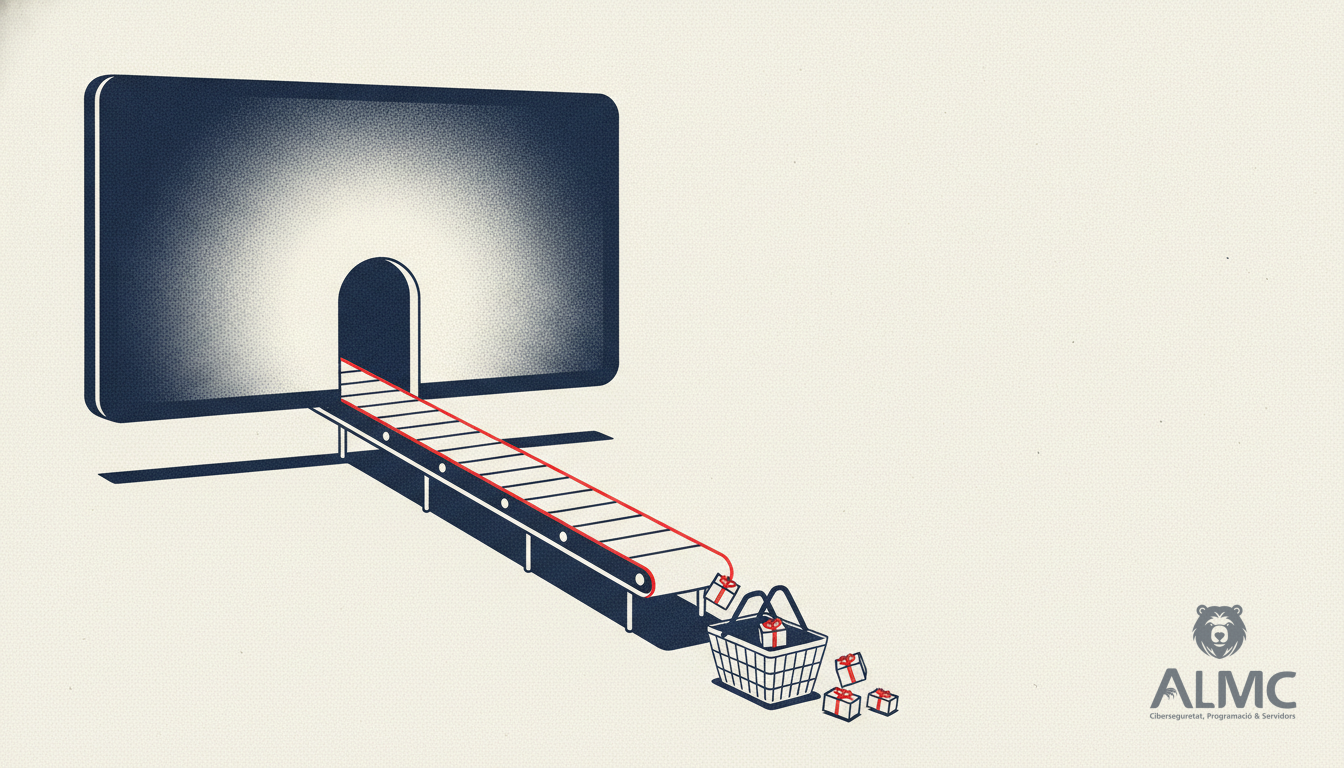
Yet there is a stubborn detail that no media platform can fix from its side of the fence. Every one of those campaigns ends in the same place: your online store. If the landing page loads slowly, the checkout asks for too much, or the product page fails to answer the question the ad promised to answer, the measurement loop breaks. The click happened, the budget was spent, and the sale did not.
This is the part we see most often in ecommerce projects across Catalonia. Companies invest in acquisition and treat the store as a fixed cost, when in reality the store is the conversion engine that decides whether the acquisition was worth it.
What a modern campaign actually demands from a store
When media buying becomes more automated, the store has to keep pace. Three demands come up again and again:
- Clean, reliable tracking. Conversion APIs, server-side events and analytics platforms only work if the store emits accurate data. A misconfigured purchase event quietly corrupts every optimisation decision made downstream.
- Fast, stable pages under load. Campaign bursts send concentrated traffic. A store that crawls under a spike loses precisely the visitors who were most ready to buy.
- Consistent messaging. The promise in the ad, the headline on the landing page and the confirmation email should read as one voice. Fragmented journeys leak conversions at every seam.
None of this is exotic. It is ordinary ecommerce engineering done properly, and it is where a custom-built store earns its keep.
PrestaShop or WooCommerce: choosing on substance, not fashion
In Spain, both platforms have deep roots, and both can be excellent. The decision should follow the business, not the other way round.
PrestaShop tends to suit catalogues with many variants, complex pricing rules, B2B tiers or multi-store setups. Its back office is built around merchandising and order management, and it handles heavy product structures with composure.
WooCommerce shines when content and commerce live together, when the team already works comfortably inside WordPress, or when editorial, blog and product pages need to share one environment. It is flexible and well documented, though it rewards disciplined development.
Either way, the platform is the starting point, not the deliverable. The real work is in the details: a checkout reduced to the minimum viable steps, payment methods that match Spanish buying habits, shipping options that make sense for peninsular and Balearic deliveries, and invoices that comply with current electronic invoicing requirements.
Conversion work that pays for itself
Conversion rate optimisation is often sold as a bag of tricks. In practice, the gains come from unglamorous places. Product pages that load images in modern formats and show stock honestly. Search that tolerates typos and regional spellings. Filters that help a customer narrow a catalogue of hundreds of references down to three. A cart that survives a session timeout. Guest checkout that does not punish the impatient.
Add the legal layer and the picture completes. Under GDPR, cookie consent must be genuine, data collection must be purposeful, and the privacy policy has to describe what actually happens rather than what a template assumed. A store that gets this right avoids both fines and the quieter cost of abandoned carts caused by distrust.
Measured together, these improvements compound. A modest lift in conversion changes the maths of every campaign you run, because the same media spend now produces more orders. That is the loop closing in the direction that matters.
Building the whole stack, not just the shopfront
A store that sells reliably rests on infrastructure most customers never see: hosting sized for real traffic, caching that does not break the cart, staging environments for testing changes safely, backups that are actually restored and verified, monitoring that warns you before customers do. When a campaign goes live on a Tuesday morning, nobody wants to discover that the server was provisioned for last year's traffic.
This is why we approach online stores as a complete stack rather than a template installation. Design, development, hosting, analytics, consent management, payment integration and ongoing optimisation belong to the same conversation. A retailer in Lleida, Barcelona, Tarragona or Girona should be able to ask one team why a campaign underperformed and get an answer that covers the ad, the landing page, the checkout and the server.
Where to start
Begin with the data you already have. Look at where visitors abandon, how long pages take to respond on a mid-range phone, and which payment steps generate support tickets. Those three signals usually point to the first two or three fixes worth making. Then decide whether your current platform can carry the roadmap ahead or whether a rebuild on PrestaShop or WooCommerce, developed to measure, is the more economical path.
Advertising will keep getting smarter and more integrated. The stores that benefit are the ones ready to receive the traffic it sends.
Related
- WooCommerce vs PrestaShop: Which Ecommerce Platform Wins in 2025?
- CRO for Ecommerce: Turning WooCommerce and PrestaShop Templates into Sales Engines
- Agentic Commerce: How AI Agents Are Rewriting the Rules of Online Shopping
- Desarrollo web
Put these ideas into practice
Talk to ALMC about a solution for your business. Explore your options or contact our team.