
EU customs reform: a turning point for online shops
EU customs reform: a turning point for online shops
Why the EU customs shake-up matters to your online shopFor years, selling into Europe from outside the single market came with a comfortable advantage...
Why the EU customs shake-up matters to your online shop
For years, selling into Europe from outside the single market came with a comfortable advantage: low-value parcels slipped through with minimal paperwork and negligible duties. That gap is closing. The European Union has been rolling out a series of customs measures aimed at imported ecommerce goods, and the cumulative effect is a structural change in how cross-border competition works. For retailers based in Spain and across the EU, this is less a threat than a repositioning of the playing field.
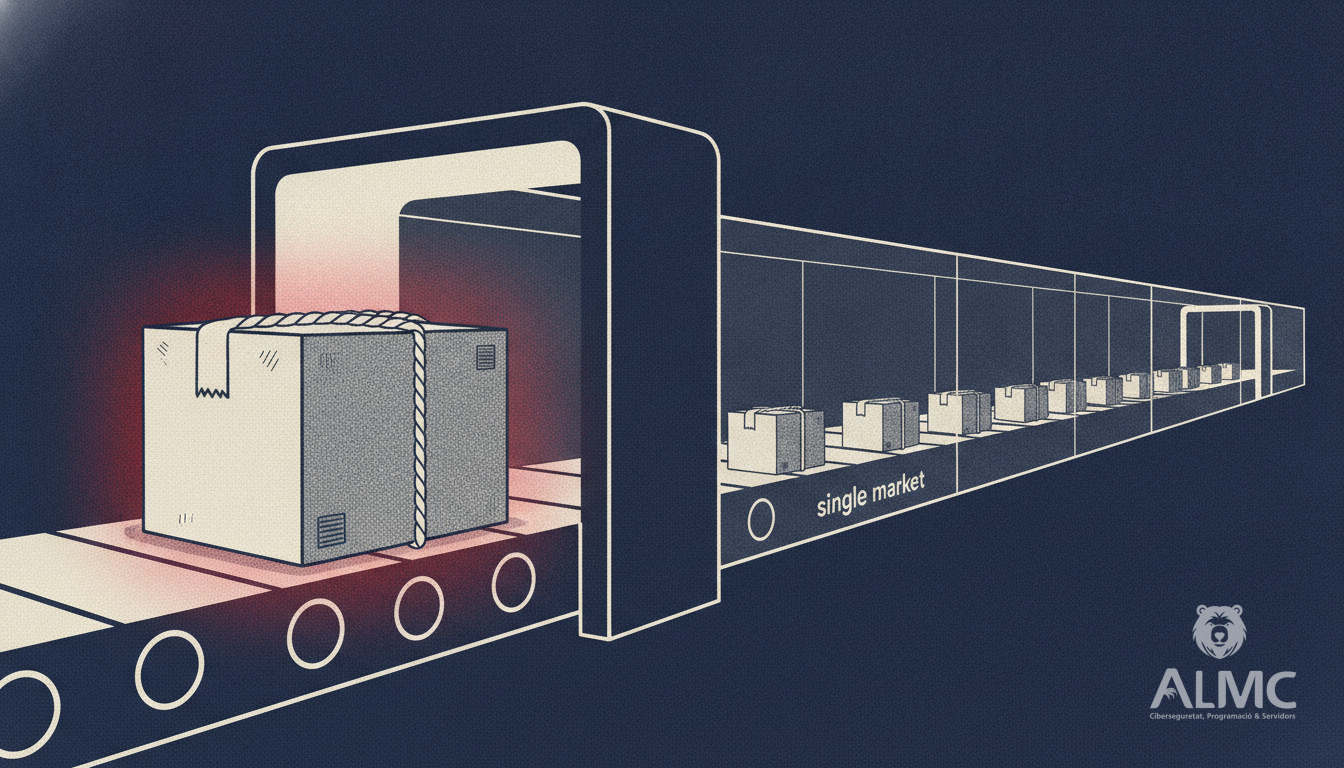
The direction of travel is clear: imports from third countries now carry additional charges and far stricter data requirements, while shipments circulating inside the single market remain untouched by these new burdens. Understanding the detail helps you decide where to invest next.
What is actually changing
Two mechanisms sit at the centre of the reform. First, a temporary low-value customs duty was introduced for imported goods below the traditional relief threshold. Second, a permanent EU handling fee now applies to qualifying business-to-consumer imports, regardless of the value of the consignment.
There is a detail that catches many merchants out: both charges are calculated per customs declaration line, not per parcel. A single order containing goods with different tariff classifications or different countries of origin can therefore trigger several charges at once. And unlike the temporary duty, the handling fee is not refunded if the customer later returns the item or it turns out to be faulty — a real cost factor for categories with high return rates, such as fashion or footwear.
Alongside the money, the paperwork has grown. New product identifier requirements mean customs declarations must now carry more granular detail: the seller's product codes, manufacturer identifiers and standardised identifiers where available. Accurate master data is no longer a nice-to-have; it is what keeps parcels moving instead of sitting in a queue.
The timing trap for seasonal campaigns
One practical wrinkle deserves attention. Goods that enter the customs process after a given cut-off date can attract the new charges even if the customer placed the order before it. Retailers preparing Black Friday, Christmas or Reyes campaigns need to build that lag into their logistics planning, or risk absorbing costs they never priced into the margin.
The opportunity for EU-based merchants
Here is the flip side, and it is significant. Intra-EU shipments are not subject to these import charges or the associated identifier requirements. As sellers established outside the EU recalculate the cost and complexity of serving European customers, some will consolidate shipments, rework their logistics models or quietly withdraw from certain channels. Every one of those decisions leaves room for a European shop that can deliver across the single market without customs friction.
For a comerç in Lleida, Barcelona, Tarragona or Girona, that means the argument for selling online within Europe has arguably never been stronger. But the advantage only materialises if the shop itself is ready: fast, trustworthy, well-structured and built to convert visitors into repeat buyers.
What this means for your ecommerce stack
A favourable regulatory backdrop will not compensate for a slow, confusing storefront. If you are positioning yourself as the local alternative to a third-country seller, your platform has to carry that promise. In practice, that means:
- Clear landed pricing. Show delivery costs and any applicable taxes transparently, so customers in other EU countries know exactly what they will pay at checkout.
- Solid product data. Structured attributes, consistent SKUs and complete descriptions support both customs compliance and better on-site search and SEO.
- Conversion-focused checkout. Fewer steps, local payment methods and mobile-first design make the difference between a browse and a sale.
- Returns handled properly. A clear, GDPR-compliant returns policy builds the confidence that cross-border buyers need.
- Performance and uptime. Campaign traffic spikes are unforgiving; hosting and caching need to be sized for them.
This is where the choice of platform matters. PrestaShop and WooCommerce, properly configured and tailored to your catalogue and workflows, give Spanish merchants full control over pricing rules, tax settings, multilingual content and integrations with carriers and ERP systems. Off-the-shelf templates rarely survive contact with real cross-border operations; a store built around your actual processes does.
Prepare now, sell better later
The reform will keep unfolding over the coming years, with further milestones in the EU customs system still to come. Merchants who treat this as a compliance headache will spend the next seasons firefighting. Those who treat it as a competitive signal will invest in the things that make an online shop genuinely sell: accurate data, transparent pricing in euros, a frictionless checkout and a platform that scales with demand.
If your store is still running on a generic setup, or if you are planning to expand across Spain and into the rest of the EU, it is worth reviewing the foundations before the next campaign season arrives. A well-built tienda online is the asset that turns a shifting regulatory landscape into a durable advantage.
Related
- WooCommerce vs PrestaShop: Which Ecommerce Platform Wins in 2025?
- CRO for Ecommerce: Turning WooCommerce and PrestaShop Templates into Sales Engines
- Agentic Commerce: How AI Agents Are Rewriting the Rules of Online Shopping
- Desarrollo web
Put these ideas into practice
Talk to ALMC about a solution for your business. Explore your options or contact our team.