
Building an Online Store That Actually Sells in Spain
Building an Online Store That Actually Sells in Spain
Why so many online stores fail to convertLaunching an ecommerce site is easy. Getting it to sell is a different discipline altogether. Across Cataloni...
Why so many online stores fail to convert
Launching an ecommerce site is easy. Getting it to sell is a different discipline altogether. Across Catalonia — from Barcelona to Lleida, Tarragona and Girona — we meet plenty of businesses that invested in a shopfront, filled it with products and then watched traffic arrive without turning into orders. The problem is rarely the catalogue. It is almost always the foundation underneath: the platform, the checkout, the speed and the way the whole stack fits together.
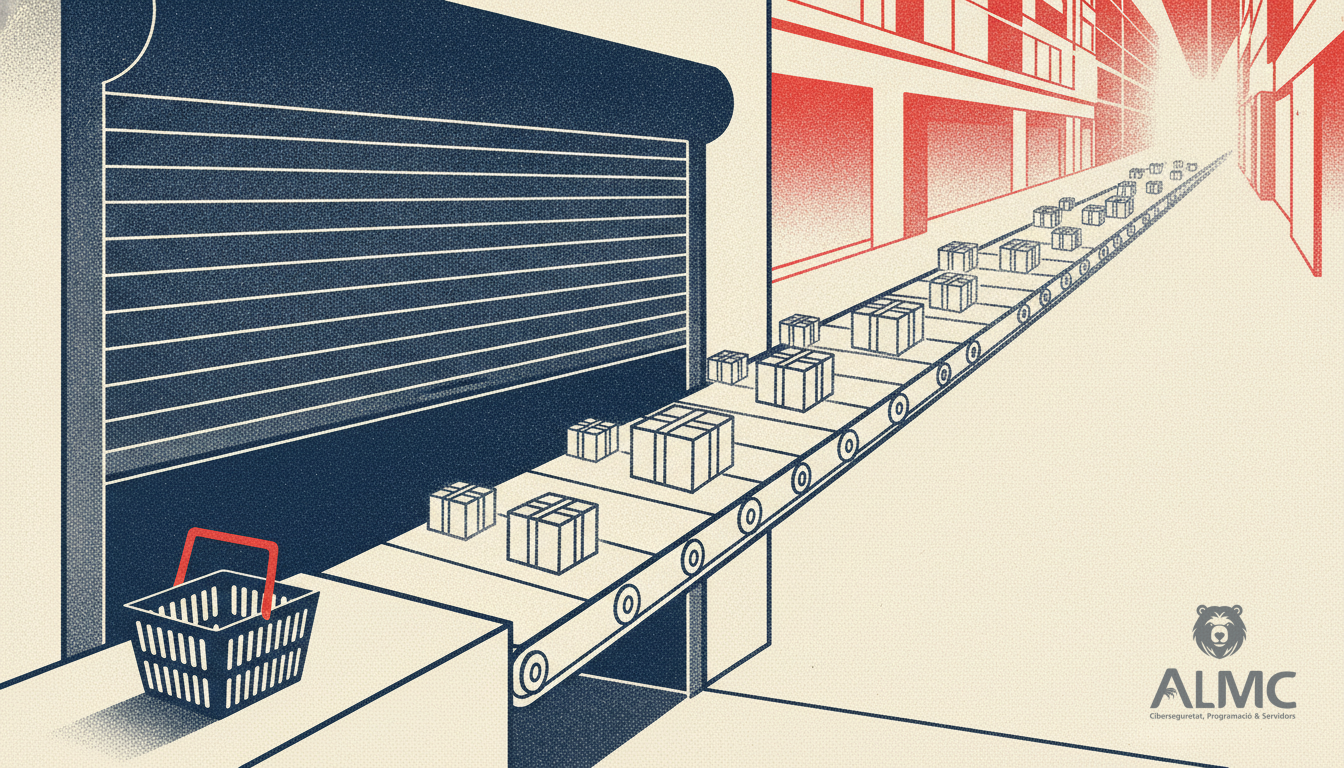
A store that genuinely sells is engineered, not decorated. That means choosing the right engine, tuning it for conversion and connecting the pieces that support growth. Let us break that down.
Start with the right platform, not the trendiest one
Two open-source platforms dominate serious ecommerce in Spain, and for good reason: PrestaShop and WooCommerce. Neither is automatically the right answer — the decision should follow your catalogue, your team and your ambitions.
- PrestaShop suits retailers with larger catalogues, complex pricing, multiple languages or B2B needs. It is built for commerce first and handles heavy product structures well.
- WooCommerce shines when content and commerce overlap, when you already run on WordPress, or when you want tight integration with a blog and SEO strategy.
The mistake is treating either as an off-the-shelf install. A generic theme and a pile of plugins will get you online, but they will also slow you down, create conflicts and leave you exposed at the checkout — exactly where revenue is won or lost. A custom build, tailored to how your business actually operates, is what separates a shop that exists from a shop that performs.
Conversion is a design and engineering problem
Visitors do not abandon carts because your logo is the wrong shade of blue. They leave because something felt slow, unclear or untrustworthy. Conversion optimisation is therefore a technical and structural exercise as much as a visual one. In our experience, the highest-impact work tends to concentrate in a few areas:
- Speed and stability: pages that load quickly on mobile, on real connections, in the middle of a busy sales period.
- A frictionless checkout: fewer steps, clear delivery costs early, and payment methods Spanish shoppers expect, priced in euros.
- Product pages that answer questions: sharp photography, honest stock information and structured data that helps search engines understand your offer.
- Search and navigation: filters and internal search that let people find what they came for in seconds.
None of this is guesswork. It is measured, tested and refined — which is why a store should be treated as a living system rather than a one-off project.
The stack behind the shopfront
An online store is never just the store. Behind it sits a stack: hosting, backups, security, invoicing, analytics and integrations with the tools your team already uses. In Spain, two practical realities shape that stack. First, GDPR compliance is not optional — consent management, data minimisation and clear privacy information need to be built in from day one, not bolted on later. Second, electronic invoicing and accounting integration matter for any retailer issuing B2B or B2C invoices under Spanish rules.
Get the stack right and the store becomes resilient: it survives traffic spikes, recovers from incidents and keeps talking to your warehouse, your payment provider and your marketing tools. Get it wrong and every growth spurt becomes a crisis.
Build for the long term, in Catalonia and beyond
The most successful ecommerce projects we see share a mindset: they plan for iteration. They launch a solid foundation, then improve continuously based on real behaviour — what people search for, where they hesitate, which products drive repeat purchases. That is the difference between a website and a commercial asset.
If you are a retailer or brand in Lleida, Barcelona or anywhere in Catalonia ready to sell online properly, the starting point is a conversation about your catalogue, your customers and the stack that will carry them. A store built to convert from the ground up will always outperform one that was merely switched on.
Related
- WooCommerce vs PrestaShop: Which Ecommerce Platform Wins in 2025?
- CRO for Ecommerce: Turning WooCommerce and PrestaShop Templates into Sales Engines
- Agentic Commerce: How AI Agents Are Rewriting the Rules of Online Shopping
- Desarrollo web
Put these ideas into practice
Talk to ALMC about a solution for your business. Explore your options or contact our team.