
Launching an Online Store in Spain: A Pre-Opening Checklist
Launching an Online Store in Spain: A Pre-Opening Checklist
Why the launch is not the finish linePublishing an online store takes one click. Making sure it actually sells is a different job altogether. For SMEs...
Why the launch is not the finish line
Publishing an online store takes one click. Making sure it actually sells is a different job altogether. For SMEs and self-employed professionals across Catalonia and Spain, the real risk is not a missing feature: it is a checkout that quietly fails when a genuine customer tries to pay with real money. That is why we treat the launch as a verification exercise, not a celebration.
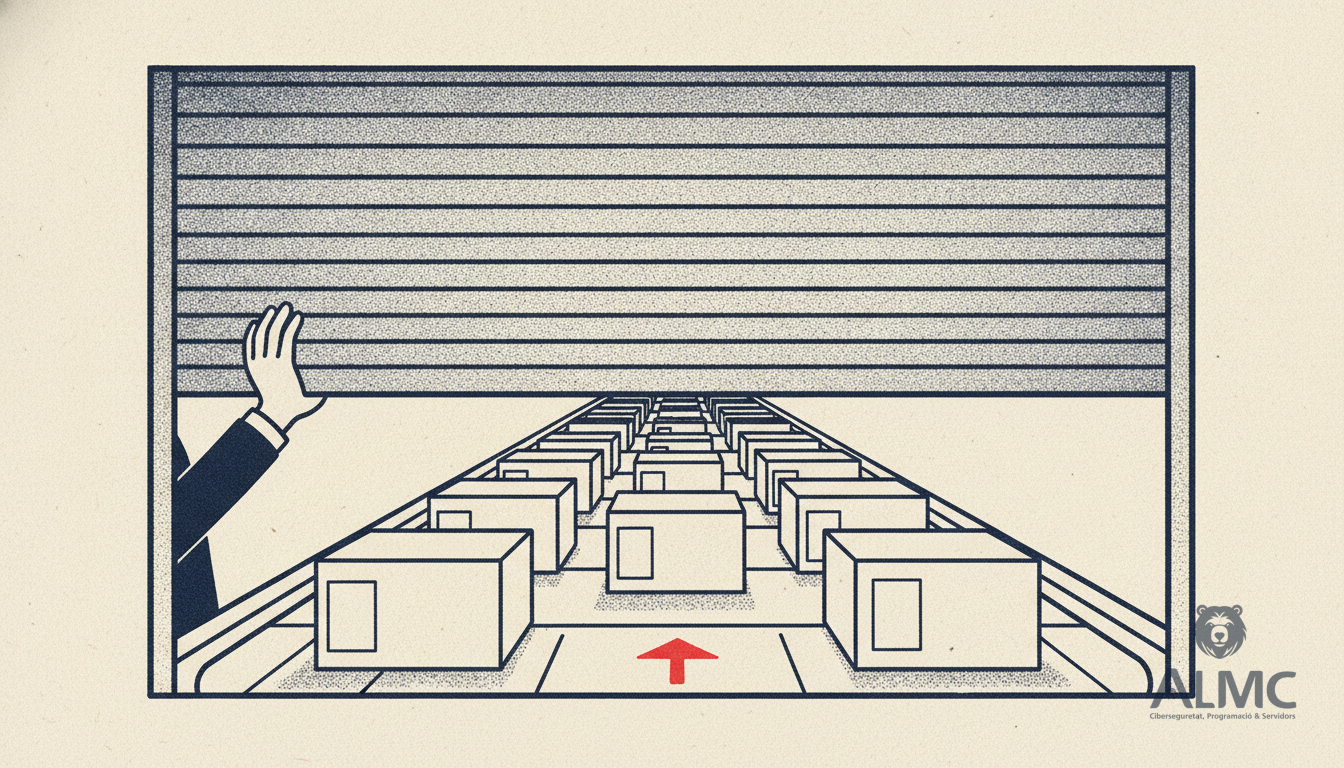
Below is the sequence we follow before opening a store to the public. It is deliberately ordered: each block depends on the previous one being solid.
Start with the order nobody wants to place
Before touching anything else, run a complete purchase with a real card. Not a sandbox, not a test gateway. A live transaction, from product search to payment confirmation. This single exercise exposes problems that no staging environment will ever show you: a card issued abroad being rejected, VAT calculated incorrectly when two different rates appear in the same basket, or a confirmation email landing in the spam folder.
Then complete the loop. Request the withdrawal, follow the return instructions and confirm the refund arrives. Under Spanish consumer law, online buyers have a 14-day right of withdrawal, and this is the part of the process that generates the most complaints precisely because almost nobody rehearses it. Finally, force a failure on purpose: a declined card, an abandoned basket halfway through. The store should respond with clear messages, never a blank screen.
Budget two or three days for this alone. It is the highest-return time you will spend all launch.
Payments, shipping and the cost of surprise
Activate every payment method you intend to offer and test each one individually. In Spain that usually means cards, Bizum and possibly PayPal or a buy-now-pay-later option. Then check that shipping costs are visible before the final step. Unexpected charges at the last moment remain one of the leading causes of cart abandonment worldwide, and a crowded payment form is close behind.
- Remove every field that is not strictly necessary. You do not need a customer's profession or how they found you.
- Offer guest checkout. Forcing account creation before payment pushes buyers away; if you want the email, ask for it after the purchase.
- Keep the number of steps between decision and payment as low as possible.
Mobile first, because that is where your customers are
Most browsing and a large share of abandoned baskets happen on a phone. Test the entire purchase on a real mid-range device using mobile data, not the browser simulator and not your office fibre connection. Then measure speed on product and category pages, not just the homepage. Those are the pages that receive commercial traffic and where Core Web Vitals scores actually matter.
This is where professional web development earns its keep. A store built on WordPress with a properly configured hosting stack, caching, image optimisation and a clean theme will load quickly and stay stable under traffic. A store assembled from plugins without performance work will not, and no marketing budget compensates for a checkout that takes ten seconds to respond.
Legal, GDPR and the paperwork nobody enjoys
In Spain, an online store needs legal notices, terms and conditions, a privacy policy and a cookie policy that genuinely reflects what you track. If you sell to consumers, the withdrawal form must be available. Under the GDPR, consent for analytics and marketing cookies must be prior, informed and revocable, and you need a record of it.
Check that invoices are generated correctly and, if you operate business-to-business, that your invoicing setup is compatible with Spain's electronic invoicing obligations. Getting this right before launch is far cheaper than retrofitting it after a complaint.
Measurement from day one
Connect analytics and Search Console before the first visitor arrives. The opening weeks produce the most valuable behavioural data you will ever get: where people hesitate, which products they view, where they leave. If tracking is not in place, that data is lost permanently and cannot be recovered later.
Set up goal tracking for completed purchases, add-to-cart events and checkout drop-off. Review it weekly during the first month, then adjust copy, images and pricing accordingly.
The first week is still part of the launch
Monitor orders manually for the first few days. Confirm that emails arrive, that stock levels update, and that no payment sits unconfirmed. Treat the first week as an extension of testing, with real customers as your testers. Once the process runs cleanly without intervention, the store is genuinely open.
Related
- Professional Web Design for Businesses: Complete 2026 Guide
- Google AI Overviews in 2026: 5 Key Takeaways for Your Business
- Digitalisation Grants in Extremadura 2026: Up to €20,000 for SMEs
- Apps móviles
Put these ideas into practice
Talk to ALMC about a solution for your business. Explore your options or contact our team.