
Blog
Proximity Marketing in 2026: What Actually Works for Shops
Why the old beacon pitch no longer holds upEvery so often a retailer or a brand comes to us with the same idea: "We want to put beacons in the shop an...
Why the old beacon pitch no longer holds up
Every so often a retailer or a brand comes to us with the same idea: "We want to put beacons in the shop and push offers to the phones of everyone walking past." It is a pitch that was popularised years ago and still resurfaces in a lot of articles. In practice, it stopped being viable some time ago. Since 2018, a Bluetooth beacon cannot send a notification to a phone that does not already have the brand's app installed, with Bluetooth switched on and location permissions granted. Android closed its system that surfaced beacon alerts without an app, largely because of spam and low engagement, and on iPhone the restriction has always applied. Wi-Fi tracking is not a shortcut either: modern iOS and Android devices rotate private MAC addresses precisely to prevent passive identification.
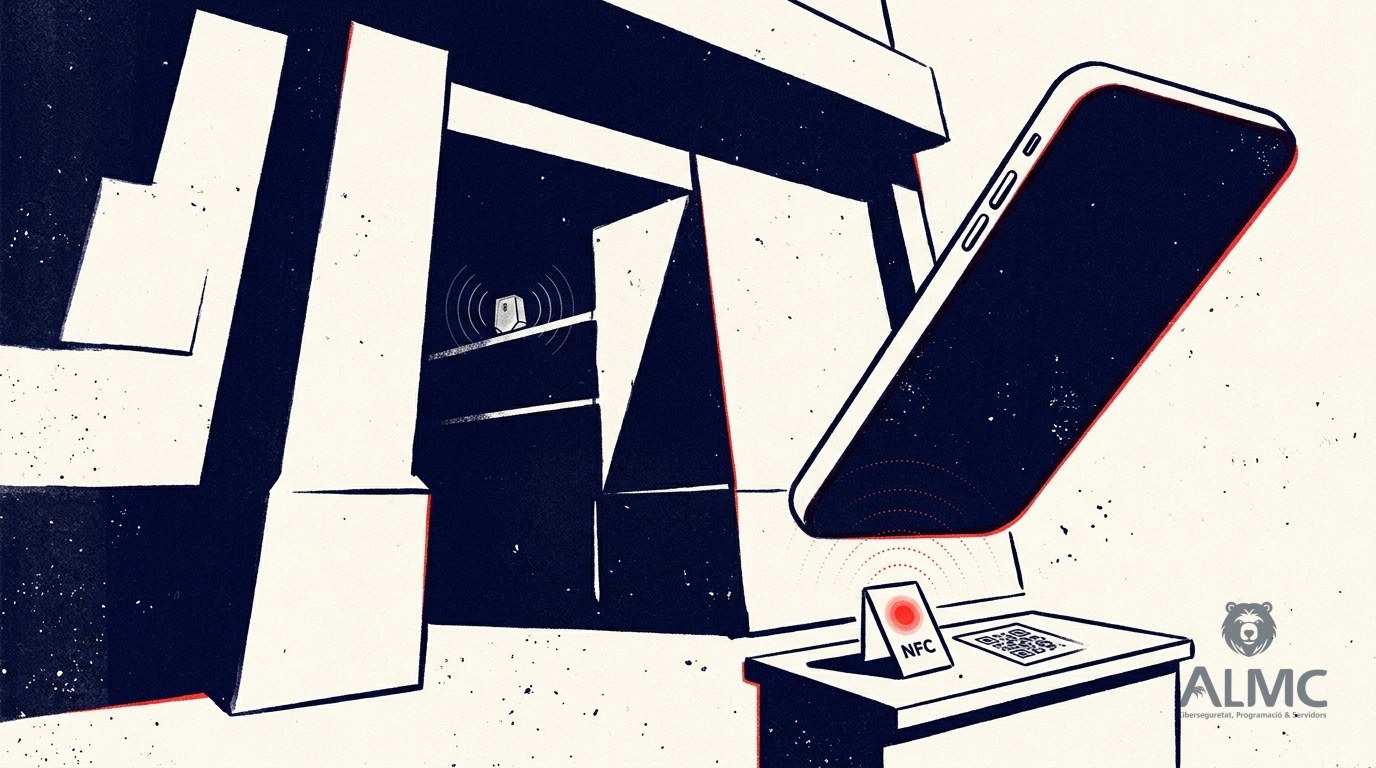
In other words, for a shop with no app, or with an app that few customers actually use, a beacon is effectively invisible. That does not make proximity marketing useless. It means the tools that genuinely work in 2026 are different, and choosing the right one is mostly a question of budget and of what you want the customer to do.
What proximity marketing really means
Proximity marketing, sometimes called hyperlocal marketing, is any action that connects a customer with a brand based on where they physically are: inside the shop, in front of a specific product, or at an event. Its value lies in timing. Receiving a discount at home is not the same as seeing it while standing in front of the product with the purchase decision about to be made. That is why it appeals to retail, hospitality, shopping centres and event organisers across Catalonia and the rest of Spain.
The important question is how that connection is triggered. And that is where almost everything has changed.
The options, compared honestly
- QR codes. The customer scans with the phone camera. No app, no hardware beyond printing. Ideal for offers, coupons, product information and signing up to a loyalty programme.
- NFC tags. The customer holds the phone a few centimetres away. No app needed to open a web page; more advanced functions may require one. Low-cost labels or cards work well on display stands, at events, for payments or access control.
- Beacons (Bluetooth LE). The app detects the beacon from several metres away. Always requires an installed app, plus battery-powered hardware, installation and maintenance. Only makes sense for brands with a genuinely active user base and a need for indoor positioning.
- Wi-Fi with a captive portal. The customer connects and registers. No app, but you need network infrastructure and portal software. Useful for consented data capture and follow-up communications.
- Wallet passes. The customer saves a card or coupon to Apple Wallet or Google Wallet. No app required. Good for loyalty cards and coupons, though the system cannot guarantee a prompt near the shop.
Start with what costs least to test
NFC and QR share one decisive advantage: the customer chooses to interact. They tap or scan because it interests them, which removes the spam and privacy problems at the root and requires no installation. With NFC, holding the phone near a tag can open a web page, save a coupon or identify the user. We have applied it to very different scenarios: integrating payments with point-of-sale terminals, capturing leads and managing access at events, configuring electronic equipment and running marketing actions. QR codes are even simpler and cheaper to deploy, which makes them the natural first step for most businesses.
The lesson is straightforward: validate the idea with the simplest possible tool before committing a budget. What usually weighs most in a proximity project is not the hardware but the development behind it, so proving demand early saves money later.
When a custom app is the right investment
Beacons, indoor positioning and personalised notifications only deliver when there is a solid app behind them. That is the point at which a generic solution stops being enough and a tailored build starts to pay off. A custom mobile app for iOS and Android brings your business into your customers' pockets: loyalty, order history, exclusive offers, push notifications and, if you need it, proximity features tied to physical locations. At ALMC.es we cover the whole journey, from the initial idea and UX design through development to publication on the App Store and Google Play, always with GDPR compliance built in from day one.
For startups and established companies alike, the sensible sequence is usually the same: test the concept with QR or NFC, measure how many customers actually redeem the offer, and only then invest in an app that unlocks the more advanced proximity features. Technology should answer a real business need, not the other way round.
Related
- 10 Mobile App Ideas to Transform Your Business in 2025
- The Mobile App Boom: Why Your Business Needs a Custom App in 2025
- Monetising Mobile Apps: Key Business Models for 2025
- Chatbot IA
Put these ideas into practice
Talk to ALMC about a solution for your business. Explore your options or contact our team.