
Blog
Custom Mobile Apps: From Idea to App Store
Why a custom app is not the same as renting softwareWhen an SME in Lleida, Barcelona or Girona asks us about building an app, the first questions are...
Why a custom app is not the same as renting software
When an SME in Lleida, Barcelona or Girona asks us about building an app, the first questions are almost always the same: how much will it cost, how long will it take and where do we start? The honest answer is that all three depend on one thing: the problem you want to solve and how the project is organised. Custom mobile app development means designing and programming an application around a specific company's workflows, users and existing systems, rather than reshaping the company to fit an off-the-shelf product.
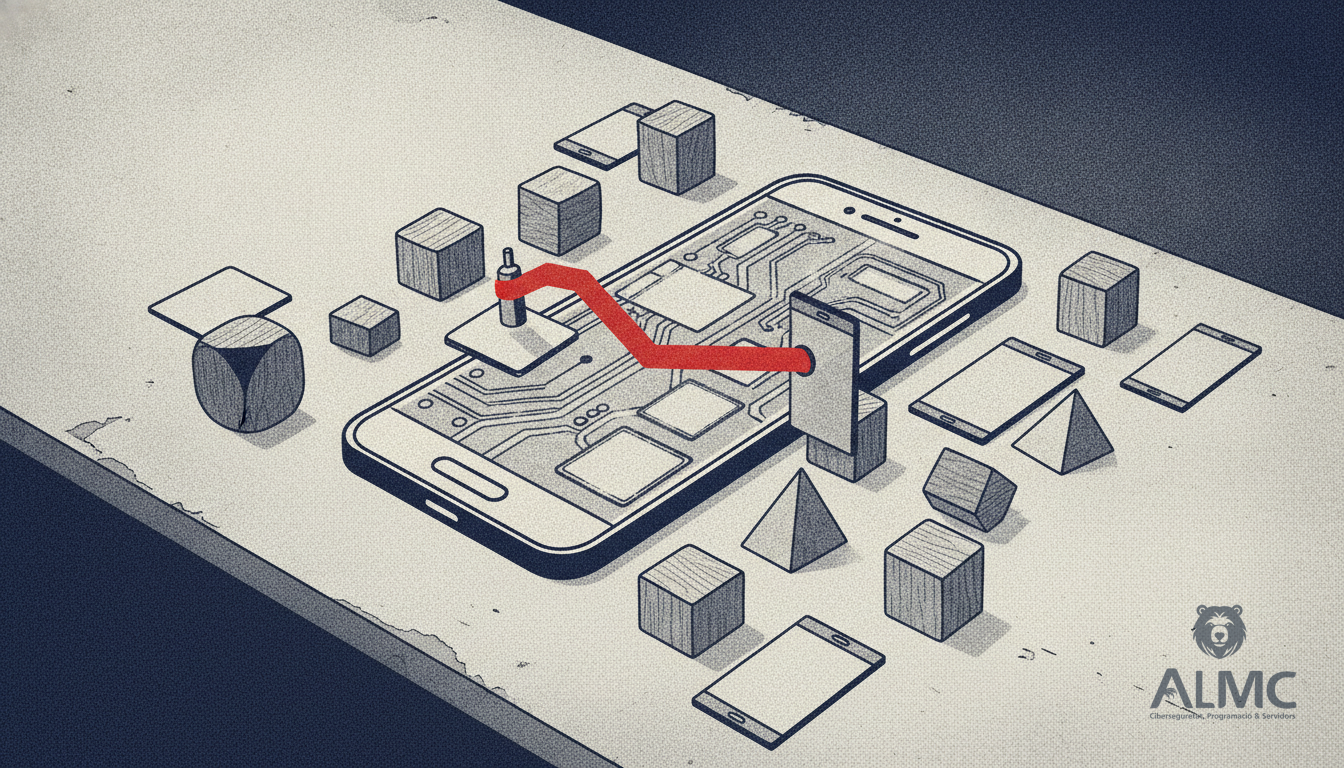
Both approaches are legitimate. A subscription SaaS tool is often the sensible first step for a small business with standard needs. A custom app pays off when no standard product covers your process properly, when you need deep integration with your ERP, CRM, field devices or IoT hardware, or when the app itself is part of your competitive edge. It also becomes a real asset if you plan to franchise or eventually sell the business.
The six phases of a well-planned project
A serious app development project moves through six stages. Skipping any of them is the most common way to turn a good idea into an expensive lesson.
- Analysis. Understand the process, the users, the edge cases and the systems the app must talk to. Bring the person who knows the process and the person who performs it daily, plus your real forms and spreadsheets. This phase produces a scope document and, with it, a fixed price.
- Design and prototype. Screens and navigation are designed and turned into a clickable prototype so your team can validate the experience before a single line of code is written.
- Iterative development. The app and its admin panel are built in short cycles. You test each delivery on your own phones and give feedback.
- Testing. Real devices, real conditions and real users. Choose the colleagues who will try it in their actual daily work.
- Launch. Publish on the App Store and Google Play, or distribute internally, and train your users. Make sure developer accounts and legal texts are in your name.
- Maintenance and evolution. Updates, fixes and improvements driven by usage data and business priorities.
How long does it take, and what does it cost?
A tightly scoped app can be ready in two or three months. A realistic first version usually lands between four and six months, and highly complex projects are better split into successive releases. Starting with a minimum viable product (MVP) containing only the essentials reduces the initial investment and lets you improve with real data instead of assumptions.
On budget, be wary of quotes given without an analysis phase: pricing an app without a scope document is like pricing a house without plans. Expect a one-off build cost plus an annual maintenance fee, and confirm before signing that the code, the store accounts and the documentation will belong to you.
What we see go wrong most often
- Starting with screens instead of the problem, which leads to beautiful apps nobody uses.
- Leaving integrations with the ERP or CRM until the end, when they are the hardest part.
- Ignoring GDPR from day one: data protection must be designed in, not bolted on, especially when handling customer or employee data in Spain.
- Forgetting maintenance, so the app stops working after the first major iOS or Android update.
- Not defining who owns the developer accounts, which can block future releases.
Where ALMC fits in
At ALMC.es we build custom applications for iOS and Android that put your business in your customers' pockets, from the first idea through to publication in the stores. We work with companies and startups across Catalonia, combining mobile development with the integration, automation and security work that makes an app genuinely useful in day-to-day operations. If you are weighing up a standard tool against a tailored build, the right starting point is a conversation about your process, not a price list.
Related
- 10 Mobile App Ideas to Transform Your Business in 2025
- The Mobile App Boom: Why Your Business Needs a Custom App in 2025
- Monetising Mobile Apps: Key Business Models for 2025
- Chatbot IA
Put these ideas into practice
Talk to ALMC about a solution for your business. Explore your options or contact our team.