
Blog
Custom Mobile Apps for Restaurants: When They Actually Pay Off
Start with the problem, not the appWhen a bar owner in Lleida or a restaurant group in Barcelona starts thinking about a mobile app, the temptation is...
Start with the problem, not the app
When a bar owner in Lleida or a restaurant group in Barcelona starts thinking about a mobile app, the temptation is to jump straight to comparing features. The better question comes first: what do you actually want to change? Shorter queues at the bar, fewer mistakes in the kitchen, takeaway orders that don't depend on a third-party platform, or regulars who come back more often. The answer to that question decides whether you need a custom app at all.
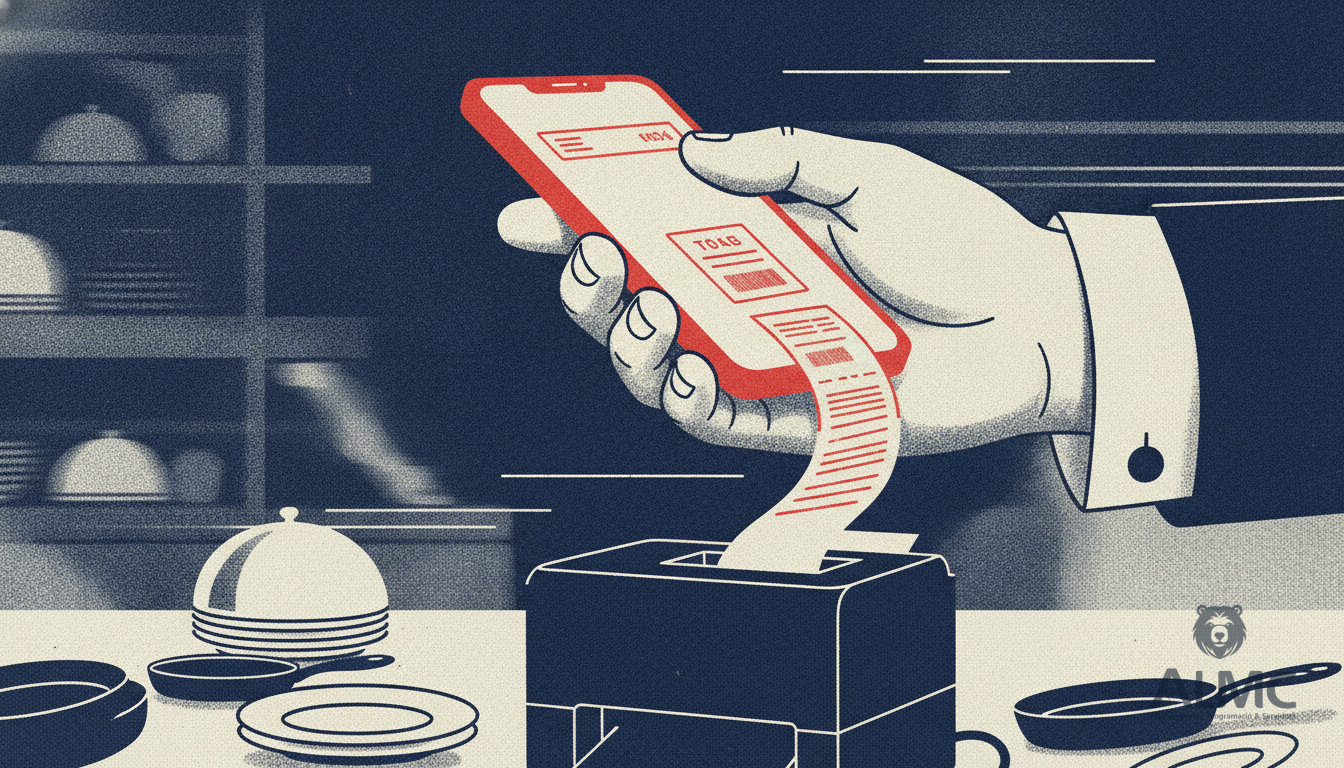
For most independent restaurants and bars, existing restaurant software already does the job: a point-of-sale system with table-side ordering, a QR menu, and a booking tool. Building your own application on top of that is usually paying twice for the same thing. A bespoke app makes sense in specific situations, and we'll look at those below.
The five jobs a restaurant app can do
Under the single label of "restaurant app" there are very different tools. It helps to separate them by who uses them and what they solve:
- Point of sale and order-taking: waiters send orders from a tablet or phone to the kitchen and bar, take payment and close the till. Used by floor staff, kitchen and managers.
- Digital menu and table ordering: customers scan a QR code to see the menu and, if you want, order and pay from their own phone.
- Reservations: managing tables, shifts, reminders and no-shows.
- Takeaway and delivery: receiving orders directly, without routing every one through a delivery marketplace.
- Loyalty and communication: points, promotions and direct contact with repeat customers.
On top of these sit internal tools such as kitchen display screens, stock control, staff rotas and multi-site management. The first three are well covered by off-the-shelf products. The last two are where a custom build can genuinely differentiate a business.
Off-the-shelf software or a custom app?
The rule of thumb we apply across sectors holds here too: if a standard solution covers what you need, use it. Hospitality POS systems already include mobile order-taking, kitchen screens, QR menus and often table-side payment, for a monthly fee and no development cost. Commissioning a bespoke app for a single venue to replicate those functions is rarely justified.
These criteria help frame the decision:
- One venue, normal table and bar service: a hospitality POS with order-taking and a QR menu is enough.
- Customers should order and pay at the table: use the table-ordering module of your POS, or a provider that integrates with it.
- Low takeaway volume: delivery platforms or the web ordering module of your POS will do.
- A chain or franchise with several sites: a custom app connected to each venue's POS starts to make sense.
- High delivery or pickup volume: an own-brand channel protects your margin and your customer relationship.
- A recognisable brand with very loyal customers: a proprietary ordering and loyalty app can pay for itself.
- You supply hundreds of hospitality businesses: a custom app for your clients can become part of your product.
When a custom app is worth building
A bespoke app earns its cost when it becomes part of the business rather than an add-on. The clearest cases are chains and franchises, where customers should be able to order at any site, menus and prices are managed centrally and loyalty works across the whole network. The technical challenge is real: each venue may run a different POS, and the app has to talk to all of them.
The second case is delivery and pickup at volume. Marketplaces bring visibility and riders, but they charge a commission per order that eats into margin and keep ownership of the customer relationship. An own channel lets you keep both, provided you can attract and retain the customers yourself. The third case is a brand with a genuinely recurrent clientele, where a loyalty app turns frequency into data you can act on.
Integration decides whether the app works
Before any design work begins, confirm that your POS can be integrated. This single point determines whether the app survives daily service or becomes a parallel system that staff quietly abandon. Ask about documented APIs, webhooks for order status, and how menu and price changes propagate. If the POS is closed, the app's value drops sharply.
For companies serving hospitality businesses, the same logic applies in reverse: your app is only as good as the integrations it offers to your clients' systems.
Compliance you cannot skip
Any customer-facing app in Spain has to meet a set of obligations from day one:
- GDPR and data protection: lawful basis for processing, clear privacy information and proper consent for marketing communications.
- Payments: delegate card handling to a certified payment gateway rather than storing card data yourself.
- Allergens: customers must be able to consult allergen information before ordering.
- Invoicing: receipts and invoices must be issued with software adapted to Verifactu or TicketBAI, depending on the region.
How we approach a mobile app project
At ALMC.es we build custom mobile apps for iOS and Android, from the first idea through to publication in the app stores. For hospitality clients in Catalonia and across Spain, the work starts with the decision above: mapping what you want to change, checking what your current systems already do, and only then designing the app. Where a standard tool covers a function, we say so. Where a custom build protects your margin, your data or your brand, we scope it properly, integrate it with your POS and take it live.
If you are weighing up whether your business needs its own app, a short conversation about your volumes, your customers and your current systems will usually settle it.
Related
- 10 Mobile App Ideas to Transform Your Business in 2025
- The Mobile App Boom: Why Your Business Needs a Custom App in 2025
- Monetising Mobile Apps: Key Business Models for 2025
- Chatbot IA
Put these ideas into practice
Talk to ALMC about a solution for your business. Explore your options or contact our team.