
Blog
Mobile Apps and IoT: Connecting Your Business Equipment
Why the app, not the sensor, decides whether IoT worksWhen a company in Lleida or Barcelona asks us about the Internet of Things, the conversation rar...
Why the app, not the sensor, decides whether IoT works
When a company in Lleida or Barcelona asks us about the Internet of Things, the conversation rarely starts with the term itself. It starts with a machine on the shop floor, an electricity meter in a warehouse or a lock on a delivery door: equipment that today is configured with a laptop and a cable, or whose readings nobody checks because extracting them is simply too much effort. That is the real starting point of any IoT project, and it is also where most of them succeed or fail.
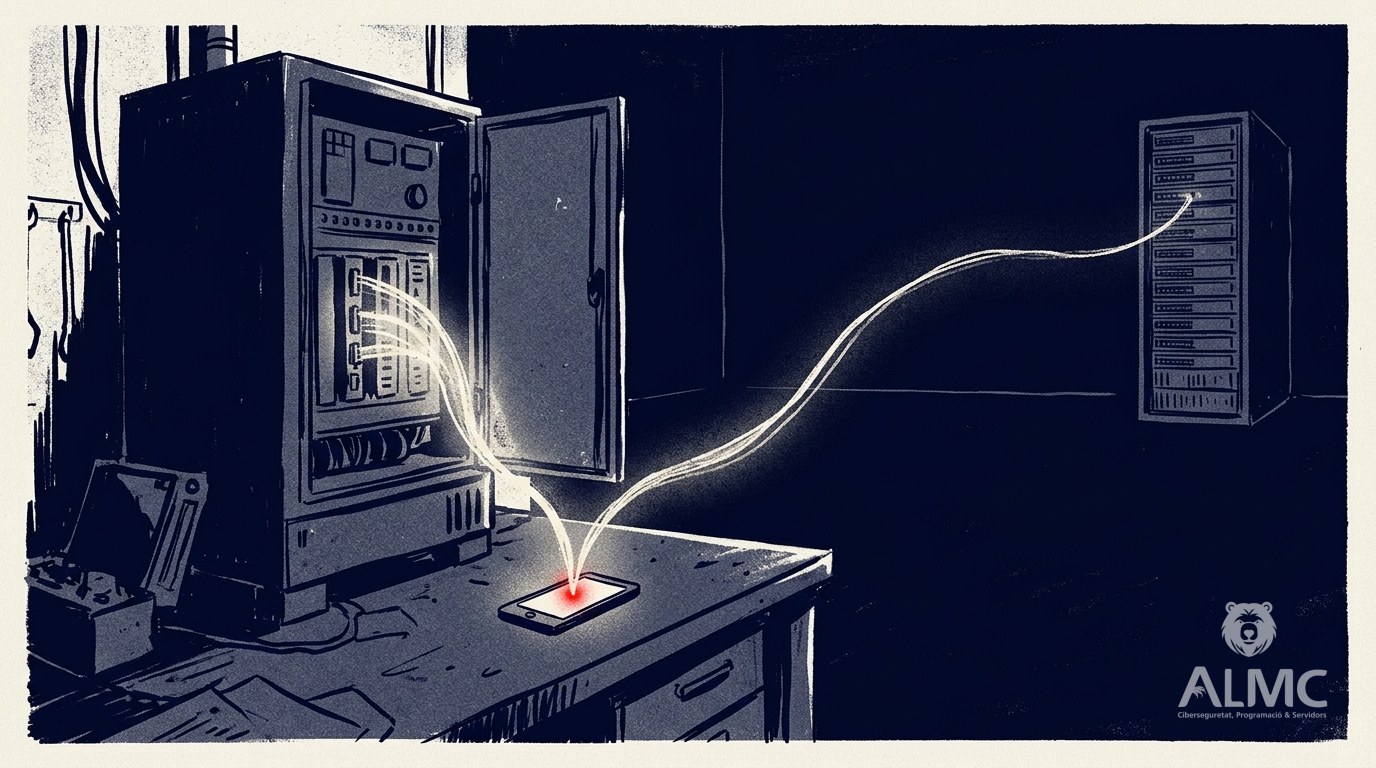
The Internet of Things means connecting physical equipment so that it can be configured, controlled or read remotely, and then using that information to make better decisions. It is not about filling a building with connected gadgets. It is about making sure the data reaches the person who needs it, at the moment they need it, in a form they can actually act on.
The four building blocks of any connected system
Every IoT deployment, from a single sensor in a cold room to a fleet of meters spread across Catalonia, rests on four pieces:
- The device. The physical equipment with its sensors or actuators: a power analyser, a robot arm, a smart lock, a consumption meter.
- The connectivity. How data travels in and out: Bluetooth Low Energy, wifi, NFC, mobile networks or low-power wide-area networks for distant sensors.
- The platform. Where data is stored and processed: in the cloud, on a company server or, increasingly, close to the equipment itself through edge computing.
- The application. What the person actually sees and uses: a mobile app, a web dashboard or an integration with the company ERP or CRM.
The first three determine whether the system works. The fourth determines whether anyone uses it. We have seen highly capable equipment sitting idle simply because checking its data was awkward. That is why, at ALMC.es, we approach IoT projects from the application side: we build the custom iOS and Android apps that talk to the equipment and make it genuinely useful.
Choosing the right connectivity
The choice depends on distance, data volume and whether the device runs on batteries. Bluetooth Low Energy is ideal for configuring equipment from a technician's phone or reading nearby sensors. Wifi suits powered devices inside a building that send data frequently. NFC allows a phone to identify or configure a device at close range, even when the tag has no battery. Mobile IoT networks such as NB-IoT and LTE-M cover meters and assets distributed across a territory, while LoRaWAN reaches battery-powered sensors kilometres away, useful in agriculture, municipal services and isolated installations. In industrial settings, protocols such as MQTT and OPC UA let equipment from different manufacturers share data reliably.
What companies actually gain
The value is not in connecting equipment but in what stops being done by hand:
- Simpler installation and setup. A machine that once required a laptop, a cable and a specialist technician can be commissioned from a mobile app.
- Fewer site visits. When equipment status is visible remotely, technicians only travel when necessary, and they arrive knowing what they will find.
- Data-driven maintenance. Replacing calendar-based servicing with servicing based on real readings reduces downtime and unnecessary part replacements.
- Better customer experience. For startups and product companies, an app that pairs with the hardware is often the difference between a product that feels finished and one that does not.
The risks worth planning for
Security is the first concern. Every connected device is a potential entry point, and under GDPR any personal data flowing through the system must be handled lawfully, with clear retention rules and access controls. The second risk is the lack of standards between manufacturers, which can make integration harder than expected. The third is connecting equipment without a clear idea of what will be done with the data. Our advice is consistent: start with a small pilot, and before writing a single line of code, confirm that the equipment can actually communicate with the outside world.
How to get started without overcommitting
Begin with one process, one type of equipment and one clear question you want answered, such as how much energy a line consumes or when a machine is likely to need servicing. Validate the data flow end to end, then build the app around the decisions that data enables. A custom mobile application developed from the idea through to publication on the App Store and Google Play keeps the scope controlled and gives your team something tangible to test early.
From our base in Lleida we work with companies and startups across Barcelona, Tarragona, Girona and the rest of Catalonia on exactly this kind of project: mobile apps that connect to equipment, present data clearly and fit the way your team already works. If you have equipment that deserves a better interface than a laptop and a cable, that is usually the right place to start.
Related
- 10 Mobile App Ideas to Transform Your Business in 2025
- The Mobile App Boom: Why Your Business Needs a Custom App in 2025
- Monetising Mobile Apps: Key Business Models for 2025
- Chatbot IA
Put these ideas into practice
Talk to ALMC about a solution for your business. Explore your options or contact our team.