
Blog
Native app or PWA? Choosing the right mobile app for your business
The question every organiser asks us firstFor years, ALMC built mobile apps for conferences, trade fairs and congresses across Catalonia. The features...
The question every organiser asks us first
For years, ALMC built mobile apps for conferences, trade fairs and congresses across Catalonia. The features that organisers valued most were never the flashy ones. What mattered was simpler: attendees could carry the programme in their pocket, always up to date, and still read it when the venue's Wi-Fi collapsed under the weight of a few thousand people. That lesson has shaped how we now advise companies and startups in Barcelona, Lleida, Tarragona and Girona when they ask us to build an app.
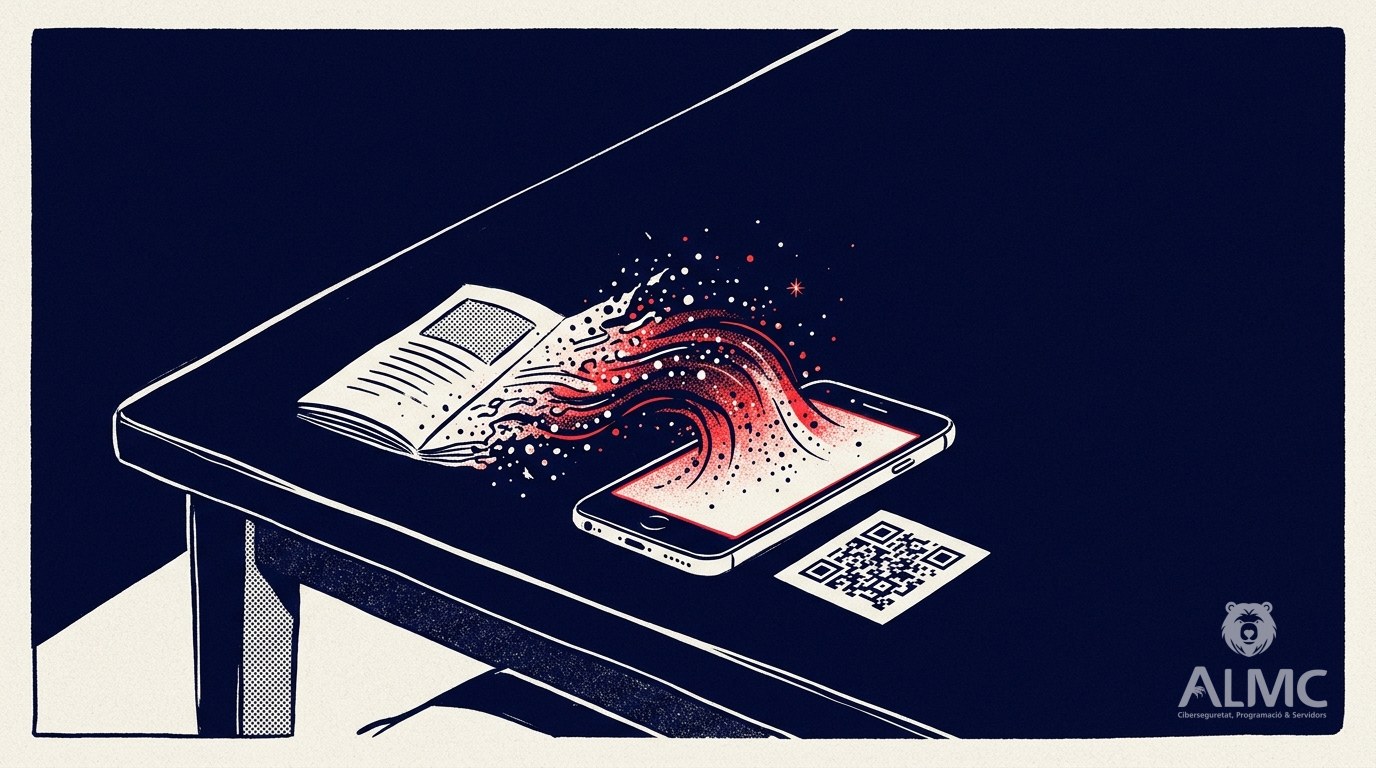
The honest answer today is that not every project needs a native download from the App Store or Google Play. A well-built progressive web app (PWA) often reaches more people at a lower cost. A native app earns its place when the experience goes well beyond reading information. Choosing between the two is the first real decision in any mobile development project, and getting it wrong is expensive.
What a mobile app actually has to deliver
Strip away the marketing and an event or business app does three things: it tells people what is happening now and where, it warns them when something changes, and it lets them take part without friction. Attendees expect to find the current session in seconds, to hear about a room change immediately, and never to waste time installing or registering before they can see anything useful.
Anything that adds steps works against adoption. That principle applies far beyond conferences. A retail app, a booking app or a customer portal lives or dies by the same rule: the first thirty seconds decide whether it stays on the phone.
Lessons from the events we have built
Working on apps for medical congresses and professional conferences taught us a handful of things that still hold true for any custom application:
- Offline mode is the most valued feature. Venue connectivity is unreliable, and a programme that loads without a signal makes the difference between a useful tool and a dead icon.
- Last-minute changes are the norm. Organisers need to edit content live from a web panel, without waiting for a new version to be published and approved.
- Content belongs to the client. Programmes, speaker bios and abstracts change until the final day. If every edit depends on the supplier, the project stalls.
- A solid starting platform shortens delivery. Building on an existing base, an event app can be ready in a couple of weeks. What usually takes longest is not the technology but getting the content finalised.
One more observation is worth sharing, because it explains why we wrote this piece. For several years now, almost no organiser has asked us for a fully bespoke native app for a one-off congress. What they still request every season are the interactive pieces that get audiences participating, such as live polls and questions to speakers, and those run perfectly well in a mobile browser.
Native app versus progressive web app
A PWA is a website that behaves like an app. It opens from a link or a QR code, can be added to the home screen, caches content for offline reading and, on Android, can send push notifications. A native app is downloaded from the stores, uses the device hardware more deeply and offers a richer experience, but it demands an installation step.
That step is a real barrier. Industry surveys consistently show that a large share of smartphone users only install an app when they genuinely need it, and many will abandon the download if a browser alternative exists. For a two-day event, convincing someone to install software is an uphill struggle. For a service a customer uses every week, the calculation changes completely.
- Choose a PWA when reach matters more than depth: one-off events, information portals, catalogues, booking flows and anything where a QR code should be enough to get started.
- Choose a native app when the product is used regularly, needs the camera, Bluetooth, geolocation or background sync, or when push notifications and a smooth, app-like feel are central to retention.
- Consider a hybrid approach when you want a native shell for the stores plus shared code that keeps costs down across iOS and Android.
What drives adoption more than features
Our experience is blunt on this point: whether people use the app depends far more on how you present it than on how many functions it has. A QR code on the badge, a short link in the confirmation email, a mention from the stage and a clear reason to open it will do more than a long feature list nobody discovers. The same applies to a business app: onboarding, a first-run experience that delivers value immediately and a reason to return are what keep it installed.
How we approach custom mobile development
At ALMC we build custom mobile apps for iOS and Android, from the first idea through to publication in the stores. We start by asking what the app must do in its first minute of use, then decide the technical route: native, PWA or a hybrid. Everything we deliver is designed with GDPR in mind, hosted on infrastructure we control and documented so your team can manage content without depending on us for every change.
If you are planning an app for your company or startup, the most useful conversation is the one that happens before any code is written. Tell us who will use it, how often and what they need to do in the first thirty seconds, and we will tell you honestly whether you need a native app, a PWA or something simpler still.
Related
- 10 Mobile App Ideas to Transform Your Business in 2025
- The Mobile App Boom: Why Your Business Needs a Custom App in 2025
- Monetising Mobile Apps: Key Business Models for 2025
- Chatbot IA
Put these ideas into practice
Talk to ALMC about a solution for your business. Explore your options or contact our team.