
Online Payments After the Payment: Why Checkout Decides Your Store's Future
Online Payments After the Payment: Why Checkout Decides Your Store's Future
The payment is not the finish lineMost online stores treat the moment a payment is authorised as the end of the job. The order is confirmed, the stock...
The payment is not the finish line
Most online stores treat the moment a payment is authorised as the end of the job. The order is confirmed, the stock is reserved, the invoice is issued. But for the customer, that instant is actually the beginning of a relationship that will be tested over the following days and weeks. At a recent industry round table held in Madrid under the banner of the future of payments, specialists from travel, hospitality and consumer brands agreed on one thing: the checkout is a hinge. If it fails or feels clumsy, all the marketing spend that brought the visitor there evaporates. If it works, it opens the door to repeat business built on trust, communication and well-handled incidents.
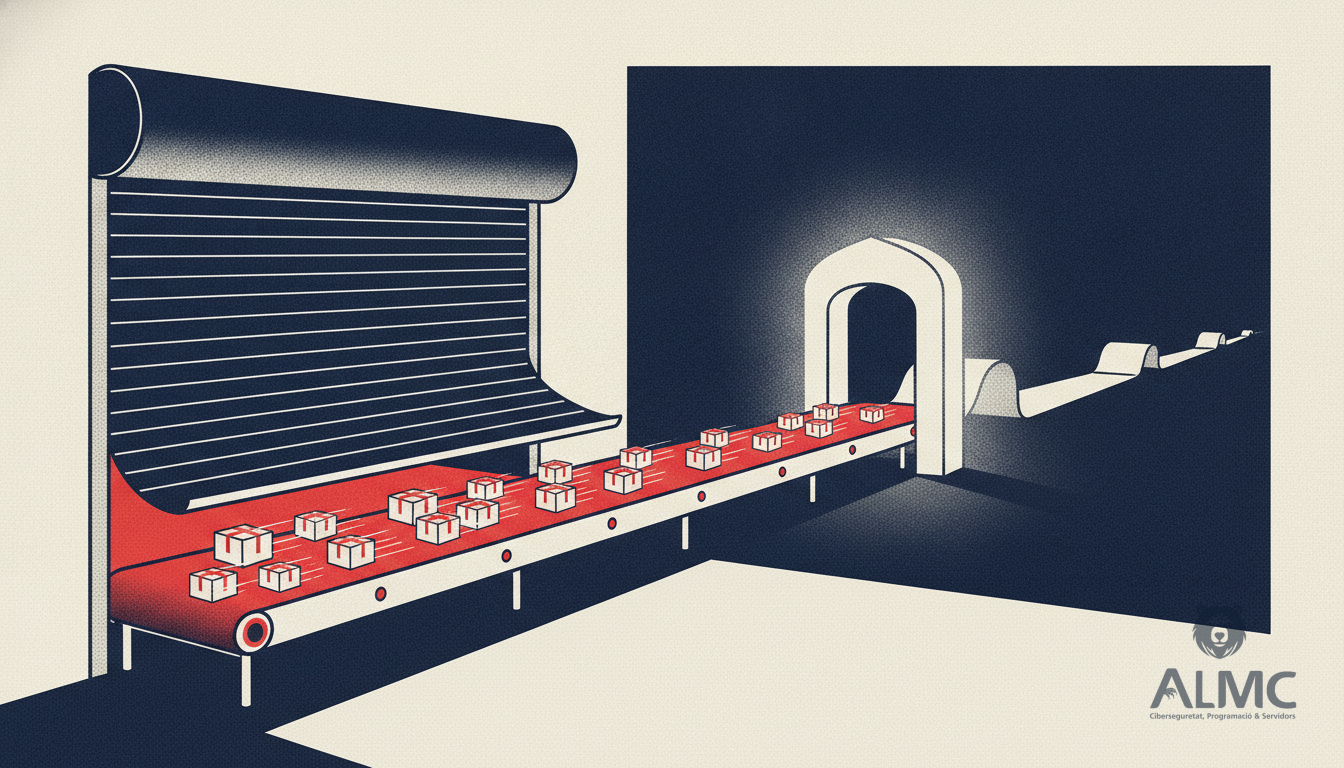
For shops and brands selling online in Catalonia and across Spain, that insight has a very practical translation: your ecommerce platform is not just a catalogue with a payment button. It is the machinery that decides whether a curious visitor becomes a loyal customer or a lost sale.
Friction is the silent killer of conversion
Brands invest heavily in being known, ranking well and generating desire to buy. Yet a surprising number of them still greet the buyer with unnecessary steps, forced account creation, confusing shipping options or payment methods that feel unfamiliar. The reference point many customers now carry in their heads is the one-click experience of the largest marketplaces, and anything slower feels like a penalty.
Reducing that friction is not about copying a giant. It is about removing everything that does not add value:
- Guest checkout as the default, with account creation offered afterwards.
- Local payment methods that Spanish and European buyers actually recognise and trust.
- Clear delivery times and costs shown before the final step, not after.
- Mobile-first forms, because a large share of traffic now arrives from a phone.
- Visible security signals and GDPR-compliant consent, which reassure rather than obstruct.
A well-built PrestaShop or WooCommerce store can be tuned for exactly this. The platform matters less than the configuration: templates, modules, checkout flow and the way payment providers are integrated.
Data is only valuable if you can act on it
One of the most striking points raised in the discussion was the gap between manufacturers and the end customer. A producer may reach most points of sale in a region, yet still not know who actually buys its products, how often, at what average value or alongside which other items. That information often sits with payment platforms and retailers, and many companies are, in the words of one participant, desperate for data but unsure what to do with it.
For an online store, the advantage is that this data is within reach. Purchase frequency, basket value, product combinations, return rates and payment success rates are all measurable if the platform and analytics are set up properly. The goal is not to collect dashboards for their own sake, but to answer concrete questions: which payment method causes the most abandoned carts? Which customer segment returns most often? Where in the checkout do people drop off?
Incidents are a cost, but also an opportunity
When something goes wrong, the instinct is to treat the complaint as a pure expense. The round table suggested the opposite. A claim handled quickly and clearly can restore confidence and even strengthen the relationship. Two principles stood out: speed and clarity. If the mistake was yours, acknowledge it and refund promptly, avoiding the bitter impression that you collect fast and pay back slowly. If expectations were not met, explain exactly what is being compensated and why, so that goodwill is not abused.
In sectors with long delivery or service windows, this matters even more. A customer who waits weeks between purchase and delivery needs confirmation, reminders and an accessible point of contact. Automation and AI can handle simple queries, but when a real problem appears, most people still want a human being on the other side.
Fraud, chargebacks and the balance you have to strike
Accepting more payment attempts increases sales, but also exposure to fraud. In low-margin businesses, a single fraudulent transaction can wipe out the profit of several legitimate ones. The sensible approach is not to choose between openness and security, but to lean on the acquirer and on fraud-prevention tools that analyse device and behavioural signals. Post-transaction monitoring and clear chargeback policies complete the picture, especially when dispute windows can stretch over many months.
For a Spanish online store, this translates into practical decisions: which provider fits your risk profile, how refunds are processed, how VAT and electronic invoicing are handled, and how customer data is stored in line with GDPR. These are not glamorous topics, but they are the difference between a store that scales and one that leaks money quietly.
Building a store that sells after the sale
An online shop that genuinely sells is one designed around the whole journey, not just the checkout page. That means a platform such as PrestaShop or WooCommerce tailored to your catalogue and your customers, conversion optimisation based on real behaviour, reliable hosting, and integrations that connect payments, stock, invoicing and support. It also means accepting that the work continues after the order confirmation: follow-up emails, clear return policies, fast responses and a checkout that respects the buyer's time.
In a market as competitive as Catalonia and the rest of Spain, where buyers in Barcelona, Lleida, Tarragona and Girona can compare three alternatives in a minute, the stores that win are rarely the ones with the biggest budget. They are the ones that remove friction, use their data wisely and treat every incident as a chance to prove they deserve the next purchase.
Related
- WooCommerce vs PrestaShop: Which Ecommerce Platform Wins in 2025?
- CRO for Ecommerce: Turning WooCommerce and PrestaShop Templates into Sales Engines
- Agentic Commerce: How AI Agents Are Rewriting the Rules of Online Shopping
- Desarrollo web
Put these ideas into practice
Talk to ALMC about a solution for your business. Explore your options or contact our team.