
Live sport streaming and your online shop: lessons from Netflix
Live sport streaming and your online shop: lessons from Netflix
Why a football rights deal matters to an online shopNetflix has secured the exclusive audiovisual rights to the 2030 men's World Cup for Spain and And...
Why a football rights deal matters to an online shop
Netflix has secured the exclusive audiovisual rights to the 2030 men's World Cup for Spain and Andorra. The platform will show all 104 matches live, and it has also committed to sub-licensing a package to a national free-to-air broadcaster that will include every Spain match, both semi-finals and the final. One match per round will also be available free to view. The financial terms have not been disclosed, and the free-to-air partner has not yet been named.
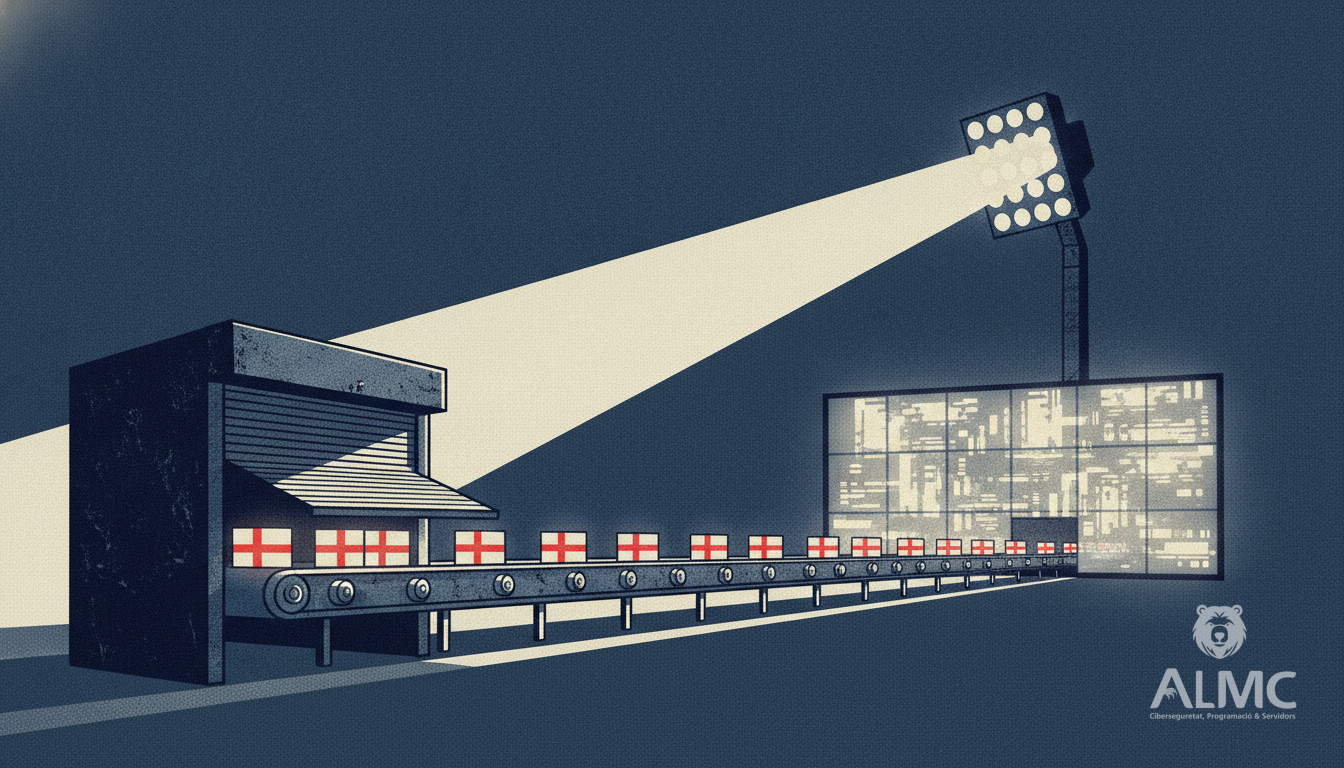
At first glance this looks like a story about television. For anyone running an online shop in Catalonia, it is really a story about demand: a single event that concentrates millions of viewers into a handful of evenings, and the operational pressure that follows. When audiences gather around a live moment, they also shop around it. Shirts, flags, snacks, screens, garden furniture, party supplies and last-minute gifts all move in bursts that are hard to predict and harder to absorb.
The pattern is already familiar in Spain
The 2026 tournament combined free-to-air coverage with a paid operator showing every match, and the 2030 arrangement follows a similar logic: full coverage behind a subscription, with a guaranteed open window for the biggest fixtures. For ecommerce teams, the practical consequence is the same either way. Traffic does not arrive evenly. It spikes before kick-off, collapses during play and surges again at half-time and full-time.
That rhythm has a direct effect on conversion. A shop that loads slowly at 20:55 on a match night loses the sale to whichever competitor answers first. A checkout that fails at half-time is not a minor incident; it is the whole evening's revenue. Planning for peak demand is therefore less about marketing and more about engineering.
What to prepare before the calendar fills up
The good news is that these peaks are known in advance. A major tournament gives months of warning, which is more than most retailers get. Use that time deliberately:
- Load-test the real paths. Not just the home page, but category listings, search, product pages and checkout, with realistic basket sizes and payment steps included.
- Cache what can be cached. Catalogue pages, images and menus should be served from cache so that the database is free to handle carts and orders.
- Separate the critical from the decorative. Reviews, recommendation widgets and third-party tracking scripts can be deferred or disabled under load without harming the purchase.
- Prepare stock and messaging. Clear delivery cut-off dates, honest stock indicators and a visible answer to "will it arrive in time?" reduce support tickets and abandoned baskets.
- Check the legal side. Promotions, countdown timers and urgency messages must comply with Spanish consumer rules and GDPR; consent for tracking has to hold up when traffic triples.
PrestaShop, WooCommerce and the difference between a shop and a shop that sells
Most ecommerce problems at peak are not caused by the platform but by how it was built. A standard installation with a heavy theme, dozens of plugins and no caching layer will struggle regardless of the software underneath. A tailored build behaves differently: the catalogue is structured for fast filtering, the checkout is shortened to the essentials, images are served in modern formats, and the server is sized for the traffic you actually expect rather than the traffic you had last month.
This is where a custom PrestaShop or WooCommerce implementation earns its keep. Both are mature, well supported and widely used across Catalonia, and both can be tuned for conversion: faster product pages, clearer calls to action, fewer steps to pay, and analytics that show where baskets are lost. The platform choice matters less than the discipline applied to it.
A local angle: Barcelona, Lleida, Tarragona, Girona
Retailers across Catalonia increasingly sell to customers who expect next-day delivery and a returns process that does not require a phone call. Events such as a World Cup accelerate that expectation. Shops that can scale smoothly during a spike, and stay calm afterwards, build trust that outlasts the tournament.
It also pays to think beyond the spike. Live sport brings new visitors who may never have bought from you before. A well-built shop captures that first purchase and turns it into a second one through email consent, a loyalty programme or a simple follow-up. The event is the opportunity; the retention is the business.
The takeaway
Netflix's move into full World Cup coverage confirms that live, shared moments are becoming central to how audiences are reached. For ecommerce, the lesson is straightforward: demand will arrive in concentrated bursts, and the shops that convert it will be the ones that prepared their infrastructure, their checkout and their customer communication long before the first whistle. Whether you run on PrestaShop or WooCommerce, the work is the same: build for the peak, measure the funnel and keep the experience fast when it matters most.
Related
- WooCommerce vs PrestaShop: Which Ecommerce Platform Wins in 2025?
- CRO for Ecommerce: Turning WooCommerce and PrestaShop Templates into Sales Engines
- Agentic Commerce: How AI Agents Are Rewriting the Rules of Online Shopping
- Desarrollo web
Put these ideas into practice
Talk to ALMC about a solution for your business. Explore your options or contact our team.