
Ecommerce in Spain: winning the click in the age of AI
Ecommerce in Spain: winning the click in the age of AI
The click is still a human decisionEvery few months the ecommerce sector announces that machines are about to take over the buying journey. Assistants...
The click is still a human decision
Every few months the ecommerce sector announces that machines are about to take over the buying journey. Assistants that compare products, assemble baskets and even complete checkout are moving from demo to reality, and the big platforms are already building storefronts designed to be read by software as well as by people. Yet the evidence from Spanish shoppers points in a more nuanced direction: they are happy to let automation help, but they want to keep their finger on the button.
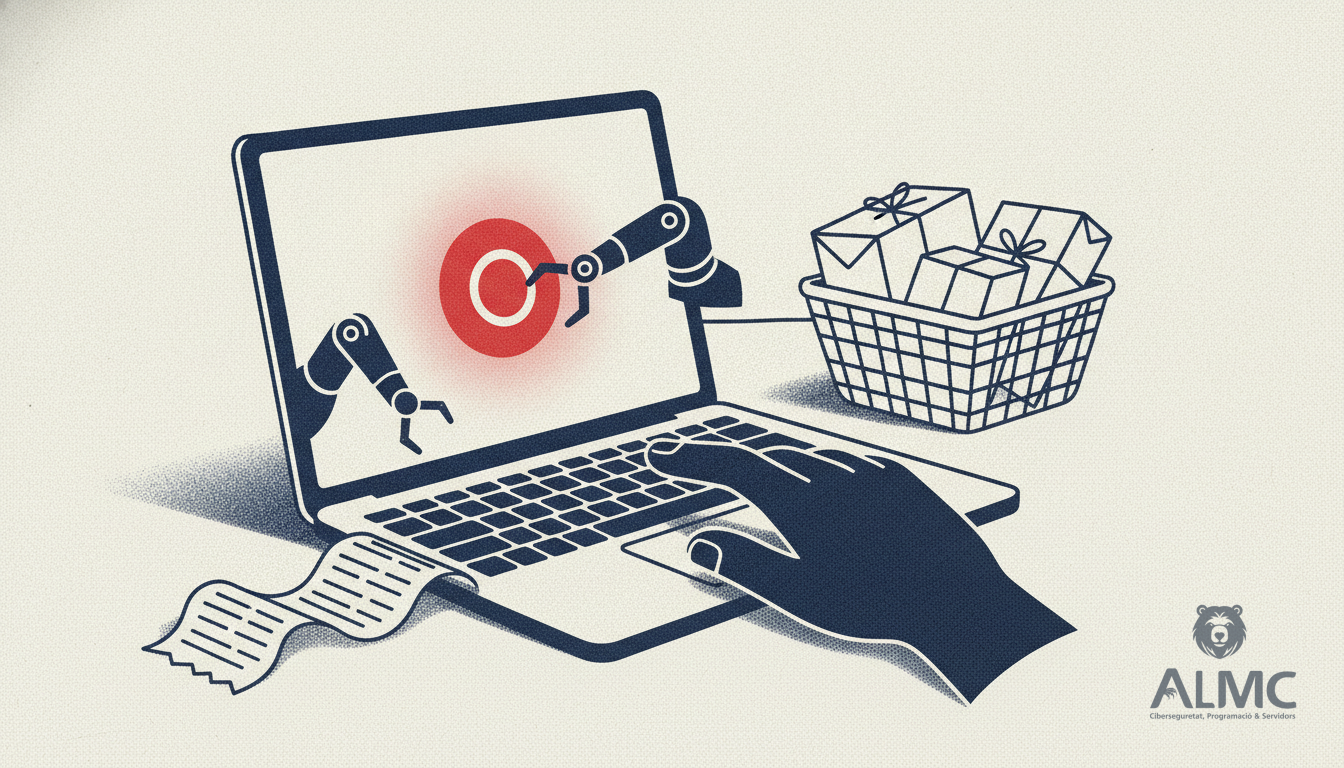
Surveys of Spanish consumers consistently show that most people are unwilling to hand over a purchase entirely to an AI agent without confirming each step. Only a small minority would delegate completely, while a large middle group accepts automation under clear conditions. The barriers are familiar ones: fear of fraud, loss of control and the simple wish to know what is being charged to their card. For any brand selling online in Catalonia, that is not a threat. It is a design brief.
Comparison is now the default
The same research landscape shows that price comparison has become second nature. The overwhelming majority of shoppers check alternatives before buying, and most say they pay closer attention to price than they did a year ago. In a market where Barcelona, Lleida, Tarragona and Girona all compete for the same online basket, being findable, legible and trustworthy at the comparison stage matters more than ever.
This is where the quality of the underlying store decides the outcome. A catalogue that is slow to load, inconsistent in its product data or awkward on mobile loses the shopper before the comparison even begins. A store built with care does the opposite: it presents clear prices, transparent delivery costs in euros and stock information that a customer — or an assistant acting for them — can rely on.
What a store that actually sells looks like
At ALMC.es we build online stores on PrestaShop and WooCommerce, tailored to the way each business actually operates. That means starting from the commercial reality of the shop, not from a template. A few principles guide the work:
- Speed and stability first. Fast pages, clean code and hosting sized for real traffic peaks, including the busy seasonal campaigns that define retail in Spain.
- Conversion optimisation as an ongoing habit. Checkout flows, product pages, search and filters are tested and refined continuously, not set once and forgotten.
- Data that machines can read. Structured product information, consistent attributes and clean feeds so that search engines and AI assistants can surface your catalogue accurately.
- Trust built into the interface. Clear return policies, visible contact options and a checkout that explains every step, which directly addresses the control concerns Spanish shoppers express.
- GDPR compliance by design. Consent management, data minimisation and secure payment handling are part of the build, not an afterthought.
The full stack behind the storefront
An ecommerce business is more than a front end. It needs reliable servers, monitoring, backups and integrations with invoicing, logistics and customer communication. Because we also work across systems administration, cybersecurity and process automation, we can deliver the whole stack around the store: from the infrastructure that keeps it online to the electronic invoicing that keeps the accounts in order. That coherence reduces friction, and friction is where sales are lost.
Preparing for agentic commerce without losing the human
The rise of AI-driven shopping does not make the storefront obsolete; it raises the bar. If an assistant is going to query your catalogue, compare your prices and prepare a basket, your product data has to be impeccable and your policies unambiguous. If a human is going to confirm the final click — and most will — the experience at that moment has to feel safe, quick and transparent.
For shops and brands across Catalonia, the practical conclusion is straightforward. Invest in a store that is fast, well structured and honest about price and delivery. Make comparison easy, because your customers will compare anyway. And keep the human in control at checkout, because that is exactly what they are asking for. A well-built online store does all three, and turns a cautious market into a loyal one.
Related
- WooCommerce vs PrestaShop: Which Ecommerce Platform Wins in 2025?
- CRO for Ecommerce: Turning WooCommerce and PrestaShop Templates into Sales Engines
- Agentic Commerce: How AI Agents Are Rewriting the Rules of Online Shopping
- Desarrollo web
Put these ideas into practice
Talk to ALMC about a solution for your business. Explore your options or contact our team.