
Ad formats under scrutiny: what brands selling online should learn
Ad formats under scrutiny: what brands selling online should learn
Why a social network's taste policy matters to online shopsWord has come from X that paid creatives on the platform may soon be judged on presentation...
Why a social network's taste policy matters to online shops
Word has come from X that paid creatives on the platform may soon be judged on presentation as much as on content: ads described as ugly, shouty or exaggerated could be rejected, and repeat offenders risk losing access to advertising. The detail is still thin — no published definition of what counts as unacceptable, no clear sanctions procedure — but the signal is unmistakable. Platforms are moving from policing claims alone to policing how a brand looks while it makes them.
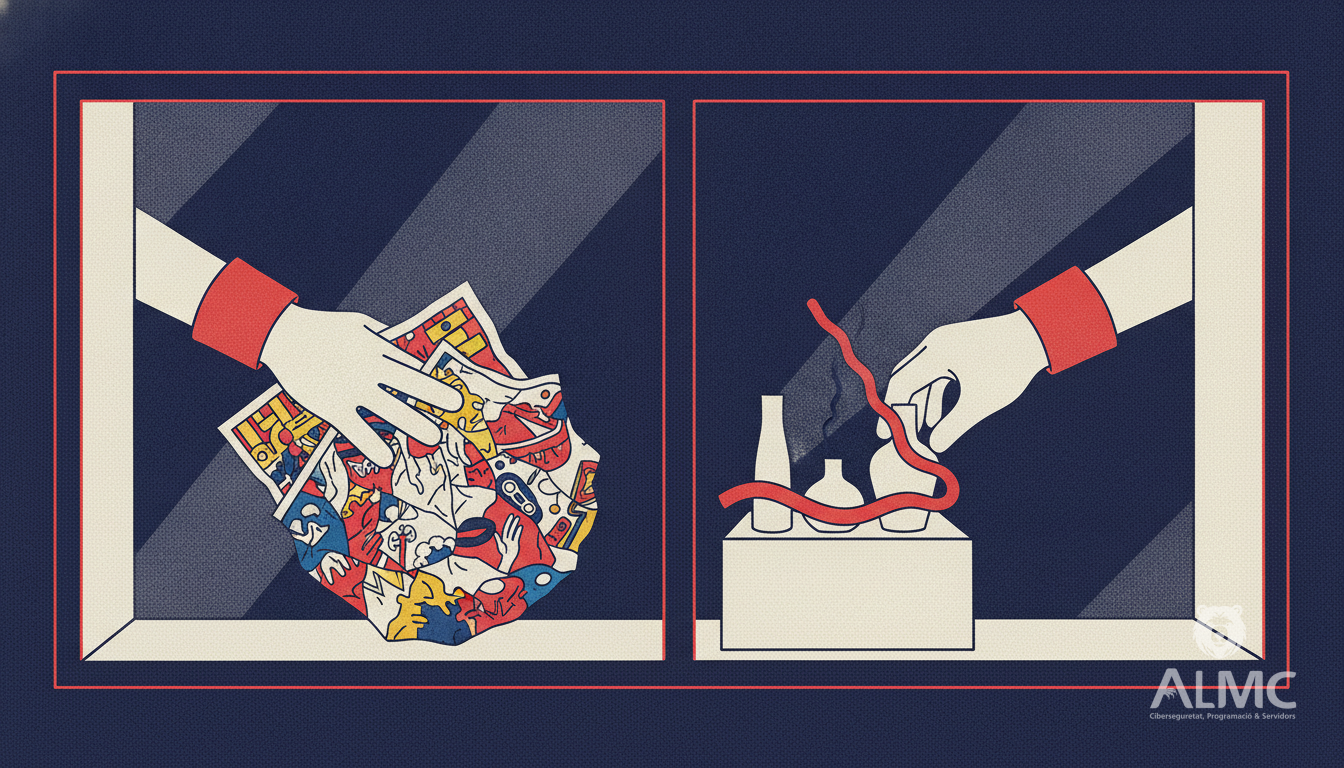
For anyone running an ecommerce operation in Catalonia or across Spain, this is not just a social media story. It is a reminder that the quality of your creative and the quality of your shop are now judged by the same audience, often within seconds of each other. A flashy ad that oversells can bring traffic; a well-built tienda online is what turns that traffic into revenue.
What the platform is actually asking for
Alongside the announcement, the company's business account shared creative guidance for advertisers: keep copy short, avoid cramming calls to action into the image itself, and use carousel formats for multi-image campaigns. None of this is revolutionary. It does, however, point to a coherent direction of travel.
- Clarity over clutter. Short text and a single message beat dense, busy compositions.
- Honesty over hype. Exaggerated product claims are explicitly in the firing line.
- Consistency over novelty. Formats that present products cleanly tend to survive policy changes better than gimmicks.
The open question is subjectivity. "Ugly" and "shouty" mean different things in fashion, industrial supplies or food retail. Until verifiable criteria exist, the prudent approach is to assume that clean, legible, truthful creative is the safest bet — and to build campaigns that do not depend on shock value.
The lesson: your shop is part of the creative
Here is where digital marketing and ecommerce converge. An ad is a promise; the landing experience is the delivery. If a campaign promises a seamless purchase and the visitor lands on a slow, confusing store, the mismatch damages trust far more than any aesthetic rule ever could. Paid media amplifies whatever your shop already is — good or bad.
This is why we approach ecommerce projects at ALMC.es as a single system rather than a set of pages. A store built on PrestaShop or WooCommerce, tailored to the catalogue and the buying habits of the target customer, gives marketing teams a stable foundation: fast product pages, coherent branding, transparent pricing in euros, and checkout flows that respect Spanish consumer expectations.
A checklist before you scale your ad spend
Before pushing more budget into social campaigns, it is worth auditing the destination. In our experience with retailers in Lleida, Barcelona, Tarragona and Girona, a handful of fixes usually delivers more return than a bigger media budget:
- Message match. Does the landing page repeat the promise of the ad, in the same tone and with the same product?
- Mobile first, genuinely. Most paid social traffic arrives on a phone; test the full purchase path on a mid-range device, not a desktop.
- Speed and stability. Hosting, caching and image weight matter more than most design tweaks.
- Clear pricing and delivery. Shipping costs and return conditions visible early, in euros, without surprises at checkout.
- GDPR-compliant tracking. Consent management that still gives you usable measurement, without dark patterns.
Conversion optimisation is the real safety net
No one can fully predict how a platform will interpret "attractive" next year. What you can control is how efficiently your store converts the visitors it receives. Systematic conversion optimisation — testing product page layouts, simplifying forms, improving search and filtering, reducing friction in checkout — compounds over time and insulates you from shifts in ad policy.
It also changes the economics of stricter rules. If a campaign is rejected or restricted, a store with strong organic conversion and a healthy returning-customer base absorbs the blow. A store that depends entirely on one channel and one creative style does not.
Practical conclusions for Spanish retailers
The announcement from X may or may not become a rigorous enforcement regime. Either way, the underlying trend is clear: platforms want advertising that respects the user's feed, and users reward brands that keep their promises. For a comercio electrónico project, that means investing in the parts you own — your domain, your catalogue, your checkout, your data — rather than renting attention you cannot control.
At ALMC.es we build and maintain online stores that are designed to sell: tailored PrestaShop and WooCommerce development, performance and security work, and continuous optimisation of the conversion path. If your ad creative is about to get more scrutiny, make sure the shop behind it is ready for the traffic.
Related
- WooCommerce vs PrestaShop: Which Ecommerce Platform Wins in 2025?
- CRO for Ecommerce: Turning WooCommerce and PrestaShop Templates into Sales Engines
- Agentic Commerce: How AI Agents Are Rewriting the Rules of Online Shopping
- Desarrollo web
Put these ideas into practice
Talk to ALMC about a solution for your business. Explore your options or contact our team.