
Blog
Your online shop is live, but is it ready for the peak?
A live website is not the same as a shop that sellsEvery November, thousands of Spanish online shops push their infrastructure to the limit. Traffic s...
A live website is not the same as a shop that sells
Every November, thousands of Spanish online shops push their infrastructure to the limit. Traffic spikes, payment gateways get hammered and courier networks buckle. Yet the most common failure is not a crashed server: it is a shop that looks perfectly healthy while quietly losing orders at the checkout. A live website only proves that a web server is answering requests. It says nothing about whether a customer can actually pay, receive a confirmation email and get a parcel on time.
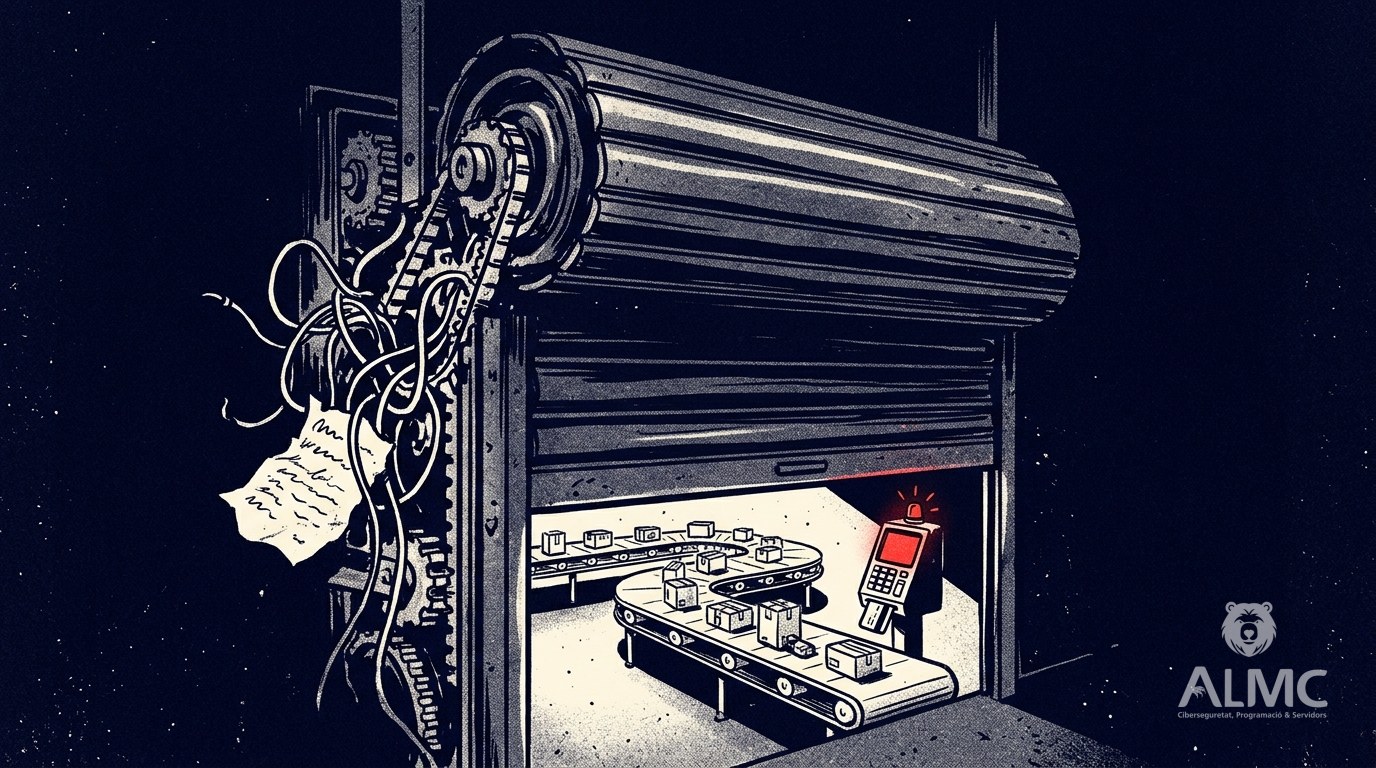
In Catalonia, where ecommerce is concentrated around Barcelona but increasingly spread across Lleida, Tarragona and Girona, many merchants run PrestaShop or WooCommerce stores built years ago and extended module by module. Each addition works in isolation. The risk appears when they all have to work together under pressure.
Where online shops really break during peak season
The checkout is a chain, not a single step. A typical order touches the storefront, the payment service provider, the bank authorisation layer, the stock system, the invoicing tool and the courier's API. A problem at any link can stop the sale even when your own hosting is performing well.
- Payment gateways: Spanish merchants rely heavily on shared processors such as Redsys and Bizum. When those external services wobble, every connected shop suffers at once, regardless of how well its own platform is maintained.
- Third-party APIs: stock synchronisation, tax calculation, delivery estimates and loyalty modules all call external endpoints. An unmonitored API that starts timing out will slow the checkout without ever showing an error on your dashboard.
- Fulfilment and delivery: Spanish shoppers are unusually sensitive to delivery options. Research on ecommerce habits suggests that a large majority would abandon a basket if their preferred delivery method were unavailable, so a courier integration failure is a lost sale, not a minor inconvenience.
- Legacy scripts and undocumented integrations: the plugin nobody remembers installing, the cron job that stopped running, the module updated without testing. These accumulate into what we call a visibility debt.
The hidden cost of visibility debt
Visibility debt is the gap between the systems a business depends on and the systems it can actually observe. It builds silently: an integration added without documentation, an API without monitoring, a payment module patched during a quiet week and never tested again. During a normal Tuesday, none of this matters. During a peak campaign, it turns a five-minute incident into a two-hour outage.
When something breaks, teams often know that a transaction failed but not why. They jump between monitoring tools, hosting panels and payment dashboards, reconstructing the timeline from logs scattered across different environments. Every minute spent investigating is a minute of lost revenue and a frustrated customer who may not come back. Under the GDPR, order and payment data must also remain traceable and secure throughout, which makes undocumented data flows a compliance risk as well as an operational one.
What to check before the next campaign
Preparation is less about buying more server capacity and more about understanding how your shop behaves when one piece of the chain fails. A practical pre-peak review usually covers the following:
- Map every dependency: list each external service your checkout touches, from payment provider to courier, and confirm who owns it and how it is monitored.
- Test the full order journey: place real test orders with each payment method, including refunds and failed authorisations, and verify that confirmation emails and invoices arrive.
- Review the platform: audit PrestaShop or WooCommerce modules, remove abandoned plugins, update the core and check that custom code follows current PHP versions.
- Set up alerting: monitor response times and error rates for payments, stock and delivery APIs, not just server uptime.
- Plan for degradation: decide in advance what the shop does when a courier API is down, for example by offering an alternative delivery option rather than blocking the order.
Building a shop that holds up under pressure
At ALMC we build and maintain online shops that are designed to keep selling when part of the chain misbehaves. That means tailored PrestaShop and WooCommerce development, conversion optimisation based on real checkout data, and the full hosting, monitoring and backup stack behind it. If your next campaign matters, it is worth knowing exactly what happens when a payment provider slows down or a courier integration fails, before your customers find out for you.
Related
- WooCommerce vs PrestaShop: Which Ecommerce Platform Wins in 2025?
- CRO for Ecommerce: Turning WooCommerce and PrestaShop Templates into Sales Engines
- Agentic Commerce: How AI Agents Are Rewriting the Rules of Online Shopping
- Desarrollo web
Put these ideas into practice
Talk to ALMC about a solution for your business. Explore your options or contact our team.