
Blog
Online stores that actually sell: building beyond the launch
The launch is not the finish lineEvery week a new online store goes live in Catalonia. Some are built on PrestaShop, others on WooCommerce, and many l...
The launch is not the finish line
Every week a new online store goes live in Catalonia. Some are built on PrestaShop, others on WooCommerce, and many look perfectly fine on the day of launch. Six months later, a good number of them are still waiting for their first hundred orders. The problem is rarely the design. It is the assumption that an ecommerce project ends when the catalogue is uploaded and the payment gateway is connected.
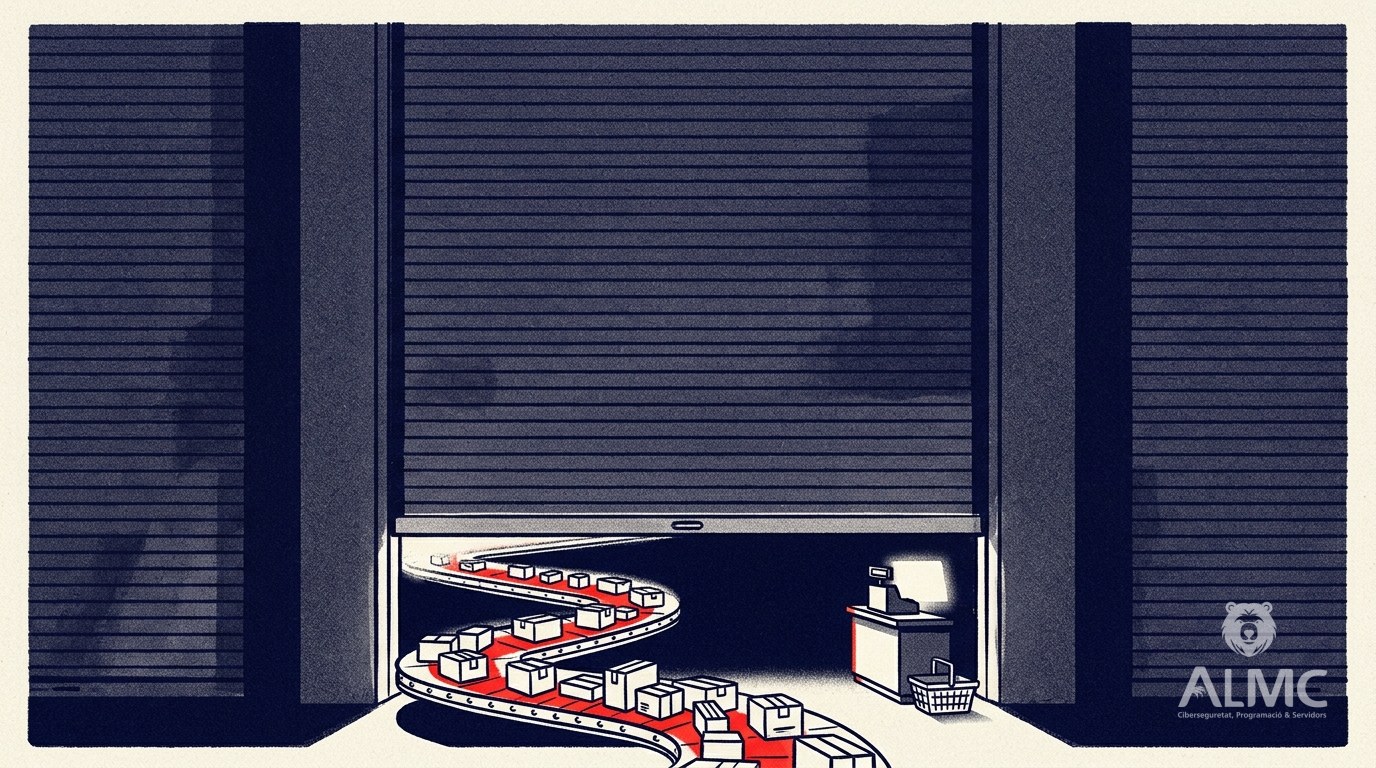
In our experience working with shops and brands across Lleida, Barcelona, Tarragona and Girona, the stores that sell are the ones treated as a living system: a platform chosen for the business rather than for the trend, a checkout that respects the buyer, and a technical stack that keeps up with traffic, stock and regulation. Everything else is decoration.
Choosing between PrestaShop and WooCommerce
This is usually the first decision, and it is often made for the wrong reasons. Both platforms are solid; the question is which one fits your catalogue, your team and your growth plans.
- PrestaShop tends to suit catalogues with many references, complex combinations, multiple carriers and B2B pricing rules. It is built for retail logic and holds up well when the product tree grows.
- WooCommerce works well when content and commerce live together: a brand that publishes, educates and sells from the same place, with a marketing team already comfortable in a familiar editorial environment.
- Custom development matters more than the base platform in both cases. A store with tailor-made modules, clean data structures and controlled dependencies ages far better than one assembled from dozens of overlapping plugins.
A common mistake is stacking plugins until the site becomes fragile. Each addition brings updates, conflicts and security surface. A lean, well-documented build with only the extensions you genuinely need is easier to maintain and cheaper to run over three years.
Conversion is a technical discipline, not a coat of paint
Conversion optimisation is often sold as a matter of colours and button sizes. In reality, most lost sales come from friction that has nothing to do with aesthetics. Slow product pages on mobile connections, unclear delivery costs appearing at the last step, a checkout that demands an account before allowing a purchase, or stock information that contradicts itself between the listing and the cart.
Working on conversion means measuring where people abandon and fixing the cause. That usually involves:
- Compressing images and caching properly so pages load quickly on mobile networks.
- Showing shipping costs and delivery windows early, in euros and without surprises.
- Offering guest checkout alongside account creation, not instead of it.
- Simplifying forms and reducing the number of steps between decision and payment.
- Reviewing the search and filter experience, especially in catalogues with hundreds of references.
None of this is glamorous, but it is where the revenue sits. A store that loads a second faster and explains its shipping clearly will usually outperform a prettier one that hides the small print.
The stack behind the shopfront
An online store is not just a website. It is a set of connected systems: hosting, database, backups, stock synchronisation with the ERP, invoicing, analytics and consent management. When these pieces are chosen carelessly, the shop works until the first busy season and then falls over.
For businesses in Spain, two practical points deserve attention from day one. The first is invoicing: electronic invoicing requirements and VAT handling need to be planned into the store, not bolted on afterwards. The second is data protection. Under GDPR, consent for analytics and marketing cookies must be genuine, recorded and revocable, and customer data must be handled with a clear legal basis. A store built without this in mind becomes an expensive problem to fix later.
Marketing and the store must speak the same language
Traffic without a coherent landing experience is wasted budget. Paid campaigns, organic search and social channels all need product pages that match the promise of the advert, structured data that search engines can read, and a measurement setup that attributes sales honestly. This is where many projects stall: the marketing team optimises campaigns while the store leaks conversions at checkout, and nobody owns the seam between the two.
Treating the online store as a product in continuous development, with a roadmap, regular technical reviews and a clear owner, is what separates shops that grow from shops that simply exist. Platforms also keep moving: social networks are tightening controls over what younger users see, recommendation systems change, and advertising formats evolve. A store built on a maintainable foundation can adapt to those shifts without a rebuild every two years.
A realistic starting point
If you are planning a store, or wondering why the one you have is not performing, start with an honest audit: platform fit, page speed, checkout friction, legal compliance and the state of your integrations. Fixing those foundations tends to produce better returns than another redesign. Selling online is a long game, and the stores that win are the ones built to keep improving after launch day.
Related
- WooCommerce vs PrestaShop: Which Ecommerce Platform Wins in 2025?
- CRO for Ecommerce: Turning WooCommerce and PrestaShop Templates into Sales Engines
- Agentic Commerce: How AI Agents Are Rewriting the Rules of Online Shopping
- Desarrollo web
Put these ideas into practice
Talk to ALMC about a solution for your business. Explore your options or contact our team.