
Online stores that actually sell: beyond the platform
Online stores that actually sell: beyond the platform
The store is no longer the shopfrontFor years the conversation about ecommerce in Spain revolved around one question: which platform do we choose? Pre...
The store is no longer the shopfront
For years the conversation about ecommerce in Spain revolved around one question: which platform do we choose? PrestaShop or WooCommerce, a marketplace or our own shop. That debate still matters, but it has stopped being the interesting one. The interesting question today is why so many online stores attract visitors and still fail to sell. A catalogue, a payment gateway and a nice theme are the starting point, not the finish line.
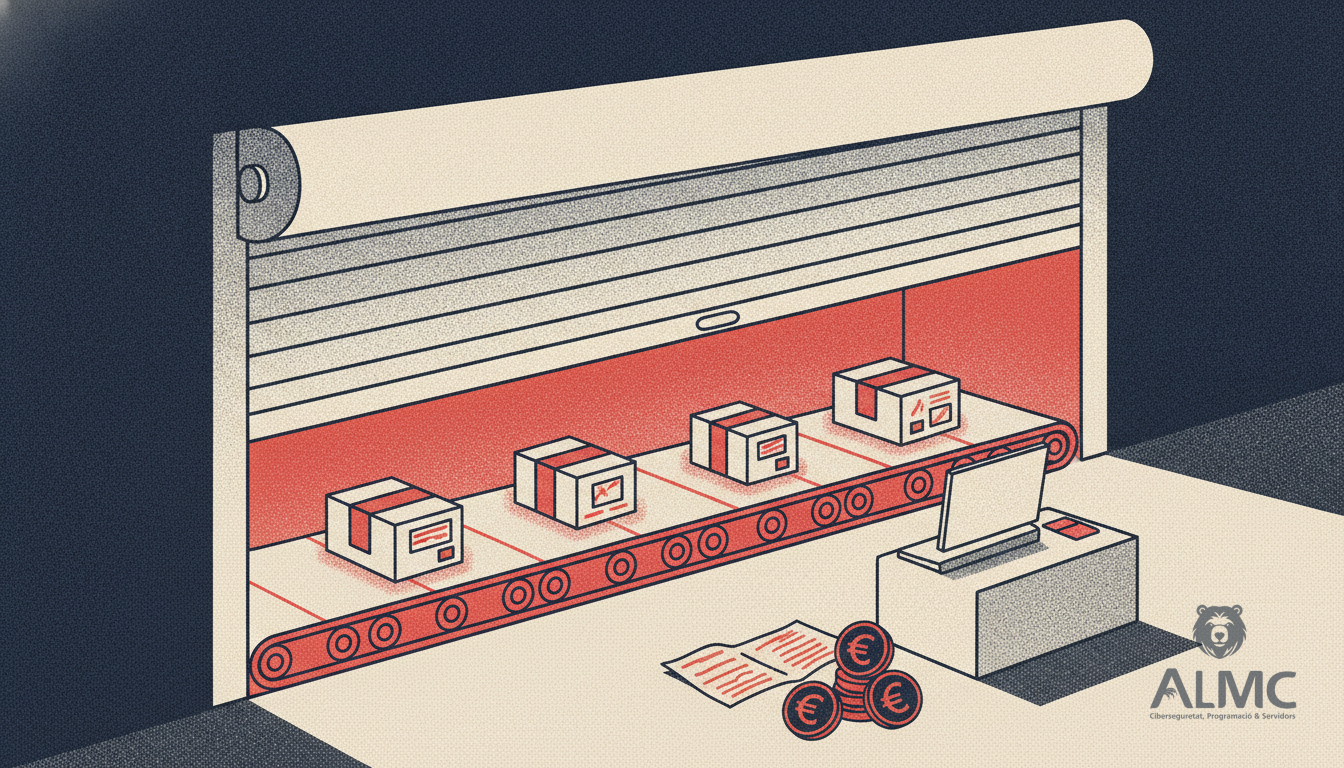
The recent consolidation moves in the grocery delivery market — large platforms buying logistics and retail technology to reach more shops and more customers — confirm the direction of travel. The winners are not the ones with the prettiest homepage. They are the ones that control the whole chain: catalogue, checkout, delivery, data and retention.
What separates a shop from a sales machine
A store that sells rests on four pillars that have to work together. If one of them fails, the others cannot compensate.
- Product and catalogue: clear descriptions, real photography, correct stock, sensible categories and a search that actually finds things. A confused catalogue is the most common reason for abandoned carts.
- Checkout: few steps, transparent shipping costs, local payment methods (cards, Bizum, bank transfer, PayPal) and a mobile experience that does not punish the buyer.
- Logistics and returns: realistic delivery times for Barcelona, Lleida, Tarragona or Girona, and a returns policy that is easy to understand. Uncertainty about delivery kills more sales than price.
- Measurement: knowing which channels bring buyers, which products convert and where users drop off. Without reliable data, every redesign is a guess.
PrestaShop or WooCommerce: choose by fit, not by fashion
Both platforms can carry a serious business, but they suit different situations. PrestaShop offers a structured back office, a mature ecosystem of modules and a strong presence among Spanish retailers, which makes it a solid choice for catalogues with many references, variants and combinations. WooCommerce, built on WordPress, shines when content and commerce need to live together: a brand that publishes guides, news or recipes and sells from the same environment.
The real difference is rarely the platform itself. It is how it is configured: page speed, database queries, caching, image weight, the quality of the modules or plugins installed, and the discipline of keeping everything updated. A poorly built PrestaShop store and a poorly built WooCommerce store fail in exactly the same way — slowly, and in front of the customer.
Conversion is a craft, not a plugin
Conversion rate optimisation has a bad reputation because it is often sold as a magic button. In practice it is a method: observe real behaviour, form a hypothesis, change one thing, measure, and keep what works. On a typical Spanish store, small decisions tend to move the needle more than big redesigns.
- Showing shipping cost and delivery date on the product page, before the cart.
- Reducing form fields to the strict minimum and letting the buyer continue as a guest.
- Making the return policy visible next to the buy button.
- Writing product pages that answer real questions instead of repeating the manufacturer's spec sheet.
- Testing the checkout on a mid-range Android phone over mobile data, not only on a desktop with fibre.
None of this is glamorous. All of it is measurable, and that is precisely the point.
Compliance and trust: the GDPR is part of the sales funnel
In the European market, trust is a commercial asset. A cookie banner that respects consent, a clear privacy policy, secure payments and transparent terms are not paperwork to be sorted out later; they are elements the buyer sees and judges. Since the GDPR came into force, sloppy data practices carry real risk, and customers increasingly notice the difference between a store that takes them seriously and one that does not.
The same applies to invoicing. If you sell to businesses in Spain, electronic invoicing and correct VAT handling need to be part of the design from the start, not bolted on after the first quarter.
Build for the next three years, not for launch day
A store is a living system. Products change, campaigns arrive, Black Friday stresses the servers, and a new payment method appears every couple of years. The sensible approach is to build on a clean, documented foundation — hosting sized for real traffic, backups that are actually tested, and a maintenance routine that does not depend on someone remembering to run it.
At ALMC.es we build online stores in Lleida and across Catalonia with that mindset: PrestaShop and WooCommerce tailored to each business, conversion optimisation grounded in data, and the full stack — hosting, security, maintenance and integrations — so that the shop can grow without being rebuilt every two years. Because an online store is not a project with a delivery date. It is a channel that has to keep selling, month after month.
Related
- WooCommerce vs PrestaShop: Which Ecommerce Platform Wins in 2025?
- CRO for Ecommerce: Turning WooCommerce and PrestaShop Templates into Sales Engines
- Agentic Commerce: How AI Agents Are Rewriting the Rules of Online Shopping
- Desarrollo web
Put these ideas into practice
Talk to ALMC about a solution for your business. Explore your options or contact our team.