
Selling online in Spain: why your shop needs more than a checkout
Selling online in Spain: why your shop needs more than a checkout
The online store is no longer a side projectFor most shops and brands in Catalonia, the website stopped being a digital business card some time ago. I...
The online store is no longer a side project
For most shops and brands in Catalonia, the website stopped being a digital business card some time ago. It is now the second shopfront, the one that stays open at midnight, on Sundays and during the week of the local festival. Yet many businesses in Lleida, Tarragona, Girona and Barcelona still run an online store that looks fine and sells very little. The gap is rarely about taste or design. It is about the operational and commercial decisions behind the shop.
At ALMC.es we build online stores that genuinely sell: tailored PrestaShop and WooCommerce projects, conversion optimisation and the full stack needed to compete in ecommerce. But before choosing a platform, it is worth understanding what actually separates a store that converts from one that simply exists.
Platform first, or business model first?
The usual mistake is to start with the technology. A merchant compares PrestaShop with WooCommerce, reads a few forum threads and picks one almost at random. A better order is the reverse: define the catalogue, the margins, the logistics and the customer journey, and then choose the tool that fits.
- PrestaShop tends to suit catalogues with many references, variants and combinations, where stock control, tax rules and multi-store setups matter from day one.
- WooCommerce works well when content and commerce live together, when the brand publishes guides or editorial pages, or when the team already feels comfortable with WordPress.
- In both cases, the difference between an average store and a good one lies in customisation: tailored checkout flows, shipping rules adapted to peninsular and island deliveries, and integrations with the warehouse or the invoicing system.
Neither platform is a magic answer. What matters is that the store is built around how the business actually operates, not around a template that forces the business to adapt.
Conversion is a discipline, not a redesign
Conversion optimisation is often sold as a one-off facelift. In practice it is a continuous process of small, measurable decisions. Product pages that answer the real doubts of a buyer in Spain: delivery times to the Balearic Islands, return conditions, warranty, whether an invoice with VAT is available. A checkout that does not demand registration from someone buying a single item. Clear pricing in euros, with taxes and shipping visible before the final step.
Speed also matters more than most teams assume. A slow store loses customers silently, especially on mobile connections. Caching, image optimisation, a clean theme and a hosting environment sized for peak traffic are not technical luxuries; they are part of the sales funnel. A campaign that brings traffic to a store that takes several seconds to respond is a campaign half wasted.
The stack behind the shop window
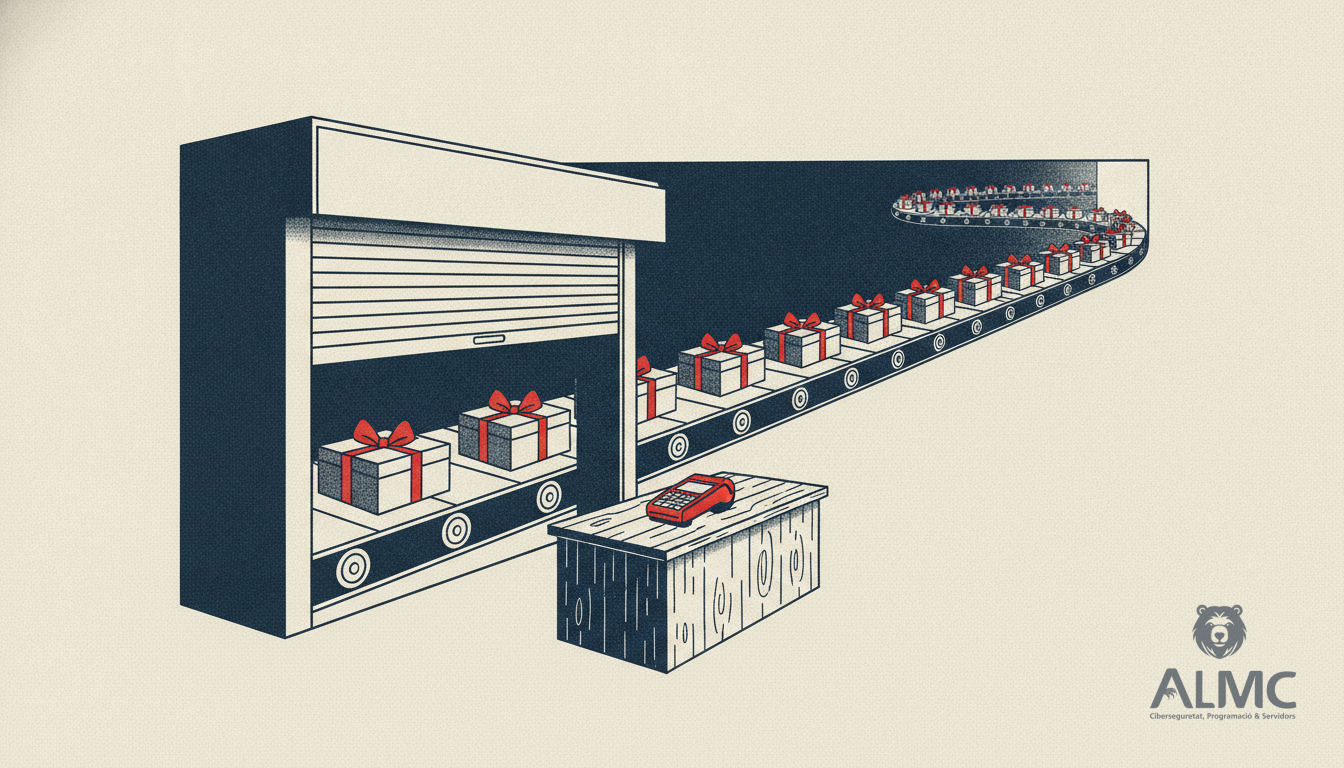
An online store is the visible layer of a much larger system. Behind it sit stock management, order processing, invoicing, shipping labels, customer support and, increasingly, automation. When these pieces are disconnected, the team ends up copying data between tools and the customer notices: late confirmations, wrong stock, invoices that arrive days later.
This is where a well-planned ecommerce stack pays for itself. Connecting the store with the ERP or the electronic invoicing system, automating order status updates, integrating WhatsApp for delivery notifications or support, and keeping backups and security under control are all part of running a serious online business. None of them is glamorous, but each one removes friction from the buying experience.
GDPR and trust: the European advantage
Selling online in the EU means operating under the General Data Protection Regulation, and customers are increasingly aware of it. Consent for cookies and marketing communications must be genuine, data must be stored lawfully and privacy information must be understandable. A store that handles this well signals seriousness; one that does not exposes the business to complaints and erodes trust at the worst possible moment, right before payment.
The same logic applies to transparency about who is selling. Clear company details, a real address in Spain, accessible contact channels and honest delivery estimates do more for conversion than many decorative improvements.
What to expect from a store that sells
A good online store is measurable. Traffic sources, product performance, cart abandonment and repeat purchase rates should be visible without guesswork. That requires proper analytics, consent-aware tracking and a team that reviews the numbers regularly rather than once a year.
For shops and brands across Catalonia, the realistic goal is not to imitate the largest marketplaces but to build a direct channel that belongs to the business, with its own margins and its own customer relationships. That takes a solid platform, a conversion-minded approach and an operational stack that holds up when orders grow. Done properly, the online store becomes what it should have been all along: a shopfront that works every hour of the day.
Related
- WooCommerce vs PrestaShop: Which Ecommerce Platform Wins in 2025?
- CRO for Ecommerce: Turning WooCommerce and PrestaShop Templates into Sales Engines
- Agentic Commerce: How AI Agents Are Rewriting the Rules of Online Shopping
- Desarrollo web
Put these ideas into practice
Talk to ALMC about a solution for your business. Explore your options or contact our team.