
Cross-border ecommerce: building resilience into your online shop
Cross-border ecommerce: building resilience into your online shop
Why cross-border selling is a resilience problem, not just a logistics oneWhen a large international marketplace warns that its deliveries may slow do...
Why cross-border selling is a resilience problem, not just a logistics one
When a large international marketplace warns that its deliveries may slow down because a customs authorisation has not been renewed, the headline looks like a story about one company. In reality it is a story about every online shop that sells across borders. A single administrative decision — a permit expiring, a low-value import scheme being reviewed, a tariff changing overnight — can ripple through the entire chain: couriers lose capacity, parcels pile up at the border, customers wait, and refund requests start arriving.
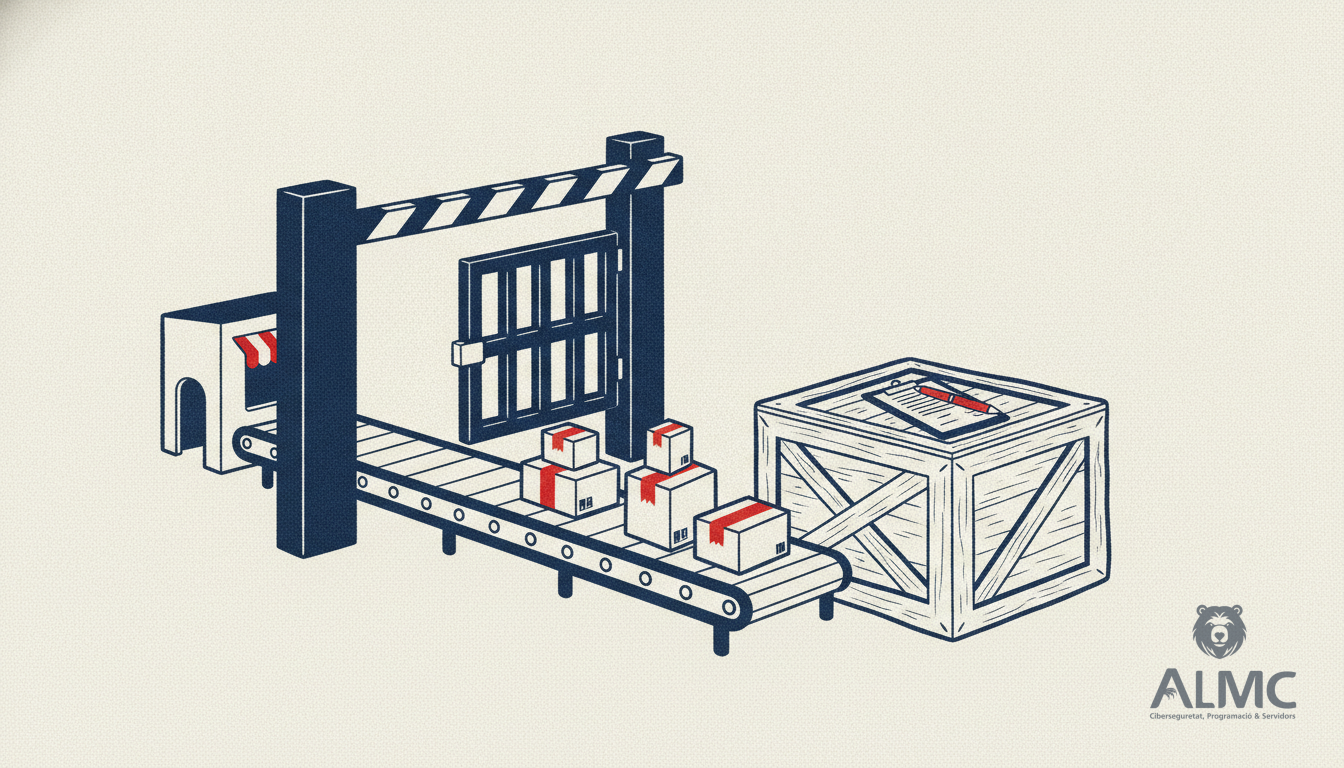
For shops based in Catalonia and across Spain, this matters more than ever. Selling into France, Italy, Portugal or further afield is now routine for many ecommerce businesses in Barcelona, Lleida, Tarragona and Girona. But the operational and legal plumbing behind those sales is often taken for granted until something breaks. The lesson from recent disruptions in cross-border parcel flows is simple: resilience has to be designed into the online shop, not bolted on after the first crisis.
What actually goes wrong when borders tighten
Most cross-border problems fall into a handful of predictable categories. Knowing them is the first step to preparing for them.
- Customs and permit schemes. Simplified import frameworks for low-value consignments can be suspended, reviewed or delayed. When that happens, couriers lose the ability to clear parcels quickly and delivery times stretch from days to weeks.
- Tariff and tax changes. Duty thresholds and tax rules for imported goods are being revised in several markets. A product that was competitive yesterday can become expensive — or unprofitable — tomorrow.
- Carrier concentration. Relying on a single logistics partner means that one expired authorisation or one operational failure can halt your entire international order flow.
- Customer communication gaps. Even a short delay becomes a reputational problem if buyers are not told what is happening and when to expect their order.
None of these are exotic risks. They are ordinary operational realities of selling abroad, and each one can be mitigated with the right ecommerce setup.
Designing an online shop that can absorb shocks
A resilient ecommerce operation starts with the platform. Whether you run PrestaShop or WooCommerce, the goal is the same: a shop that gives you control over shipping rules, taxes, carrier options and customer messaging without needing a developer for every change.
In practice, that means configuring your store so that delivery promises, shipping costs and customs information are driven by rules rather than hard-coded assumptions. If a carrier becomes unavailable, you should be able to switch to an alternative without breaking checkout. If a destination country changes its import rules, you should be able to adjust pricing, messaging or availability for that market quickly. A custom-built or well-configured online shop makes these changes manageable; a rigid one turns them into emergencies.
Practical measures for Spanish and Catalan retailers
Here are the areas worth reviewing before the next disruption arrives.
- Diversify carriers. Work with at least two logistics partners per destination market where possible, and test the fallback route before you need it.
- Be transparent about delivery times. Show realistic estimates per country rather than a single generic promise. Under-promise and over-deliver on cross-border orders.
- Automate customer notifications. Order confirmation, dispatch, customs status and delay messages should be triggered automatically, in the customer's language.
- Review tax and duty logic. Make sure your shop calculates VAT and import costs correctly for each market, and that this is clear at checkout under EU consumer rules.
- Keep GDPR compliance tight. Cross-border selling means transferring customer data across jurisdictions. Document your legal basis, your processors and your retention periods.
- Monitor your key markets. Assign someone to watch regulatory changes in your top three export destinations, and review your shipping policy quarterly.
Conversion optimisation is part of resilience too
When logistics get harder, margins get thinner. That makes conversion rate optimisation more valuable, not less. Every percentage point you gain in checkout completion is a buffer against higher shipping costs and longer delivery times. Practical steps include simplifying the checkout flow, offering local payment methods for each market, making delivery costs visible early, and using clear, reassuring copy around customs and returns.
It is also worth measuring what happens after a delay. Shops that communicate proactively tend to keep more customers than shops that go quiet. A well-built ecommerce stack lets you segment affected orders and send targeted updates rather than a blanket apology.
Building for the long term
Cross-border ecommerce will keep growing, and so will the regulatory complexity around it. The shops that thrive will be those that treat their online store as infrastructure: something to be designed, tested and improved continuously, not just launched and forgotten. Whether you sell from a warehouse in Lleida or a studio in Barcelona, the principles are the same — control your shipping logic, diversify your dependencies, communicate clearly and keep optimising the buying experience.
At ALMC.es we build online shops that are ready for this reality: PrestaShop and WooCommerce solutions tailored to your business, conversion optimisation built in from day one, and the full technical stack needed to sell confidently across borders.
Related
- WooCommerce vs PrestaShop: Which Ecommerce Platform Wins in 2025?
- CRO for Ecommerce: Turning WooCommerce and PrestaShop Templates into Sales Engines
- Agentic Commerce: How AI Agents Are Rewriting the Rules of Online Shopping
- Desarrollo web
Put these ideas into practice
Talk to ALMC about a solution for your business. Explore your options or contact our team.