
Low-cost AI agents: what they mean for your online shop
Low-cost AI agents: what they mean for your online shop
The new economics of running an online shopFor years, the conversation around artificial intelligence in ecommerce revolved around capability: what a...
The new economics of running an online shop
For years, the conversation around artificial intelligence in ecommerce revolved around capability: what a model could do, how well it could write a product description, how accurately it could classify a support ticket. That framing is shifting. The more interesting question for a shop owner in Lleida, Tarragona or Barcelona is now cost per task. When a single automated action costs a fraction of a cent, the calculus of what is worth automating changes completely.
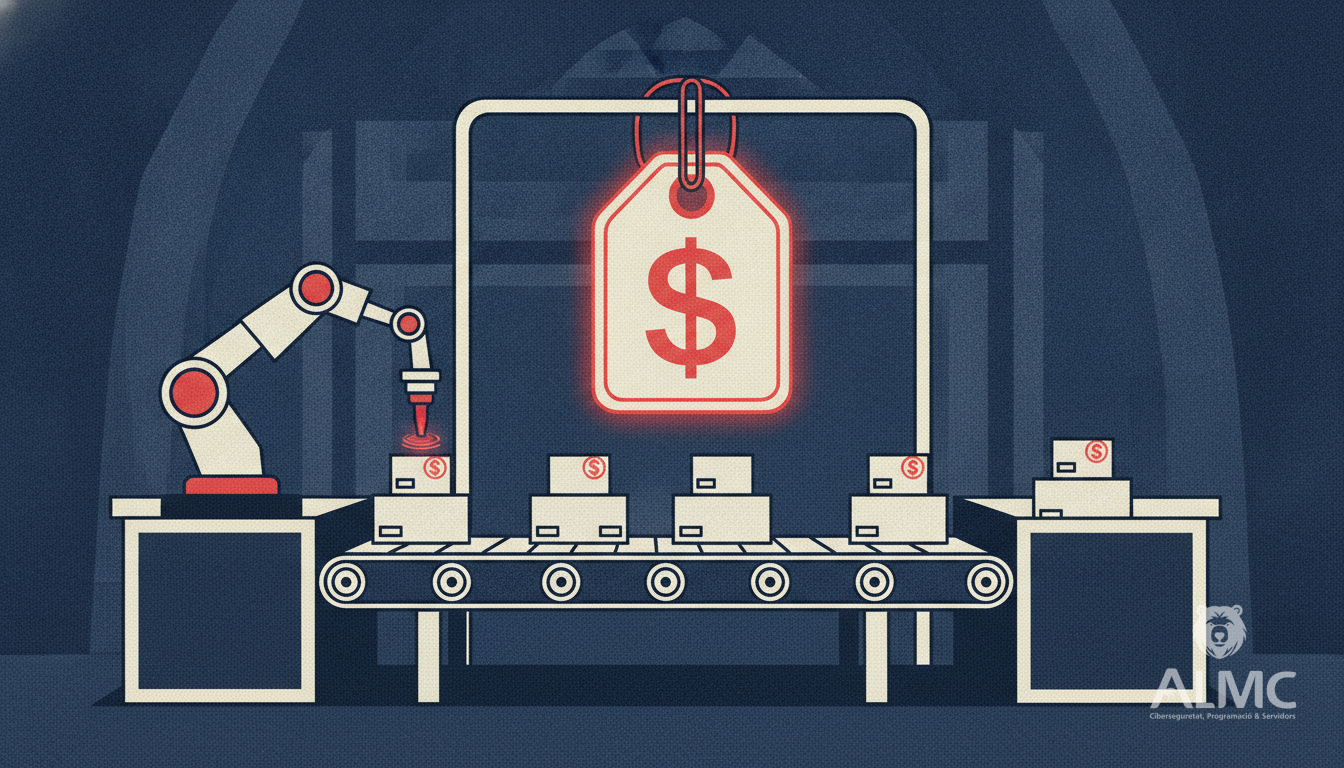
This is the context in which a new generation of small, efficient models is arriving. Rather than competing on raw reasoning power, they are designed to be cheap enough to run thousands of times a day on narrow, repetitive jobs: reading a supplier PDF, extracting a SKU, applying a price rule, launching a test, or calling an external tool. For an ecommerce operation, that is precisely the kind of work that eats up hours without adding visible value.
Why cheap agents matter more than clever ones
The practical lesson for online retailers is that you do not need a single all-powerful assistant. You need a layered setup where a more capable model handles planning and exceptions, while a lighter, cheaper model executes the bulk of routine subtasks. Think of it as the difference between a shop manager and a stock clerk: both are essential, but you would not pay manager rates for every box that gets moved.
In a PrestaShop or WooCommerce store, this pattern shows up in concrete places:
- Catalogue hygiene: normalising product attributes, detecting duplicate references, or flagging missing dimensions before they reach the front end.
- Supplier feeds: reading invoices, delivery notes and PDF catalogues to update stock and cost prices without manual rekeying.
- Customer support triage: classifying incoming messages, drafting first responses, and routing the genuinely complex cases to a person.
- Quality checks: running automated tests on checkout flows and flagging regressions before they cost you sales.
None of these tasks requires deep reasoning. They require reliability, volume and low cost. That is exactly where small models are finding their place.
What this means for conversion, not just operations
It is tempting to treat automation as a back-office concern, but the commercial impact lands squarely on conversion. A catalogue with consistent attributes converts better because filters and search work. A support inbox that answers within minutes reduces abandonment. A checkout that is tested continuously loses fewer customers at the final step. In each case, the saving is not only in staff hours but in revenue that would otherwise leak away.
At ALMC we build online shops on PrestaShop and WooCommerce with this in mind: the storefront is only half the project. The other half is the stack behind it — product data, order flow, integrations, monitoring and the automation that keeps everything coherent as the catalogue grows. A shop that genuinely sells is one where the operational plumbing is as well designed as the front end.
A word of caution on benchmarks and hype
Vendors publish benchmark results that favour their own models, and the numbers rarely transfer cleanly to real shops. A model that scores well on a coding benchmark may be mediocre at reading a badly scanned supplier invoice in Catalan. The sensible approach is to pilot on your own data, measure the error rate on a few hundred real cases, and only then decide whether the cost saving justifies the integration work.
There is also a compliance dimension that is easy to overlook. Any automation that touches customer data in Spain must respect the GDPR: purpose limitation, data minimisation, and clear records of what is processed where. Sending order data to an external API without a lawful basis and a processor agreement is not a shortcut, it is a liability. Build the data flow deliberately, and keep personal data out of prompts wherever the task allows it.
Where to start without over-engineering
The most common mistake is trying to automate everything at once. A more pragmatic sequence for a Catalan or Spanish retailer looks like this:
- Map the repetitive tasks that consume the most time each week, and estimate their volume.
- Pick one with a clear success criterion — for example, reducing manual product uploads by half.
- Run it alongside the existing process for a month, comparing output quality.
- Only then remove the manual step, and monitor for drift as the catalogue or supplier base changes.
Cheap agents make this kind of experimentation affordable. They do not remove the need for judgement, but they lower the cost of trying, which is often the real barrier for a small or mid-sized shop.
The bigger picture
The direction of travel is clear: automation is becoming a commodity, and the advantage shifts to retailers who know their own processes well enough to apply it precisely. A well-integrated WooCommerce or PrestaShop store, with clean data and a measured approach to automation, is in a far stronger position than one that simply bolts on the latest tool. If you are planning your next step in ecommerce, the question worth asking is not which model to use, but which task is quietly costing you the most.
Related
- WooCommerce vs PrestaShop: Which Ecommerce Platform Wins in 2025?
- CRO for Ecommerce: Turning WooCommerce and PrestaShop Templates into Sales Engines
- Agentic Commerce: How AI Agents Are Rewriting the Rules of Online Shopping
- Desarrollo web
Put these ideas into practice
Talk to ALMC about a solution for your business. Explore your options or contact our team.