
Automating Signatures and Approvals in Catalan SMEs
Automating Signatures and Approvals in Catalan SMEs
Why approvals still slow down small businessesIn many SMEs around Lleida, Girona, Tarragona and the Barcelona metropolitan area, a simple decision sti...
Why approvals still slow down small businesses
In many SMEs around Lleida, Girona, Tarragona and the Barcelona metropolitan area, a simple decision still depends on a printer, a pen and three people being in the same place at the same time. A purchase order waits for a manager who is travelling. A contract sits in an inbox until someone remembers to chase it. A new employee's paperwork is passed around on paper while their start date approaches. None of these bottlenecks is dramatic on its own, but together they quietly consume hours every week and push back revenue.
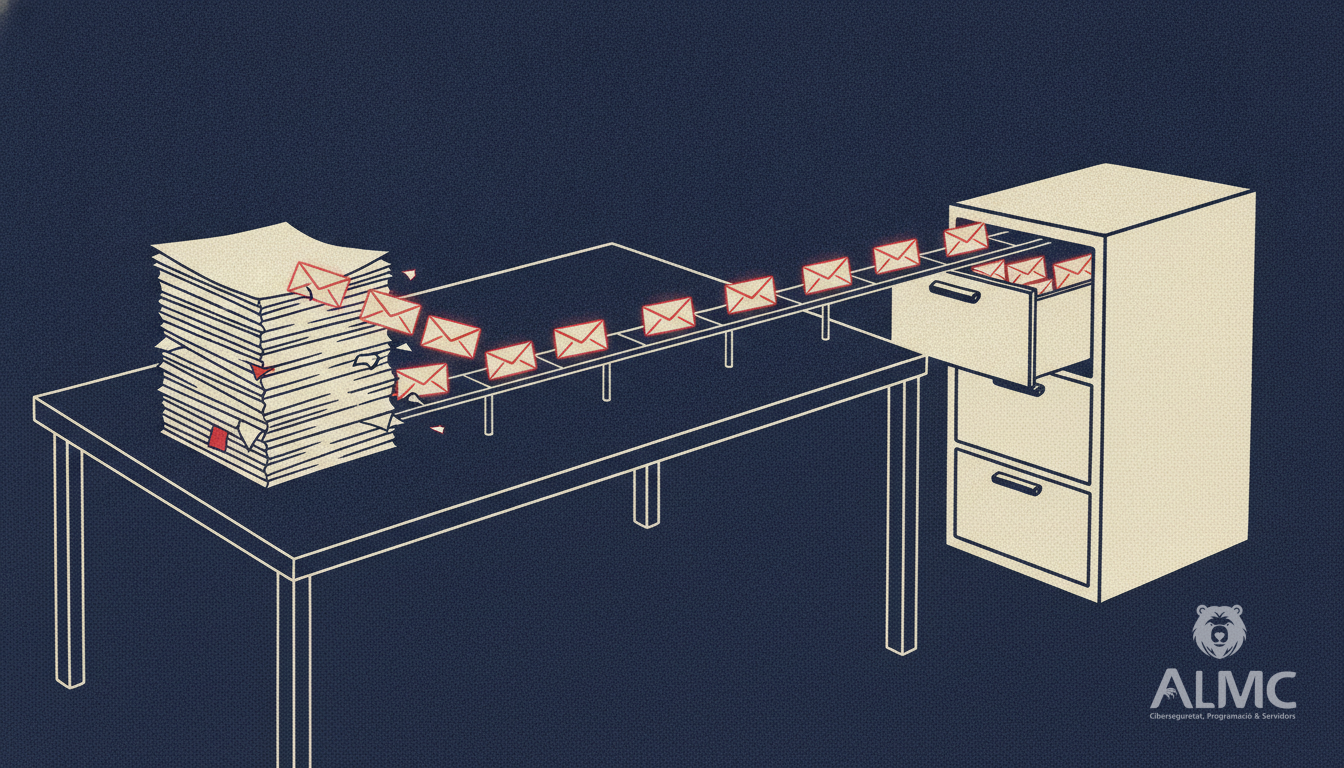
Electronic signatures solved part of the problem: they removed the need for physical presence and let documents circulate in minutes rather than days. But signing is only one step in a longer chain. The real gain comes when the whole sequence — review, approval, sending, signature, archiving and notifying the right people — runs on its own. That is where process automation turns a useful tool into a genuine productivity advantage.
Where automation pays off first
Not every task deserves a workflow. The best candidates are repetitive, rule-based and frequent. In most small and mid-sized companies, these are the areas where automation delivers results quickly:
- Contracts and commercial agreements. Service contracts, confidentiality agreements, renewals and annexes can be routed automatically to the right signatory, with reminders if a signature is still pending after a set number of days.
- Human resources. Employment contracts, internal policies, consent forms and onboarding documentation can be sent, tracked and filed in each employee's record without manual handling.
- Sales. Accepted quotes, proposals and changes to service conditions can be formalised in hours rather than days, keeping momentum while the client is still interested.
- Purchasing and suppliers. Order authorisations and supplier contracts can follow a predefined approval path, with the final version stored automatically.
- Public administration procedures. Submissions that require a qualified signature can be prepared and dispatched through a controlled flow, reducing errors and repeat submissions.
From a signed document to a self-running process
The most common mistake is to treat the signature as the finish line. In practice, a signature is a trigger. Once a document is signed, several things should happen without anyone lifting a finger: the final PDF is stored in the correct folder, the counterparties are notified, the finance or HR system is updated, and a record of the evidence is kept for compliance purposes.
This is exactly the kind of chain that tools such as n8n are built for. Instead of writing custom code for every connection, you describe the flow visually: when a document reaches a certain state, check who must approve it, send the request, wait for the response, then move the file and update the related systems. Each step can call an existing application — your document manager, your CRM, your accounting package, your email or messaging platform — so the tools you already pay for start talking to each other.
Integrations matter more than the tool itself
A workflow is only as good as the systems it connects. Before automating anything, it is worth mapping which applications hold the information and which ones simply display it. In a typical Catalan SME this might include an invoicing platform compliant with Spanish electronic invoicing rules, a CRM, a shared drive, a project tracker and a messaging channel for internal alerts.
Once those connections exist, the possibilities multiply: a signed quote can create a project folder, notify the account manager and schedule a kick-off reminder. A new supplier contract can trigger a payment schedule entry. A completed onboarding pack can open the employee's file and inform the IT team that accounts need to be created. None of these steps is complex, but doing them by hand every time is where the hours disappear.
Compliance is not an obstacle
Automating signatures and approvals in Spain means working within the GDPR and the country's electronic signature framework. The good news is that automation actually strengthens compliance rather than weakening it. A well-designed flow records who approved what and when, keeps an audit trail of every version, applies retention rules consistently and limits access to sensitive documents. Manual processes, by contrast, tend to leave gaps that are hard to reconstruct later.
The key is to match the level of signature to the risk of the document, and to make sure consent records and personal data handling are built into the workflow from the start rather than bolted on afterwards.
A realistic starting point
You do not need to automate the entire company in one go. Pick one process that causes visible friction — usually contract approvals or employee onboarding — and map it step by step. Identify the manual actions, the waiting points and the systems involved. Then automate the most repetitive part first and measure the time saved over a few weeks.
In our experience at ALMC, SMEs that start with a single well-chosen flow tend to see the value quickly and then expand naturally to adjacent processes. The goal is not to replace people but to free them from chasing signatures, copying files and sending the same notification for the hundredth time. That is business productivity in its most practical form: fewer hours lost to admin, more time spent on the work that actually grows the business.
Related
- n8n Automation Guide: Streamline Your Business Workflows in 2026
- How Much Does Process Automation Really Cost? A 2026 Guide for SMEs
- Best WordPress SEO Plugins 2026: Expert Comparison for Spanish Sites
- Chatbot IA
Put these ideas into practice
Talk to ALMC about a solution for your business. Explore your options or contact our team.