
EU AI Act 2026: What It Means for Your Business and Team
EU AI Act 2026: What It Means for Your Business and Team
A New Regulatory Era for Artificial IntelligenceIf your organisation uses artificial intelligence in any capacity—whether for customer support, market...
A New Regulatory Era for Artificial Intelligence
If your organisation uses artificial intelligence in any capacity—whether for customer support, marketing, or internal processes—the European Union's AI Act will soon demand your attention. The regulation, which enters its final binding phase in August 2026, introduces a risk-based framework that applies across all member states, including Spain. Understanding its scope and preparing accordingly is not just a legal necessity but a strategic advantage.
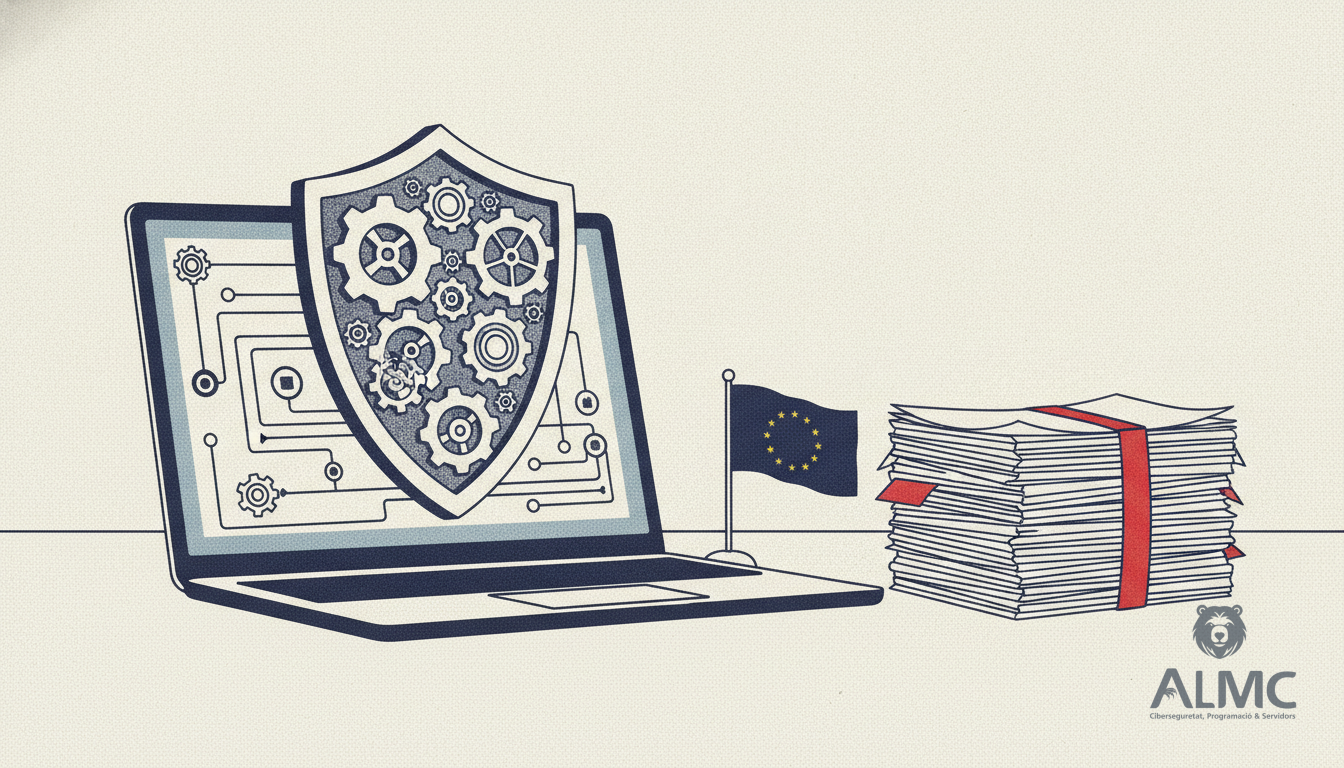
Many business leaders assume that because they do not develop AI systems themselves, they are exempt from compliance. This misconception can lead to significant legal exposure. The AI Act clearly distinguishes between providers—those who build and sell AI tools—and deployers, which are organisations that use these tools in their day-to-day operations. If your company uses a CRM with predictive scoring, an AI-powered chatbot, or even a content generation platform, you fall into the deployer category and carry legal responsibilities for how these systems are used.
Territorial Reach: Beyond the EU's Borders
The AI Act, like the GDPR, has extraterritorial scope. Any company, regardless of where it is headquartered, that provides AI services or generates outcomes used within the EU market must comply. For businesses in Catalonia—from Barcelona to Lleida—that means your competitors and partners across the globe are equally bound, levelling the playing field and ensuring ethical AI practices are a shared standard.
Understanding the Risk Classifications
The regulation categorises AI systems into four risk levels, each with distinct obligations. Knowing where your applications fall is the first step toward compliance.
- Unacceptable risk: Systems that manipulate human behaviour or enable social scoring are banned outright. No legitimate business application exists for these, and their use would result in severe penalties.
- High risk: This category includes AI used in recruitment, credit scoring, or critical infrastructure management. Deployers must conduct impact assessments, maintain rigorous technical documentation, and register their systems in an EU database before deployment.
- Limited risk: Chatbots, marketing content generators, and similar tools require transparency. Users must be clearly informed when they are interacting with AI or consuming AI-generated content.
- Minimal risk: Spam filters, grammar checkers, and internal recommendation systems carry no additional legal obligations, as their potential for harm is negligible.
Implications for Human Resources and Your Workforce
One of the most sensitive areas affected by the AI Act is human resources. Automated CV screening, performance evaluation algorithms, and tools that predict employee behaviour fall under the high-risk category. The goal is not to ban automation but to eliminate algorithmic discrimination. As an employer, you are responsible for ensuring that any AI used in hiring or promotion decisions is transparent, auditable, and free from bias.
Practical steps include conducting regular audits of your AI tools, documenting their decision-making processes, and maintaining human oversight at critical stages. In Catalonia, where many SMEs are adopting AI for the first time, this may seem daunting. However, the regulation is designed to foster trust and innovation, not to stifle it.
What About Everyday AI Tools?
Many businesses rely on AI for customer service, email management, and content creation. These applications typically fall into the limited-risk category, meaning the main requirement is transparency. For instance, if you use an AI assistant to help draft responses to client emails, your customers should be aware that they are interacting with an automated system. This is not merely a legal checkbox; it builds credibility and enhances your brand's reputation for honesty.
For small and medium-sized enterprises in Spain, the administrative burden of full compliance may seem heavy. Yet, the AI Act also offers an opportunity to streamline operations. By adopting AI tools that are designed with compliance in mind, you can reduce risk and improve efficiency simultaneously.
Preparing Your Business for the AI Act
To prepare effectively, start by inventorying all AI systems your company uses. Classify them according to the risk levels outlined above, and document their purpose and data flows. If you rely on third-party providers, ensure they offer the necessary transparency and compliance features. For high-risk applications, implement a governance framework that includes regular reviews and employee training.
In Lleida and across Catalonia, digitalisation is a key driver of business growth. The AI Act should not be viewed as a hurdle but as a catalyst for adopting responsible AI practices. By aligning your operations with the regulation early, you not only avoid penalties but also position your company as a trustworthy partner in an increasingly AI-driven market.
Turning Compliance into Competitive Advantage
Ultimately, the AI Act is about building a European ecosystem where innovation thrives without compromising fundamental rights. For your business, this means choosing AI solutions that respect privacy, ensure fairness, and operate transparently. Whether you are automating customer interactions or enhancing internal workflows, the right tools can help you meet these standards while saving time and resources.
As the August 2026 deadline approaches, now is the time to act. Review your AI usage, train your team on the new requirements, and seek partners who understand the regulatory landscape. With thoughtful preparation, your company can navigate the AI Act with confidence, turning compliance into a strategic asset.
Related
- How to Learn Digital Marketing with No Prior Experience
- How to Choose a Digital Marketing Master's That Boosts Your Career
- AI Jobs in Spain: Skills and Roles for 2026
- Automatización
Put these ideas into practice
Talk to ALMC about a solution for your business. Explore your options or contact our team.