
Ethical AI Chatbots: Trust and GDPR for SMEs
Ethical AI Chatbots: Trust and GDPR for SMEs
Why trust is the real currency of conversational AIWhen a customer opens a chat window on your website or sends a WhatsApp message to your business, t...
Why trust is the real currency of conversational AI
When a customer opens a chat window on your website or sends a WhatsApp message to your business, they are not just looking for a quick answer. They are deciding, in those first few seconds, whether they can trust you. That is why the conversation around chatbot IA has shifted. It is no longer only about response times or cost savings; it is about whether an automated assistant can represent your brand with the same care as your best employee.
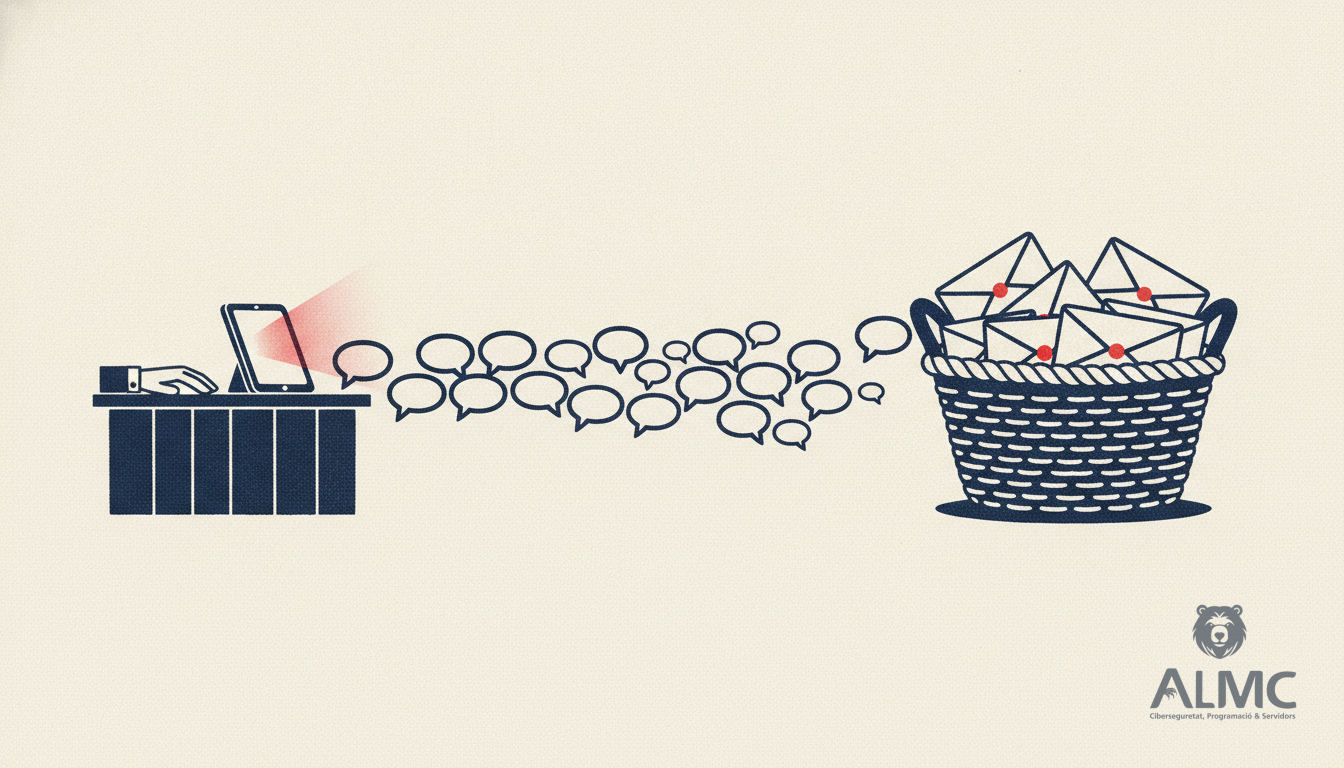
Recent global research paints a cautious picture. A large-scale study across dozens of countries found that fewer than half of respondents were willing to trust AI systems, while a clear majority believed regulation was necessary. For SMEs and ecommerce businesses in Catalonia, this is not an abstract debate. It is a practical design brief: your asistente virtual must earn trust from the very first message.
The EU AI Act and GDPR: what Spanish businesses need to know
Europe has moved faster than most regions in setting rules for artificial intelligence. The EU AI Act introduces obligations that become enforceable in stages, with key requirements already applying from August 2026. At the same time, the GDPR continues to govern how you collect, store and process personal data. For a small business in Lleida, Tarragona, Girona or Barcelona, this means your atención al cliente automatizada cannot be a black box.
In practice, compliance touches several areas:
- Transparency: users must know they are talking to an AI, not a person. A simple, clear notice at the start of the conversation is enough.
- Data minimisation: collect only what the conversation truly requires, and store it securely.
- Human oversight: the assistant must be able to hand over to a human when the query is sensitive or the customer asks for it.
- Fairness: responses should be consistent and free from bias, regardless of the customer's profile.
- Accountability: someone in your team must be responsible for monitoring the assistant and handling incidents.
None of this is optional if you want to operate in the Spanish market with peace of mind. But it is also an opportunity: businesses that get it right can use ethical AI as a differentiator.
What ethical conversational AI looks like in daily operations
Ethics in ia conversacional is not a document you sign and forget. It shows up in small decisions. Does your chatbot push a sale when the customer only asked about a return policy? Does it hide the fact that it is automated? Does it pass sensitive data to third parties without a clear legal basis? These are the moments that define whether your assistant builds or erodes trust.
A well-designed chatbot whatsapp can handle a wide range of routine queries: order status, opening hours, appointment scheduling, pricing, availability, and basic troubleshooting. It can also qualify leads by asking the right questions and routing hot prospects to your sales team. What it should not do is pretend to be human, pressure customers, or make promises your business cannot keep.
For ecommerce businesses, the stakes are particularly high. A single mishandled conversation can end up in a public review. An assistant that answers accurately, admits when it does not know, and escalates gracefully does more for your reputation than one that always replies instantly but sometimes gets it wrong.
How SMEs in Catalonia can start without overcomplicating it
You do not need a large budget or a dedicated AI department to deploy a responsible virtual assistant. A pragmatic approach works better:
- Start with one channel. WhatsApp is often the fastest route for Spanish SMEs because customers already use it daily.
- Define the boundaries. Decide which topics the assistant can handle and which must go to a human.
- Be transparent. A short, friendly message explaining that the user is chatting with an AI assistant is enough.
- Review regularly. Check conversations weekly, look for gaps and refine the responses.
- Document your compliance. Keep a record of how data is processed and who is responsible.
At ALMC, we work with SMEs and ecommerce businesses across Catalonia to design AI assistants that fit these principles from day one. The goal is not to replace your team, but to free them from repetitive questions so they can focus on the conversations that truly need a human touch.
The competitive advantage of doing it well
Customers may not read your privacy policy, but they notice how you treat them. An AI assistant that is clear about what it is, respectful of their data, and quick to hand over to a person when needed sends a powerful signal: this business is modern, but it is also trustworthy.
In a market where regulation is tightening and consumer scepticism is real, that signal matters. Ethical chatbot IA is not a constraint on growth. It is the foundation on which sustainable automation is built. For SMEs in Lleida, Barcelona, Tarragona and Girona, the question is no longer whether to adopt conversational AI, but how to do it in a way that strengthens the relationship with every customer.
Related
- Chatbot IA para Atención al Cliente: Guía para Pymes y Ecommerce en España
- AI Chatbots for WhatsApp Business: A Guide for Spanish SMEs
- Free Chatbot Options for SMEs: What You Get and What You Don't
- Automatización
Put these ideas into practice
Talk to ALMC about a solution for your business. Explore your options or contact our team.