
AI Chatbots for SMEs: 24/7 Customer Service That Converts
AI Chatbots for SMEs: 24/7 Customer Service That Converts
Why your customers no longer wait for opening hoursIn Catalonia, and across Spain more broadly, the way people buy has quietly changed. A customer bro...
Why your customers no longer wait for opening hours
In Catalonia, and across Spain more broadly, the way people buy has quietly changed. A customer browsing your ecommerce site in Lleida at eleven at night, or sending a WhatsApp message from a train between Barcelona and Tarragona on a Sunday, expects an answer now. Not on Monday at nine. Not after a ticket number and a two-day wait. The expectation gap between what buyers want and what small teams can realistically deliver has become one of the biggest sources of lost revenue for SMEs and online shops.
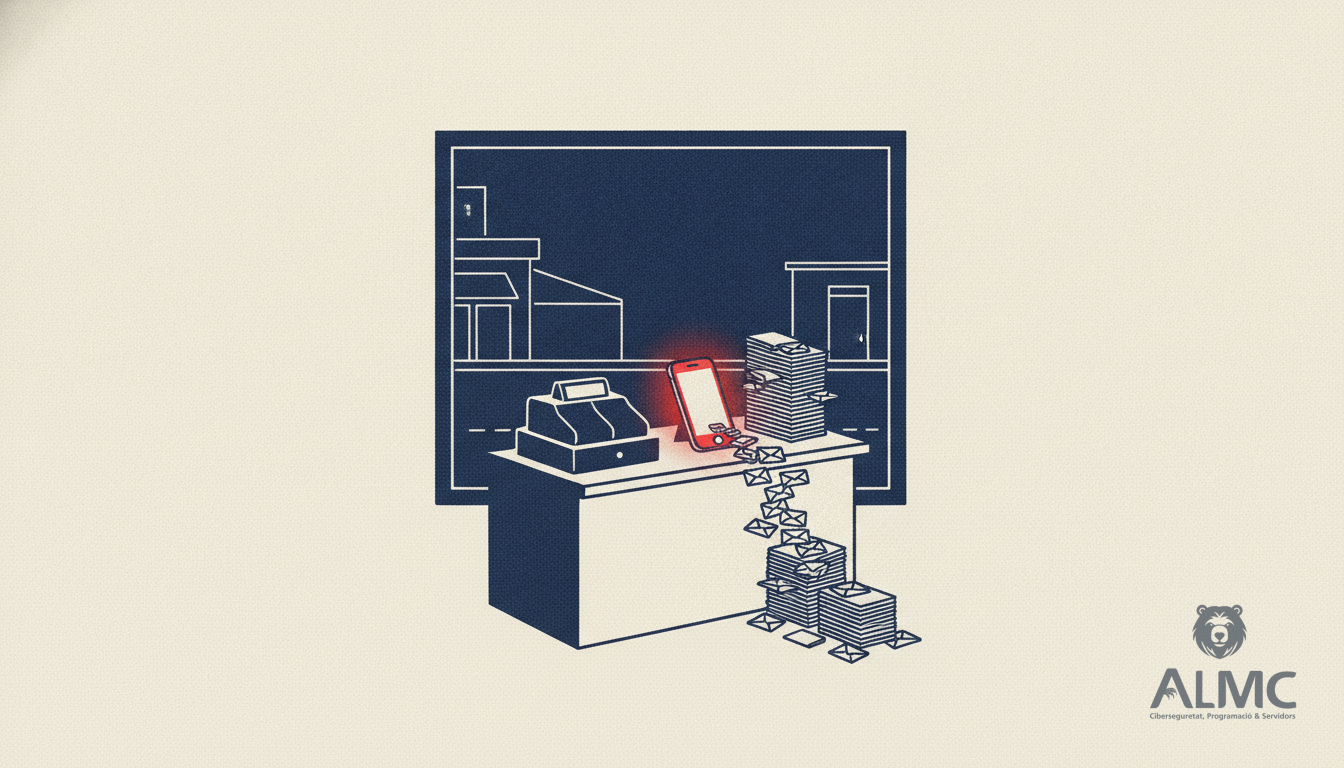
This is where conversational AI stops being a futuristic concept and becomes a practical operations tool. An AI chatbot is not a scripted menu of buttons. A modern virtual assistant understands natural language, reads your product catalogue and policies, and holds a coherent conversation in several languages, including Spanish, Catalan and English, at any hour.
What a virtual assistant actually does for a small business
It is worth separating the marketing promises from the day-to-day reality. In practice, an automated customer service layer handles four jobs that currently consume most of your team's time:
- Instant answers to repetitive questions. Delivery times, return conditions, stock availability, opening hours, invoice requests. These are the bulk of inbound messages, and they rarely need a human to resolve them.
- Lead qualification. Instead of collecting a name and an email and hoping for the best, the assistant asks the right questions, identifies budget, urgency and fit, and hands your sales team a warm, pre-qualified contact.
- Order tracking and post-sale support. Connected to your systems, it can check an order status, explain a delay and offer alternatives without a human touching the ticket.
- Out-of-hours cover. Nights, weekends and public holidays stop being dead zones where enquiries pile up unanswered.
The result is not that you fire anyone. It is that your existing team stops drowning in the same twenty questions and starts dealing with the complex cases that genuinely need a person.
Web and WhatsApp: meet customers where they already are
In Spain, WhatsApp is not a secondary channel. For a large share of consumers it is simply the way to talk to a business. A chatbot for WhatsApp that shares the same brain as the widget on your website means a consistent experience whichever door the customer knocks on. Conversations carry context, so someone who starts on the web and continues on their phone does not have to repeat themselves.
This matters commercially. A prospect who receives a useful answer within seconds is far more likely to complete a purchase than one who waits hours. Speed of first response is one of the few levers in digital commerce that improves conversion without touching your prices or your ad spend.
Privacy, GDPR and the Spanish context
Any conversation about AI and customer data in the EU has to start with the GDPR. A well-built assistant is designed around data minimisation: it collects only what it needs to answer or qualify, stores conversations securely, and gives you clear control over retention. Where an AI provider processes personal data on your behalf, you need a data processing agreement in place and a clear record of what is captured and why.
There is a second, quieter advantage. When the assistant runs close to your own infrastructure or within a controlled environment, sensitive information does not have to travel as far. This mirrors a broader trend in European technology: keeping intelligence as close to the point of use as possible, both for latency and for data sovereignty. For a Catalan SME handling customer records, that is not an abstract debate. It is a compliance question with a practical answer.
What it costs, and what it saves
Pricing for a tailored assistant in Spain typically sits in a range that a small business can absorb, especially when compared with the cost of hiring an additional support agent or the revenue lost to unanswered enquiries. The honest calculation is not 'chatbot versus nothing'. It is 'chatbot versus the hours your team currently spends on messages that a machine could have handled'.
Most SMEs that deploy one see the benefit in two places: response times fall sharply, and the quality of leads reaching the sales team improves because the assistant has already done the filtering.
Where to start
You do not need to automate everything on day one. A sensible path looks like this:
- Map the ten questions your team answers most often.
- Decide which channel matters most first: your website, WhatsApp, or both.
- Feed the assistant your real content: catalogue, FAQs, shipping and returns policy.
- Set a clear handover rule so the AI escalates to a human when it should.
- Review the transcripts monthly and keep refining.
Done properly, an AI chatbot becomes less of a gadget and more of a colleague that never sleeps, never loses patience and never forgets your return policy. For an SME in Lleida, Girona or Barcelona competing against larger players with bigger support teams, that is a genuine levelling of the field.
Related
- Chatbot IA para Atención al Cliente: Guía para Pymes y Ecommerce en España
- AI Chatbots for WhatsApp Business: A Guide for Spanish SMEs
- Free Chatbot Options for SMEs: What You Get and What You Don't
- Automatización
Put these ideas into practice
Talk to ALMC about a solution for your business. Explore your options or contact our team.