
Make vs Zapier: Which Automation Tool Fits Your Business in 2026?
Make vs Zapier: Which Automation Tool Fits Your Business in 2026?
Choosing the Right Automation Platform for Your SMEFor small and medium-sized businesses in Spain, automating repetitive tasks is no longer a luxury b...
Choosing the Right Automation Platform for Your SME
For small and medium-sized businesses in Spain, automating repetitive tasks is no longer a luxury but a necessity. When evaluating automation tools, two names often come to the forefront: Make and Zapier. Both are cloud-based platforms that connect your favourite apps and streamline workflows without requiring deep technical expertise. But which one truly delivers better value for your business in 2026? This article breaks down the key differences to help you decide, with a special focus on the needs of companies in Catalonia and the rest of Spain.
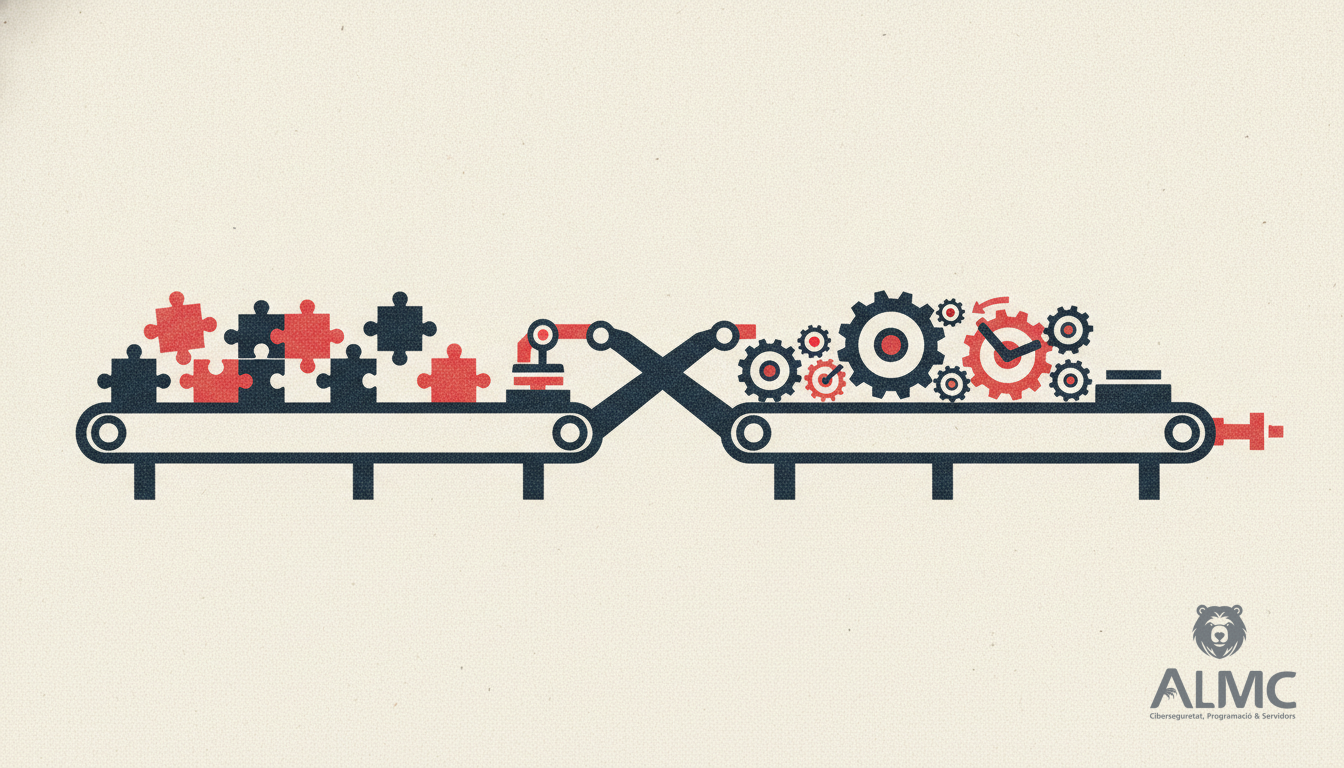
Understanding the Landscape: Make vs Zapier
Zapier has been a pioneer in the no-code automation space since 2011, building a reputation for simplicity and a vast ecosystem of integrations. Make, formerly known as Integromat until its rebrand in 2022, has emerged as a formidable European challenger, winning over users with its visual workflow builder and more generous pricing. In 2026, both platforms have matured, incorporating artificial intelligence and expanding their capabilities, making the choice more nuanced than ever.
Pricing: Where the Real Value Lies
For many SMEs, budget is the deciding factor. Let's compare the entry-level plans. Make offers a free tier with 1,000 operations per month and unlimited scenarios, while Zapier's free plan is limited to 100 tasks per month and just five Zaps. Moving to paid plans, Make's Core plan starts at around $9 per month for 10,000 operations, whereas Zapier's Starter plan costs roughly $20 per month for 750 tasks. The gap widens at higher tiers: Make's Pro plan at $16 per month provides 10,000 operations with advanced features, while Zapier's Professional plan at $49 per month offers only 2,000 tasks. For the same budget, Make consistently delivers five to ten times more automation capacity, making it the clear winner for cost-conscious Spanish businesses.
Integrations: Quantity vs. Practicality
Zapier boasts over 6,000 integrated apps, far surpassing Make's 1,500+. However, the most commonly used tools for SMEs—Google Workspace, Slack, Notion, Airtable, Shopify, WordPress, and major social media platforms—are available on both. The difference only becomes relevant if you rely on niche, industry-specific software that only Zapier supports. For the vast majority of use cases, Make's integration library is more than sufficient, so the practical advantage of Zapier's sheer volume is often overstated.
User Experience: Simplicity vs. Flexibility
Zapier's interface is linear and guided, making it incredibly easy for beginners to create basic automations in minutes. If your team has little technical background and you need to set up simple, straightforward workflows, Zapier is the more approachable option. Make, on the other hand, uses a visual canvas with nodes and connections, which can feel overwhelming at first. But this visual approach shines when you need to build complex workflows with multiple branches, conditions, and data transformations. For users who are willing to invest a little time in learning, Make offers far greater flexibility and power.
Advanced Capabilities: Going Beyond the Basics
When it comes to advanced features, Make has a decisive edge. It allows you to create scenarios with intricate branching, loops, iterators, and aggregators—elements that are either difficult or impossible to implement in Zapier without custom coding. Make also offers more sophisticated native data transformation tools, enabling you to manipulate data between steps seamlessly. For businesses that need to automate complex processes, Make is the superior choice.
Artificial Intelligence: The New Frontier
Both platforms have embraced AI to enhance automation. Make includes an AI Router module that uses language models to make intelligent routing decisions within your workflows, allowing for conditional logic based on natural language. Zapier has introduced Zapier Central, an AI assistant that can suggest automations and even act autonomously within your Zaps. Both also integrate with major AI providers like OpenAI, Claude, and Gemini as action nodes. In this arena, the two are closely matched, with each offering unique strengths depending on your specific needs.
Why Make Is Often the Best Fit for Spanish SMEs
For companies in Spain, Make frequently comes out on top for three reasons. First, as a European company, Make is better positioned to comply with the General Data Protection Regulation (GDPR), which is a critical consideration for any business handling personal data. Second, its pricing model is far more accessible for SMEs and freelancers, allowing you to scale automation without breaking the bank. Third, Make offers a more complete Spanish-language interface, which can be a significant advantage for teams who prefer to work in their native language.
Final Verdict: Which Platform Should You Choose?
In most scenarios, Make is the recommended choice for Spanish-speaking businesses. It offers better value for money, superior capabilities for complex workflows, and stronger alignment with European privacy regulations. Zapier may be the better option if you rely on very specific integrations that only it supports, or if your team is entirely non-technical and prioritises simplicity above all else. But for the majority of SMEs looking to boost productivity through automation, Make provides the ideal balance of power, price, and compliance.
Ultimately, the best way to decide is to test both platforms with a real workflow from your business. Start with a free trial, build a simple automation, and see which one feels more intuitive and meets your needs. If you need expert guidance, our team at ALMC.es can help you design and implement automation solutions tailored to your business, ensuring you save hours every week and focus on what truly matters: growing your company.
Related
- How to Monetise a Blog in 2026: Proven Strategies for Spanish SMEs
- AI-Powered WordPress Automation for Productive SMEs in Spain
- Chatbot IA
Put these ideas into practice
Talk to ALMC about a solution for your business. Explore your options or contact our team.