
Electronic Invoicing in Spain: Automate Before the 2027 Deadline
Electronic Invoicing in Spain: Automate Before the 2027 Deadline
Why e-invoicing is an automation project, not a paperwork upgradeMany SMEs in Lleida, Barcelona and across Catalonia still assume that sending a PDF b...
Why e-invoicing is an automation project, not a paperwork upgrade
Many SMEs in Lleida, Barcelona and across Catalonia still assume that sending a PDF by email makes them "electronic". Under Spain's new B2B framework, that assumption no longer holds. The regulation that completes the picture — the Real Decreto 238/2026, followed by the ministerial order regulating the public e-invoicing solution — draws a clear line between a digital-looking document and a genuinely structured electronic invoice that software can read, validate and track.
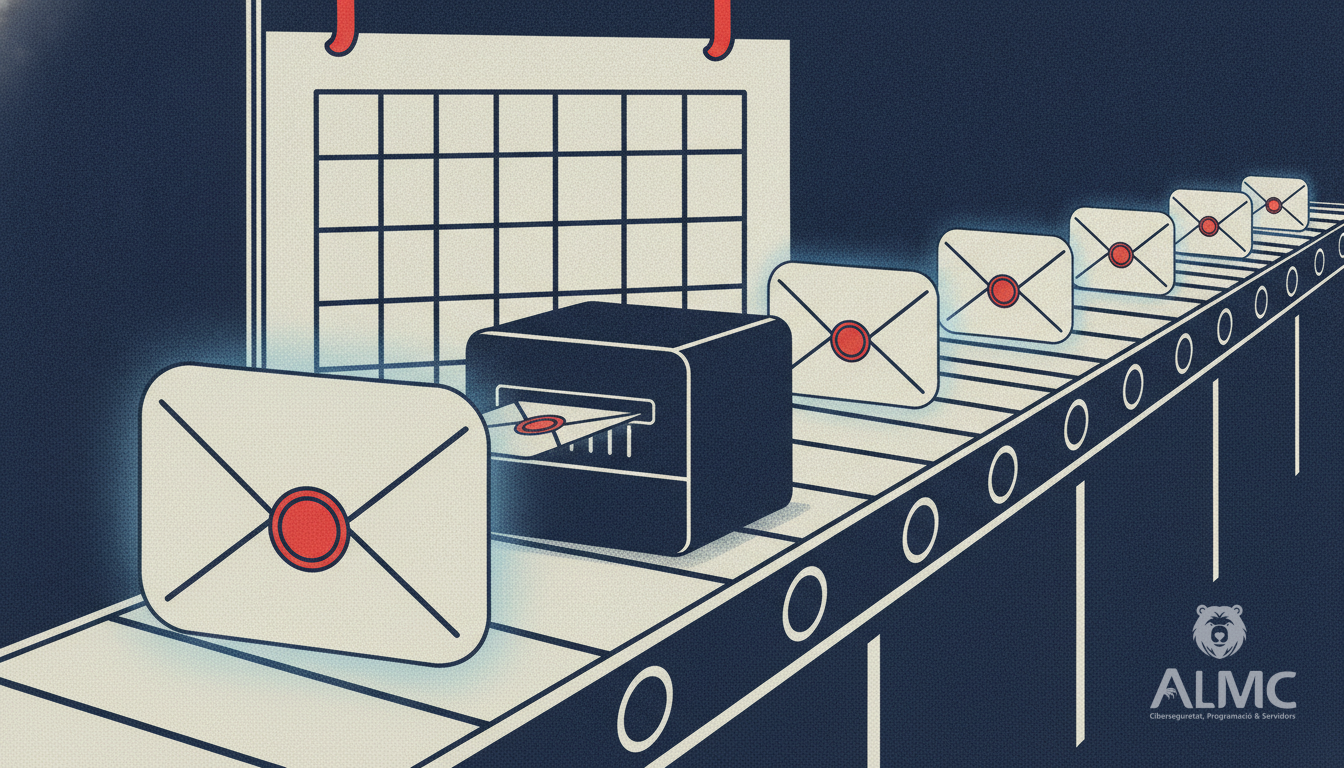
That distinction matters because compliance is only half the story. The real prize is the hours your team stops losing to manual keying, chasing payment status and reconciling documents. In other words: electronic invoicing is the perfect excuse to automate your billing workflow from end to end.
What actually counts as an electronic invoice
For B2B operations covered by the obligation, an electronic invoice must be issued, transmitted and received in electronic format, and it must document a commercial transaction between businesses or professionals while meeting the technical characteristics set out in the rules. Three ideas sit at its core:
- Structured data, not a picture. The invoice must follow the European semantic model EN 16931 and use one of the admitted syntaxes — Facturae, UBL, CII or EDIFACT. When the public solution is used, UBL is required. A PDF or a scanned image can display an invoice, but it cannot replace the structured message.
- Authenticity, integrity and legibility. You must be able to prove who issued the invoice, show that its content has not been altered, and keep it readable throughout its retention period. These guarantees already applied to paper invoices under the Spanish invoicing regulation, and they travel with you into the electronic world.
- Status traceability. The system records acceptance, rejection, due date and the date of full effective payment. If no rejection or corrective invoice is registered, the invoice is presumed accepted — which quietly changes how you manage collections.
The calendar every SME should have on the wall
The obligation rolls out in stages. Businesses whose volume of operations exceeds €8 million (calculated under the VAT Act) face the earlier date, while the rest of companies and professionals get an additional year. Exact dates have shifted during the legislative process, so treat any figure you read online — including this one — as a prompt to verify against the official BOE text before you plan. What is certain is the direction of travel: the window for "we'll deal with it later" is closing.
E-invoicing, SII and Veri*Factu: three pieces, one puzzle
It helps to separate the moving parts. SII is the immediate supply of VAT information to the tax agency. Veri*Factu concerns the integrity and traceability of invoicing records generated by software. The new B2B e-invoicing system governs the structured exchange between businesses. They overlap in the data they need, which is precisely why building them into a single automated flow — rather than three disconnected manual routines — saves far more than it costs.
How to implement it without paralysing your team
A pragmatic rollout looks like this:
- Map your current flow. Who issues invoices, from which tool, to which clients, and where does the data come from? Most SMEs discover two or three spreadsheets nobody admits to maintaining.
- Clean your master data. Customer tax IDs, VAT rates and payment terms must be consistent before any system can exchange them reliably.
- Choose your route. The public solution or a private platform — each has different signing and syntax requirements, so pick with your accountant, not against them.
- Connect the systems. Link your ERP, CRM, e-commerce and accounting tools so an invoice is generated from the order itself, with no re-keying.
- Automate the lifecycle. Status updates, rejections, reminders and payment confirmations should flow between systems on their own.
- Test with real clients. Run a pilot with a handful of frequent customers in Catalonia before switching everything at once.
Where process automation does the heavy lifting
This is where process automation earns its place. With tools such as n8n, we build workflows that connect your existing applications — invoicing software, ERP, CRM, email, storage — so that repetitive tasks run themselves: generating structured invoices from confirmed orders, pushing status changes to the right person, flagging rejected documents, archiving everything with correct retention, and preparing the data your accountant needs each quarter.
The benefit is not only compliance. It is business productivity: fewer manual errors, faster collections, and a finance team that spends its week on analysis instead of copy-paste. For a small company in Lleida or Tarragona, saving a few hours a week per person is a measurable return long before the mandate bites.
Don't forget GDPR
Invoices carry personal and commercial data, so any integration you build must respect the GDPR: minimised data flows, access controls, documented processing and processors bound by contract. Automation done properly makes this easier, not harder, because data moves through defined, auditable channels instead of ad-hoc emails.
The takeaway
Electronic invoicing is coming on a fixed schedule, and treating it as a last-minute formatting exercise is the expensive way to comply. Treat it instead as the moment to automate your billing backbone: integrate your tools, connect your applications and let structured invoices flow with minimal human intervention. Companies that start now will meet the deadline calmly — and keep the productivity gains afterwards.
Related
- n8n Automation Guide: Streamline Your Business Workflows in 2026
- How Much Does Process Automation Really Cost? A 2026 Guide for SMEs
- Best WordPress SEO Plugins 2026: Expert Comparison for Spanish Sites
- Chatbot IA
Put these ideas into practice
Talk to ALMC about a solution for your business. Explore your options or contact our team.