
VeriFactu in 2026: A Practical Roadmap for Spanish SMEs
VeriFactu in 2026: A Practical Roadmap for Spanish SMEs
Why 2026 is the year to act on VeriFactuIf you run a business in Spain, you have probably heard about VeriFactu, the technical standard that brings Sp...
Why 2026 is the year to act on VeriFactu
If you run a business in Spain, you have probably heard about VeriFactu, the technical standard that brings Spanish invoicing into the anti-fraud era. The original plan was tight, but the government has since softened the timetable. Under the Real Decreto-ley 15/2025, the mandatory start date is now 1 January 2027 for companies and 1 July 2027 for autónomos. That extra breathing room is welcome, but it would be a mistake to treat 2026 as a year off. This is the year for testing, migrating and cleaning up data while there is still no risk of penalties.
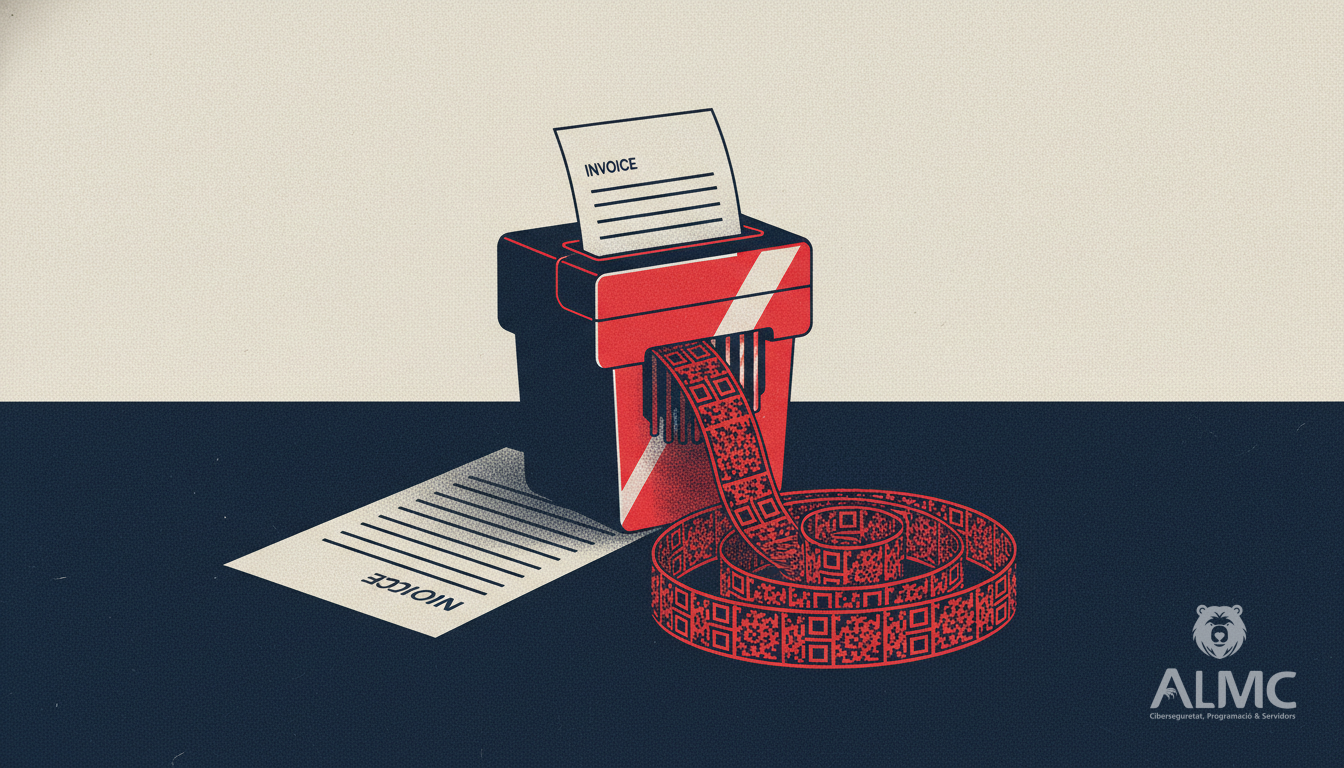
The rules behind VeriFactu — the Ley Antifraude and the related regulations — are not just about switching to PDFs. They require software that produces unalterable records, generates a QR code on every invoice, and can send data automatically to the AEAT. In other words, the days of editing an invoice after it has been issued are over.
What VeriFactu actually changes in your day-to-day
It is easy to get lost in the legal language. In practice, VeriFactu affects three things:
- Traceability. Every invoice gets a unique identifier and a hash chain. If a record is altered, the chain breaks and the system flags it.
- Transparency with the AEAT. Depending on your setup, invoices are either sent to Hacienda in real time or stored in a way that allows immediate verification.
- Software responsibility. Your invoicing tool must be certified and declare compliance. A spreadsheet with a macro will not qualify.
For gestorías in Lleida, Barcelona, Tarragona or Girona, this is also a service opportunity. Clients will need help choosing software, migrating data and understanding what the AEAT expects. The firms that master VeriFactu early will win trust — and retain accounts.
Find your starting point before you buy anything
Not every business faces the same challenge. Your first step is an honest self-assessment. There are three common scenarios.
Scenario 1: Invoices made with Excel, Word or paper
This is the highest-risk group. These methods are fully editable and will be non-compliant once the deadlines hit. If this sounds like you, do not wait for 2027. Start now by gathering your master data: a clean list of clients (legal name, NIF, address) and another of products or services (description, price, VAT rate). That alone will save you days during migration. Then research cloud invoicing providers and compare at least three options. Treat the subscription as a core operating cost, like your internet or phone line — not as an optional extra.
Scenario 2: You use an old ERP or on-premise software
Many established businesses run custom or legacy systems. The key question is whether your provider has submitted the required responsible declaration to the AEAT following the ministerial order. Contact them in writing and ask direct questions: Will the software be adapted to VeriFactu? When will the update be available? Is it included in maintenance or will it cost extra? How will the migration work? Be wary of quick patches bolted onto the outside of an old system. VeriFactu compliance should be built into the core, not added as an afterthought. If the upgrade path is expensive or unclear, compare it with the cost of moving to a modern cloud solution. Often the monthly fee of a SaaS tool is lower than maintaining an ageing licence, and you gain security and features.
Scenario 3: You already use modern cloud software
If your provider is already VeriFactu-ready, your job is simpler but not zero. Confirm that the compliance module is active, that your user permissions are correct, and that your historical data is clean. Test the QR generation and the record chain in a sandbox environment. 2026 is the perfect year to run these tests without pressure. Also check how the software handles corrections, credit notes and simplified invoices — these are common blind spots.
A practical checklist for the next twelve months
- Audit your current invoicing method. Identify every tool and template in use, including those used by individual departments.
- Talk to your provider. Get written confirmation of their VeriFactu roadmap and certification status.
- Clean your data. Standardise client NIFs, addresses and VAT rates. Errors here cause rejected records later.
- Test in 2026. Use the transition period to run parallel invoicing and catch integration issues early.
- Train your team. Ensure whoever issues invoices understands why records cannot be edited after the fact.
- Review your GDPR position. Sending invoice data to the AEAT is a legal obligation, but you still need a lawful basis and clear privacy information for clients and suppliers.
Turning compliance into an advantage
VeriFactu is often framed as a burden, but it can be a catalyst for better administration. Businesses that adopt electronic invoicing properly tend to see faster payment cycles, fewer manual errors and cleaner books at year-end. For autónomos, it removes the monthly scramble of paper receipts. For SMEs, it opens the door to automated workflows and real-time cash-flow visibility. And for gestorías, it is a chance to offer a higher-value, tech-enabled service.
The penalties for non-compliance are significant, so the cost of doing nothing is far higher than the cost of adapting. With the 2027 deadlines confirmed, 2026 is your window to move calmly. Start with a clear diagnosis, choose a compliant software partner, and treat the change as an upgrade rather than a threat. Your future self — and your accountant — will thank you.
Related
- VeriFactu AEAT: A Complete Guide for Spanish Businesses
- VeriFactu for Freelancers: Deadlines, Requirements and How to Prepare
- Automatización
Put these ideas into practice
Talk to ALMC about a solution for your business. Explore your options or contact our team.