
What Meta's AI crawling terms mean for your online shop
What Meta's AI crawling terms mean for your online shop
Why a quiet change in Meta's terms deserves a second lookIf you run an online shop in Lleida, Barcelona or anywhere else in Catalonia, the terms and c...
Why a quiet change in Meta's terms deserves a second look
If you run an online shop in Lleida, Barcelona or anywhere else in Catalonia, the terms and conditions of the big platforms rarely make it onto your to-do list. Yet a recent revision of Meta's business terms is a useful reminder of something every ecommerce owner should understand: the content published on your store can be accessed, collected and analysed by third parties, and the rules governing that access are written by the platforms themselves.
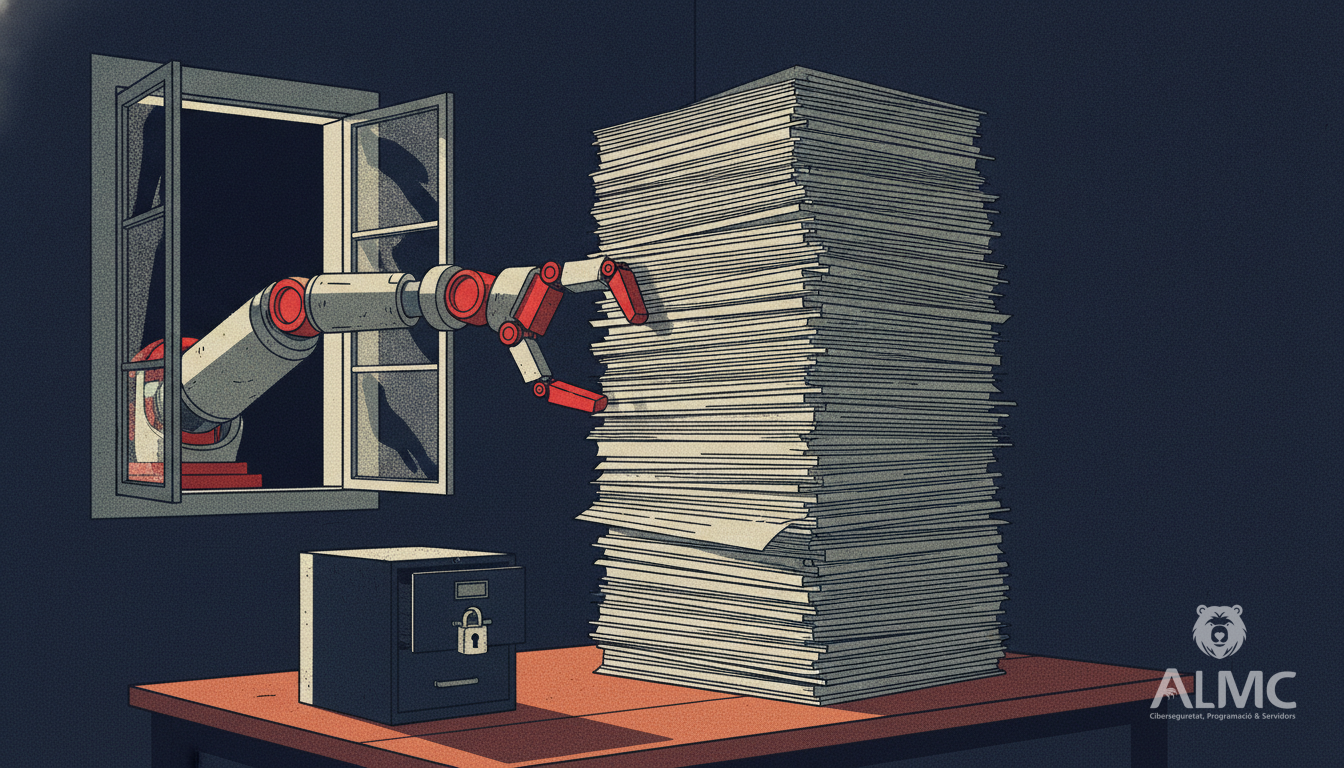
Meta updated the conditions that apply to businesses using its tools to manage Facebook pages, Instagram profiles, Threads accounts and other commercial assets. An earlier draft appeared to authorise the company to use content from domains, pages and URLs linked to a business's products or services in order to develop, improve and train its systems. After criticism from publishers and legal experts, the company removed the explicit reference to training and narrowed the stated purposes to its advertising and business products. The revised version is expected to take effect on 30 October 2026.
What actually changed, and what did not
The distinction matters. Meta has removed a specific phrase, not necessarily every possible use of the content it collects. According to analyses published after the revision, the updated wording still permits automated tools to access, gather and analyse content from pages connected to a business's products or services, with the aim of developing and improving advertising and commercial products. Intellectual property lawyers have noted that "developing business products" remains broad enough to leave open questions about how such content might feed into AI systems.
Meta, for its part, insists that its approach to crawling the web has not changed and that site owners can continue to express their preferences through the robots.txt file. That file tells automated crawlers which parts of a site they may visit. It is worth being clear about its limits: robots.txt is a declaration of intent, not a technical barrier. It does not physically block access, and it does not guarantee that every crawler will honour it.
For shop owners, the practical takeaways are these:
- Removing a clause is not the same as removing a capability. The absence of an explicit training reference does not settle every question about how crawled content is used.
- robots.txt is necessary but not sufficient. It is a good first line of defence, especially for catalogue pages, but it should sit alongside other measures.
- Business accounts had no straightforward opt-out. At the time of reporting, there was no simple switch for businesses to exclude themselves from the relevant provisions, which puts the burden on site owners to manage their own exposure.
Why publishers pushed back, and why shops should care
The reaction was led by media organisations, and their concerns go beyond AI training. Automated crawling can allow platforms to collect commercial and editorial information published on a website, so it becomes important to know what is being gathered, for what purpose and under which conditions. The European Publishers Council signalled it would ask EU institutions to examine the implications for copyright, contractual fairness and competition, and there were calls for regulators in the United Kingdom and the United States to intervene.
An online store is not a newsroom, but it publishes a great deal of valuable material: product descriptions, pricing, specifications, photographs, buying guides and blog content. All of that is exactly the kind of information that automated systems can ingest. If you sell online, you are a publisher too, and the same questions apply to you.
A practical checklist for Spanish and Catalan online shops
Under the GDPR and Spanish data protection rules, you already have obligations around personal data. The crawling question is adjacent but distinct: it concerns your published content and how third parties may reuse it. A sensible approach combines legal and technical measures.
- Review your robots.txt. Define clearly which sections may be crawled and which should stay off limits. Keep it maintained as your catalogue grows.
- Check your terms of use. State explicitly whether automated collection of your content is permitted and for what purposes.
- Look at your platform's settings. Both PrestaShop and WooCommerce offer ways to manage indexing and crawling behaviour; make sure they reflect your actual intentions.
- Keep an inventory of your content. Knowing what you publish, and where, makes it far easier to respond if something is reused without permission.
- Document your decisions. If a dispute arises, a clear record of the measures you took is worth a great deal.
Building a store that is ready for this landscape
None of this should overshadow the main job: selling. But a well-built online shop is one that combines commercial performance with sound technical foundations. At ALMC.es we build ecommerce sites on PrestaShop and WooCommerce tailored to each business, with conversion optimisation and the full stack needed to compete online. That includes getting the technical details right, from crawl directives to structured content, so your store is both visible to the customers you want and clear about the terms on which it can be accessed.
Whether you are launching a new store in Girona or reworking an existing one in Tarragona, the goal is the same: an ecommerce platform that sells effectively and protects the assets you have built. The platforms will keep rewriting their terms. Your shop should be ready for the next revision.
Related
- WooCommerce vs PrestaShop: Which Ecommerce Platform Wins in 2025?
- CRO for Ecommerce: Turning WooCommerce and PrestaShop Templates into Sales Engines
- Agentic Commerce: How AI Agents Are Rewriting the Rules of Online Shopping
- Desarrollo web
Put these ideas into practice
Talk to ALMC about a solution for your business. Explore your options or contact our team.