
Blog
Last-mile logistics: the hidden engine of your online shop
Delivery is not the end of the sale — it is part of the productWhen a shop in Lleida, Girona, Tarragona or Barcelona decides to sell online, the conve...
Delivery is not the end of the sale — it is part of the product
When a shop in Lleida, Girona, Tarragona or Barcelona decides to sell online, the conversation usually starts with the website: catalogue, payment methods, design. Yet the moment that decides whether a customer comes back is often the one that happens after checkout, when a parcel has to arrive at a real door, at a real time, in a real neighbourhood. Courier networks know this well, which is why they keep investing in partnerships and social initiatives that strengthen their brand among consumers. For an online shop, the lesson is simpler: your logistics promise is a conversion argument, not an afterthought.
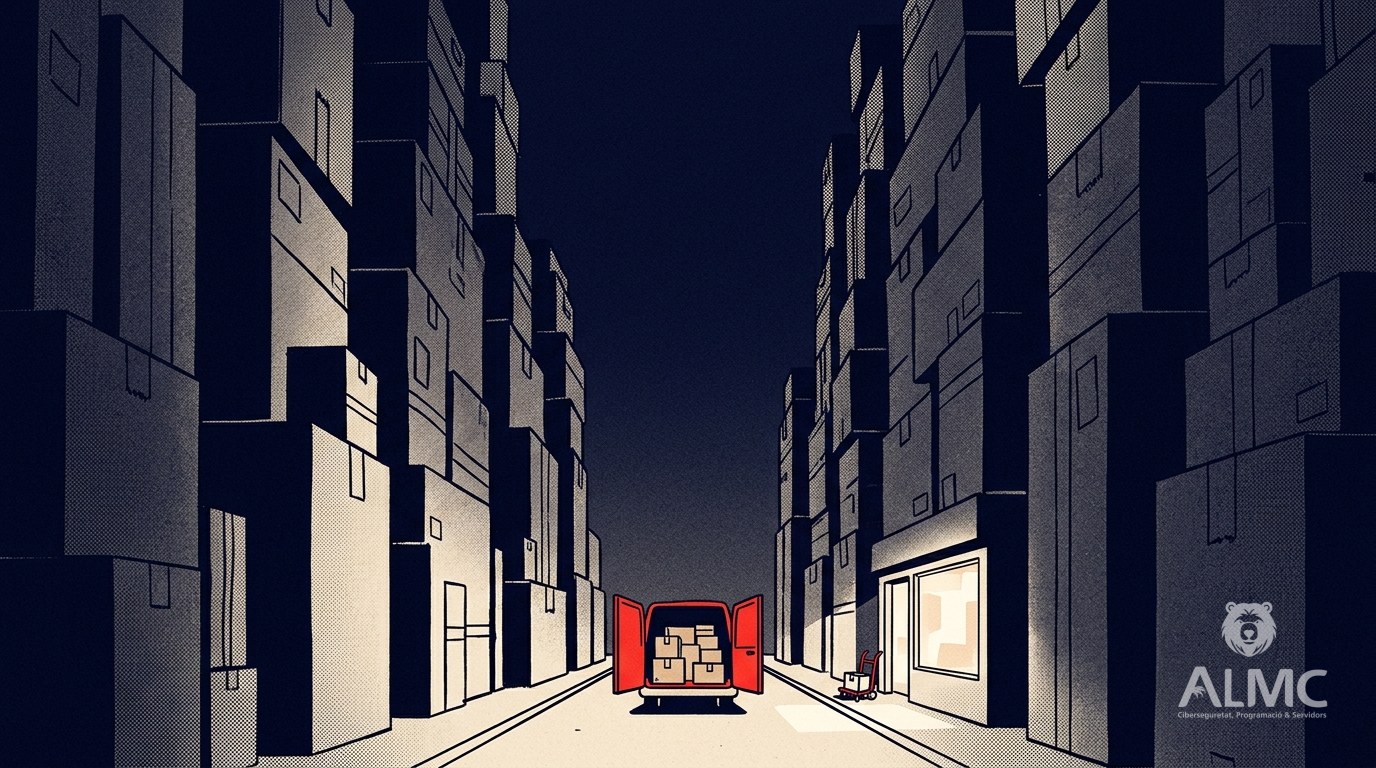
At ALMC we build online shops that genuinely sell, and that means treating last-mile delivery, returns and post-purchase communication as part of the ecommerce stack, not as something bolted on at the end.
Why the checkout page is only half the battle
Shoppers in Spain have become demanding. They compare delivery windows, look for pickup points near home or work, and expect clear information about return costs before they pay. If those answers are vague, many abandon the basket. If they are clear, the perceived risk drops and the order goes through.
A well-built ecommerce platform lets you show that information natively:
- Estimated delivery dates calculated per product and destination, not a generic banner.
- Pickup-point selectors integrated into the checkout, so the customer chooses a nearby shop or locker.
- Transparent return policy and, where it fits your margins, a prepaid label generated automatically.
- Order tracking pages that live on your own domain, keeping the customer inside your brand.
None of this is exotic. It is standard configuration in PrestaShop and WooCommerce when the shop is built with care from the start, rather than patched together with plugins that fight each other.
Returns: the cost centre that can become a loyalty tool
Fashion, footwear and home goods generate return rates that can hurt a small retailer's margins badly. The instinct is to make returns difficult. The result is usually worse: angry reviews, chargebacks and customers who never return. A better approach is to make returns predictable and cheap to process.
In practice, that means automating the reverse flow — a customer requests a return from their account, the system checks the order status, issues a label and updates stock once the item is received. Good ecommerce development turns a manual headache into a routine operation, and it gives you data on why products come back, which feeds directly into better product pages and sizing guides.
Local reality: Catalonia is not a single market
Serving a customer in central Barcelona is a different problem from serving one in a village in the Pyrenees or in the Ebro delta. Density changes cost per drop, delivery windows and the viability of same-day services. A shop that promises two-hour delivery across the whole of Catalonia will lose money; one that segments its promise by postcode can be both competitive and profitable.
This is where platform choice matters. A PrestaShop installation with custom shipping rules can apply different carriers, rates and cut-off times by zone. A WooCommerce store can do the same with tailored logic, and both can connect to the courier APIs that dominate the Spanish market. The goal is a shipping configuration that reflects your actual costs, not an average invented by a template.
GDPR and the data your logistics generates
Every parcel produces personal data: name, address, phone number, delivery preferences. Under the GDPR, sharing that data with a courier is legitimate and necessary, but it must be limited to what the delivery requires, documented in your privacy policy and covered by a processing agreement with the carrier. Storing tracking histories indefinitely "just in case" is a risk with no upside.
A well-designed shop collects only what it needs, keeps consent records tidy and gives customers a clear way to exercise their rights. This is not legal decoration: it protects you from fines and it builds trust with buyers who are increasingly aware of how their data travels.
Conversion optimisation continues after the click
Most conversion advice stops at the product page. In reality, the post-purchase experience drives repeat purchase rates as much as any banner. Transactional emails that actually arrive, a tracking page that loads quickly on mobile, a support channel that answers within hours — these are conversion features, because they determine whether the same customer buys again.
When we optimise an ecommerce project, we look at the whole funnel: how the shop performs on mobile connections, how the checkout behaves when a payment provider is slow, how the order confirmation reads, and what happens when something goes wrong. Speed and clarity at those moments are worth more than another discount code.
Building the stack around the promise
A convincing online shop is the sum of small, well-integrated decisions: a platform suited to your catalogue, shipping rules that match real costs, a return process that does not require a phone call, and data handling that respects the customer. Get those right and logistics stops being the weak link and becomes a reason to buy from you rather than from a marketplace.
If your shop is growing and the operational side is starting to creak, it is usually a sign that the platform needs to evolve with the business — not that ecommerce has stopped working.
Related
- WooCommerce vs PrestaShop: Which Ecommerce Platform Wins in 2025?
- CRO for Ecommerce: Turning WooCommerce and PrestaShop Templates into Sales Engines
- Agentic Commerce: How AI Agents Are Rewriting the Rules of Online Shopping
- Desarrollo web
Put these ideas into practice
Talk to ALMC about a solution for your business. Explore your options or contact our team.