
Blog
Online store logistics: from checkout to doorstep in Spain
Why the store is only half of the saleMost conversations about launching an online shop in Catalonia start with the website: the theme, the product pa...
Why the store is only half of the sale
Most conversations about launching an online shop in Catalonia start with the website: the theme, the product pages, the checkout. That is understandable, but it is only half the story. The moment a customer clicks pay, a second operation begins, and that operation is what decides whether they come back. A well-built tienda online that cannot keep its delivery promise will lose the customer just as surely as one with a broken checkout.
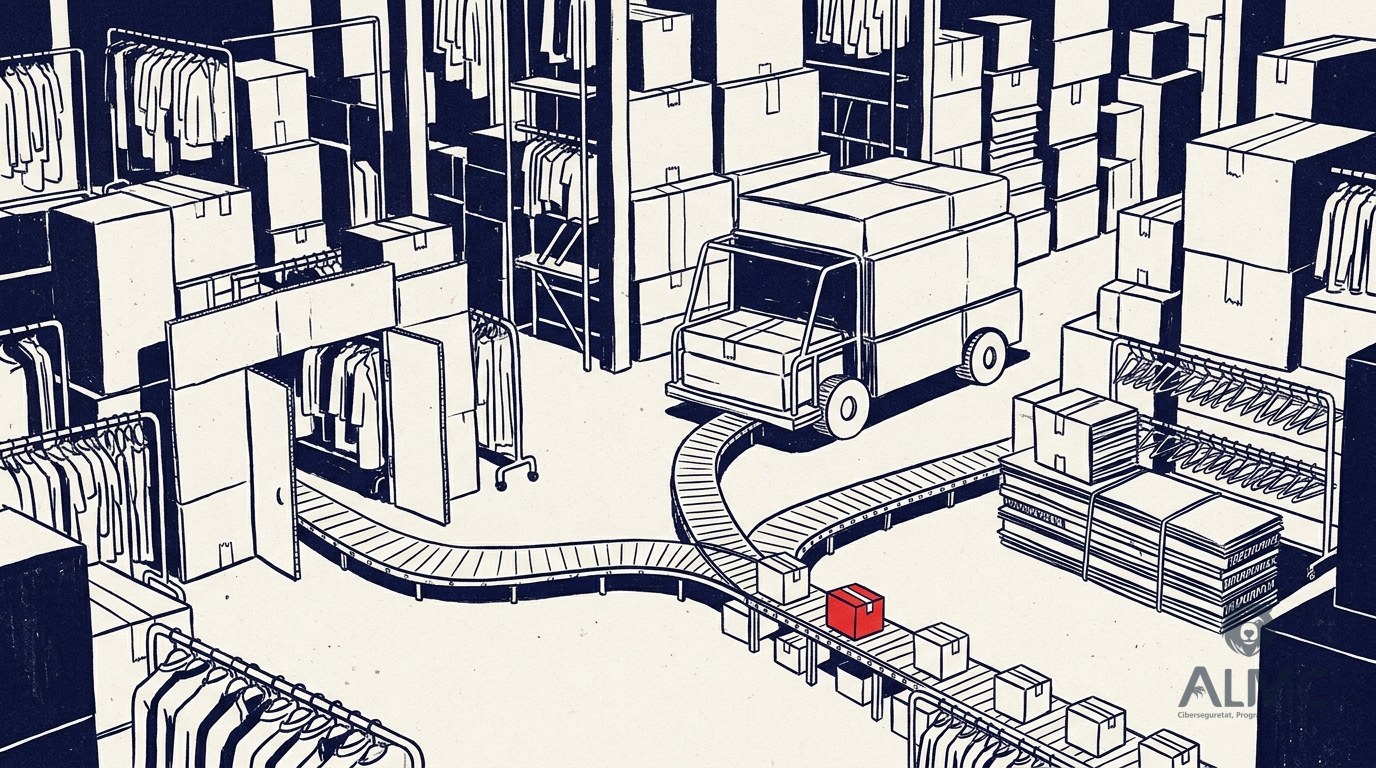
For shops and brands selling fashion, lifestyle or high-rotation products, the real competitive edge sits between the order confirmation and the unboxing. This article looks at how to connect the store, the stock and the last mile so that logistics becomes a growth engine rather than a bottleneck.
Specialised logistics is not the same as generic storage
Fashion and lifestyle products have a very particular rhythm: short product lifecycles, a high number of SKUs, strong seasonality, promotional peaks and constant collection launches. A generalist warehouse provider can store boxes; a specialised partner understands how garments must be received, handled, stored, picked, personalised and returned. It also understands that an ecommerce order for a single item, a replenishment order for a physical shop and a wholesale shipment are three different jobs with different packaging, documentation, cut-off times and transport needs.
That distinction matters for any brand operating from Barcelona, Lleida, Tarragona or Girona. The Ebro corridor and the Mediterranean axis give access to southern Europe, but only if the operation behind the website is designed to use that position. When logistics is treated as a strategic function, it allows a Catalan brand to sell across Spain and into France without opening a second warehouse.
Omnichannel means one inventory, not five
Customers now buy through the brand's own website, physical shops, marketplaces and social commerce. The temptation is to build a separate process for each channel. The result is usually duplicated stock, extra handling and limited visibility. A genuinely omnichannel operation connects inventory, orders and returns regardless of where the sale happened, and can allocate stock dynamically.
In practice this means a WooCommerce or PrestaShop store should not live on an island. Stock levels, order status and return flows need to talk to the warehouse and to the physical shop. That is where custom development earns its keep: a well-integrated ecommerce platform avoids overselling, reduces manual work and gives the team a single view of what is actually available.
The hidden cost of returns
Returns are often treated as an afterthought, yet they can quietly erode margins. The fix is not to make returns difficult, which damages trust, but to make them predictable. Clear sizing information, accurate product photography, simple return labels and a fast refund process all reduce the volume and cost of reverse logistics. For fashion brands, a returns process that is easy for the customer and structured for the warehouse is a competitive advantage, not a cost centre.
Packaging and presentation also belong to this conversation. The website creates the expectation; the parcel has to deliver on it. Receiving the right product, on time and in good condition is the baseline. Beyond that, packaging and personalisation should reflect the brand's positioning, and when something goes wrong, speed of response matters more than perfect wording.
Where automation and data actually help
Automation and artificial intelligence are useful when they solve a concrete problem: forecasting demand before a promotional peak, prioritising orders by cut-off time, flagging delivery incidents before the customer calls. They are less useful as a label. The same applies to the store itself: conversion optimisation should be based on real behaviour, not on assumptions. Testing product page layouts, checkout steps and delivery options in a live PrestaShop or WooCommerce environment gives measurable answers.
- Connect stock and sales channels so that inventory is visible and allocated dynamically.
- Design for peaks: seasonal campaigns and collection launches need capacity that can move between channels.
- Measure the full journey, from product page to delivery confirmation, not just the checkout conversion rate.
- Treat returns as part of the product experience, with clear policies and fast processing.
- Keep GDPR compliance in mind across the stack: customer data, order data and marketing consent.
Building the stack around the customer
A store that sells is the result of many small decisions working together: a fast, well-structured catalogue, a checkout that respects the customer's time, delivery options that match expectations, and a back office that can keep up. At ALMC.es we build tiendas online with PrestaShop and WooCommerce tailored to each business, focused on conversion and connected to the rest of the operation. Because the sale does not end at the checkout, and the brand experience does not begin with the parcel.
Related
- WooCommerce vs PrestaShop: Which Ecommerce Platform Wins in 2025?
- CRO for Ecommerce: Turning WooCommerce and PrestaShop Templates into Sales Engines
- Agentic Commerce: How AI Agents Are Rewriting the Rules of Online Shopping
- Desarrollo web
Put these ideas into practice
Talk to ALMC about a solution for your business. Explore your options or contact our team.