
What McDonald's AI Drive-Thru Teaches Online Shops
What McDonald's AI Drive-Thru Teaches Online Shops
Why a Burger Chain's Voice Assistant Matters to Your Online ShopWhen McDonald's started testing a voice assistant called Archy to take drive-thru orde...
Why a Burger Chain's Voice Assistant Matters to Your Online Shop
When McDonald's started testing a voice assistant called Archy to take drive-thru orders in English and Spanish, most coverage framed it as a restaurant story. For anyone running an online shop in Catalonia, it is something more useful: a live case study in how automation, careful rollout and conversion-focused design decide whether a digital channel actually sells.
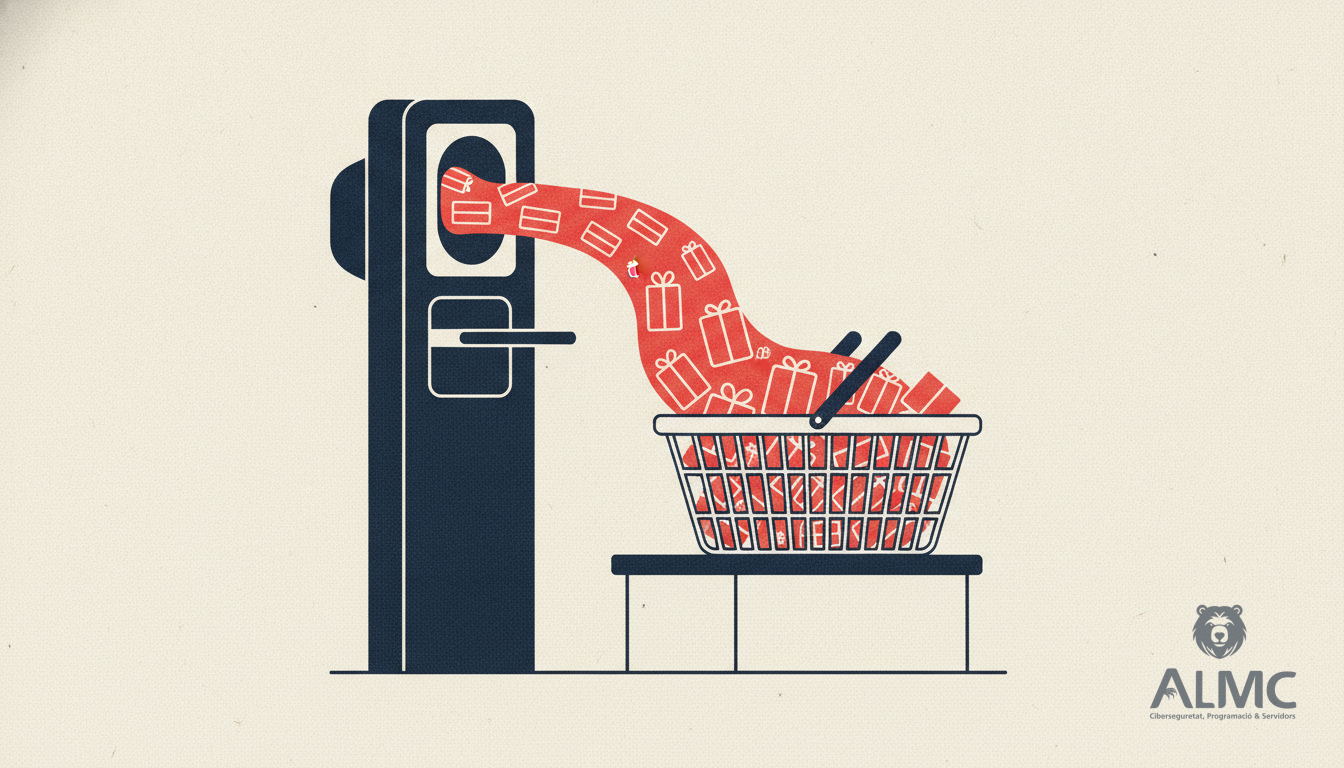
The chain reports that early trials handled a large majority of orders correctly, and that its wider AI platform could free up a substantial number of staff hours each week per restaurant. Those figures come from the company itself, so treat them as directional rather than gospel. The interesting part is not the numbers — it is the architecture behind them.
One Interface, One Platform, One Goal
McDonald's splits its effort in two. Archy is the conversational layer the customer meets at the speaker. Behind it sits a broader platform that connects inventory tracking, equipment monitoring and order verification. The voice assistant is the visible tip; the operational backbone does the heavy lifting.
That distinction maps neatly onto ecommerce. A polished storefront is the Archy of your business. The real work happens underneath: stock synchronisation, payment handling, shipping logic, fraud checks and analytics. A beautiful theme bolted onto a fragile back end will fail the moment traffic spikes, exactly as a voice assistant fails when the kitchen cannot keep up.
It is also worth noting that McDonald's is not switching everything on at once. The company is expanding gradually and has been candid that an earlier attempt with a different partner was abandoned after high-profile errors. The lesson for retailers is uncomfortable but valuable: automate the repetitive, low-risk steps first, measure honestly, and keep a human fallback.
What This Means for Shops in Lleida and Beyond
If you sell online from Barcelona, Tarragona, Girona or Lleida, you are already competing with businesses that treat their store as an operating system rather than a brochure. Here is where the parallels bite:
- Order accuracy: McDonald's verifies that every item is in the bag before handover. Your equivalent is a checkout that confirms stock, address and payment method before the customer commits — not after.
- Multilingual by default: Archy handles English and Spanish. In Catalonia, a store that only speaks one language quietly loses customers. PrestaShop and WooCommerce both handle Catalan, Spanish and English natively when configured properly.
- Edge decisions: Processing data close to the point of action speeds things up. For a shop, that means caching, a fast hosting stack and a checkout that does not wait on a slow third-party call.
- Human time: The point of automation is not to remove people but to move them to higher-value work — merchandising, supplier negotiation, customer care.
Conversion Is the Only Metric That Counts
McDonald's measures success by throughput and satisfaction, not by how clever the model is. Online retailers should apply the same discipline. Traffic is vanity; conversion is sanity. A store that loads in under two seconds, offers clear delivery costs, accepts the payment methods Spanish shoppers actually use, and reassures buyers with visible GDPR compliance will outperform a flashier competitor every time.
This is where a tailored approach pays off. Off-the-shelf templates rarely match how a business actually sells. A PrestaShop or WooCommerce build shaped around your catalogue, your margins and your logistics will convert better than a generic setup, because every decision — from product page layout to the abandoned-cart flow — is made with your customer in mind.
Automation should sit on top of that foundation, not replace it. Chatbots that answer delivery questions, automated invoices that comply with Spanish e-invoicing rules, and stock alerts that trigger reorders are all sensible next steps once the basics are solid.
Start With the Backbone, Not the Buzzword
The most transferable insight from McDonald's experiment is structural: build a connected platform first, then layer intelligence on top. For an online shop, that means choosing a commerce engine you can extend, hosting that can grow, and analytics that tell you where customers drop off.
If your current store feels like a collection of plugins held together with hope, the fix is not another app. It is a coherent ecommerce stack designed to sell — and to keep selling as your catalogue and your ambitions grow.
Related
- WooCommerce vs PrestaShop: Which Ecommerce Platform Wins in 2025?
- CRO for Ecommerce: Turning WooCommerce and PrestaShop Templates into Sales Engines
- Agentic Commerce: How AI Agents Are Rewriting the Rules of Online Shopping
- Desarrollo web
Put these ideas into practice
Talk to ALMC about a solution for your business. Explore your options or contact our team.