
Blog
Retail media in Spain: why your online shop needs clean data
Retail media grows up in SpainRetail media has moved from a niche experiment to a serious line item in Spanish marketing budgets. The recent Retail Me...
Retail media grows up in Spain
Retail media has moved from a niche experiment to a serious line item in Spanish marketing budgets. The recent Retail Media Awards in Madrid, now in their third edition, drew dozens of entries from brands, retailers and agencies, and the themes on stage were telling: first-party data, artificial intelligence, and closer collaboration between manufacturers and shops. For anyone running an online shop in Catalonia — from a boutique in Girona to a distributor in Lleida or a growing brand in Barcelona — the message is hard to ignore. Advertising inside retail environments only works when the underlying commerce platform is solid.
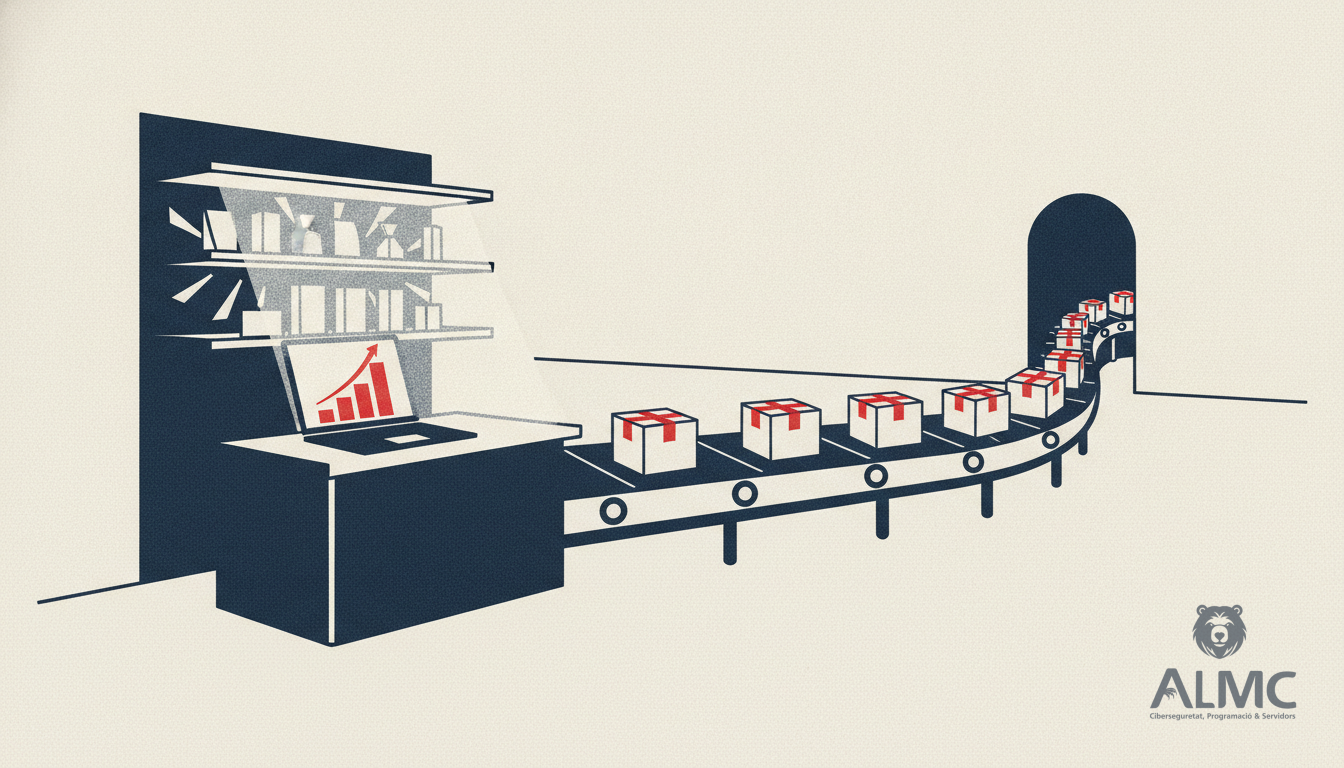
What the award winners had in common was not a bigger budget. It was better plumbing. Campaigns that combined a brand's own customer knowledge with a retailer's audience data delivered stronger results than those relying on reach alone. That kind of integration is impossible if your catalogue is messy, your stock figures are wrong or your checkout leaks customers at the last step.
Why your shop is the real media platform
Retail media is often described as advertising on someone else's shelves. In practice, every ecommerce site is already a media surface: product pages, category listings, search results, the confirmation email, the post-purchase follow-up. Each of these is a place where a relevant offer can appear at exactly the right moment. But to sell that space — to suppliers, to partners, or simply to your own repeat customers — you need structured, trustworthy data.
- Clean product data: consistent titles, categories, attributes and images, so audiences can be built and offers matched correctly.
- Reliable stock and pricing: a campaign that sends traffic to an out-of-stock item wastes budget and damages trust.
- Consent-aware tracking: under GDPR, audience building must rest on lawful, documented consent, not on assumptions.
- Fast, stable pages: slow product pages depress conversion and inflate the cost of every click you buy.
None of this is glamorous. All of it determines whether a retail media investment returns anything at all.
PrestaShop and WooCommerce as a foundation
Most Spanish SMEs run their shops on PrestaShop or WooCommerce, and both are perfectly capable of supporting serious commerce media — provided they are built and maintained with that goal in mind. A standard installation with a handful of plugins will get you online, but it will struggle once you start layering audiences, feeds for external platforms, personalised recommendations and conversion tracking on top.
A tailored build changes the picture. On PrestaShop, that means a structured catalogue with well-defined attributes, a checkout tuned to your actual sales process, and modules that expose the data your marketing team needs without breaking performance. On WooCommerce, it means a lean plugin stack, careful caching, and a product schema that external advertising platforms can read without errors. In both cases, the aim is the same: a shop that produces clean signals, so every euro spent on acquisition or retail media works harder.
Conversion optimisation sits at the heart of this. Small, measurable changes — clearer delivery information for Spanish and Catalan customers, local payment methods, transparent pricing in euros including VAT, a frictionless returns policy — often deliver more than a larger ad budget. Retail media amplifies whatever your shop already does; it does not fix a broken funnel.
A practical checklist for Catalan retailers
- Audit your product feed: are titles, categories and attributes consistent across the whole catalogue?
- Check consent management: can you prove, under GDPR, how each audience segment was built?
- Measure the full path: from ad impression to product page to checkout, with events that actually fire.
- Test the basics in Catalan and Spanish, including delivery times to Barcelona, Tarragona, Lleida and Girona.
- Review performance under load before a campaign, not during it.
The brands celebrated in Madrid showed that collaboration between retailers and manufacturers pays off when data flows cleanly between them. For a smaller shop, the same principle applies at a smaller scale: your suppliers, your logistics partners and your own marketing all depend on the quality of the platform underneath. Building that platform properly is the unglamorous work that makes the visible wins possible.
Related
- WooCommerce vs PrestaShop: Which Ecommerce Platform Wins in 2025?
- CRO for Ecommerce: Turning WooCommerce and PrestaShop Templates into Sales Engines
- Agentic Commerce: How AI Agents Are Rewriting the Rules of Online Shopping
- Desarrollo web
Put these ideas into practice
Talk to ALMC about a solution for your business. Explore your options or contact our team.