
Abuse Shield: Centralised Server Protection for SMEs
Abuse Shield: Centralised Server Protection for SMEs
Why scattered defences stop working once you run more than one serverMost small and mid-sized organisations in Catalonia start with a single server an...
Why scattered defences stop working once you run more than one server
Most small and mid-sized organisations in Catalonia start with a single server and a single firewall. Then comes the second machine for the online shop, a third for backups, a fourth for internal tooling. Each one gets its own rules, its own logs and its own administrator who occasionally remembers to check them. The result is predictable: the same attacker hammers all four boxes, gets blocked on one, and walks straight into the next.
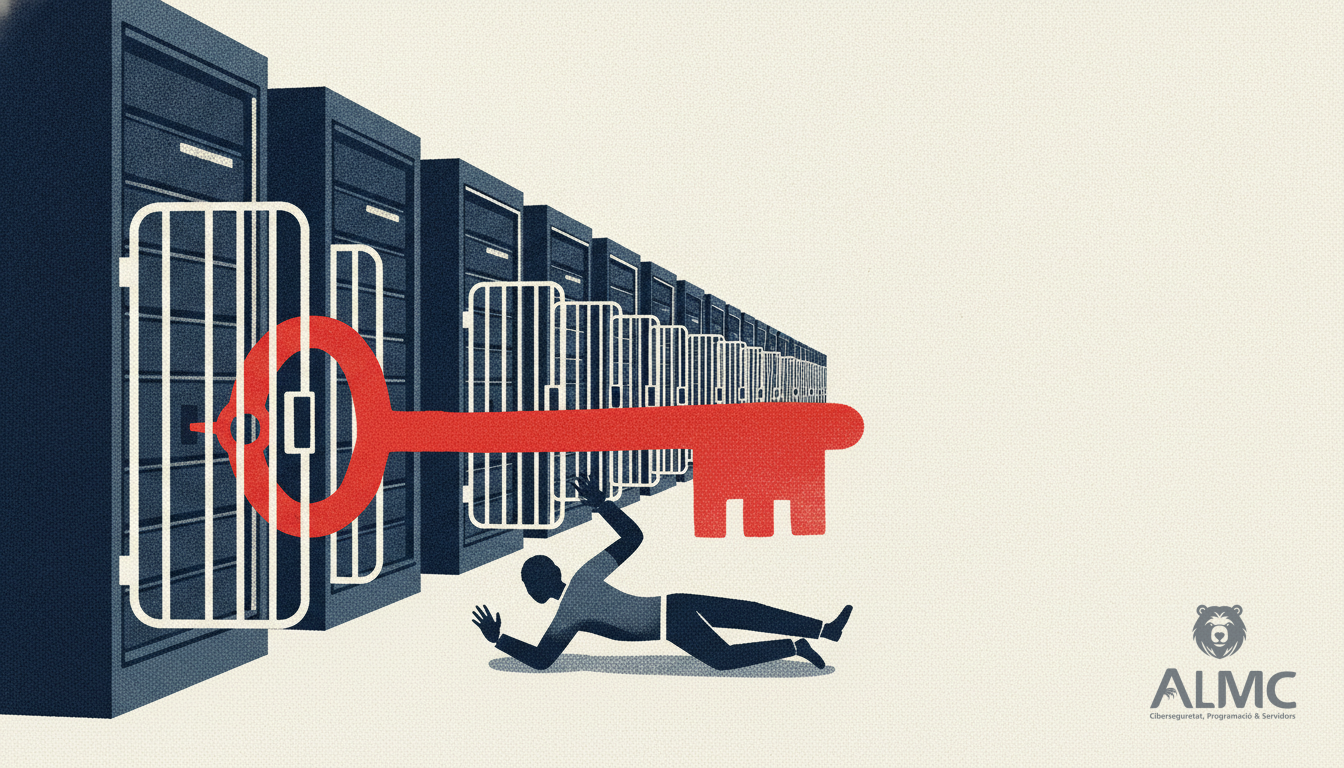
This is the gap that Abuse Shield was built to close. Instead of treating every machine as an isolated island, it turns your fleet into a single defensive unit: malicious IPs are detected, blocked automatically, and the knowledge is shared instantly with every other server you operate.
What fail2ban does well, and where it falls short
fail2ban remains one of the most useful tools in a systems administrator's kit. It watches log files, spots repeated failed logins or abusive request patterns, and drops a temporary firewall rule against the offending address. On a single VPS it is excellent value for money.
The problems appear at scale:
- Each installation needs its own jails, filters and tuning, and drift creeps in over time.
- A ban on one machine is invisible to the others, so a blocked attacker simply retries elsewhere.
- Logs grow, rules multiply, and nobody has a clear overview of who is being blocked and why.
- When a legitimate customer or partner gets caught in a ban, unblocking them becomes a manual hunt across machines.
Managed fail2ban across multiple machines changes the economics. You define policy once, apply it everywhere, and let the platform handle the repetitive work.
How Abuse Shield works in practice
The service sits on top of your existing infrastructure and coordinates three things that are usually kept apart.
Automatic blocking of malicious IPs. Abuse Shield monitors authentication attempts, web requests and other signals across your servers. When an address crosses the threshold you have defined, it is blocked without waiting for a human to notice. Brute-force attempts against SSH, credential stuffing against a login form or aggressive scraping of a web application are all handled in the same way.
Managed fail2ban on every machine. Rather than installing and maintaining the tool by hand on each host, you get a centrally managed deployment. Rules stay consistent, updates are applied uniformly, and your team spends its time on real incidents instead of configuration drift.
A shared reputation feed. This is the part that changes behaviour most noticeably. When one of your servers identifies an abusive address, that verdict is published to the others. The attacker who probes your staging server at three in the morning finds every production machine already closed to them. Over time the feed becomes a private threat intelligence layer shaped by your own traffic, not by generic blocklists.
Who benefits most
The service is aimed at three overlapping groups. Systems administrators gain a single control plane instead of a dozen scattered configurations. Hosting companies can protect customer machines without asking each client to become a security expert, which is a genuine selling point in a crowded market. SMEs with their own servers — a manufacturer in Lleida, a logistics firm near Tarragona, a professional services practice in Girona or Barcelona — get enterprise-grade coordination without hiring a dedicated security team.
Compliance and the GDPR angle
Under the GDPR, keeping personal data secure is an obligation, not a courtesy. Article 32 asks for appropriate technical measures, and unauthorised access through an unprotected server is exactly the kind of incident that turns into a breach notification. Centralised blocking and a documented, consistent policy across machines make it far easier to demonstrate that you took security seriously. It also reduces the volume of noise your team has to sift through when investigating a real incident.
Common objections, answered honestly
"We already have fail2ban installed." Good — Abuse Shield builds on that foundation rather than replacing it. The value is in coordination, not in reinventing the filter.
"We are worried about blocking real customers." Thresholds are configurable, and shared reputation is based on observed behaviour rather than guesswork. Addresses can be reviewed and released centrally when a false positive occurs.
"Our infrastructure is small." Two servers are already enough to justify a shared feed. The moment you have more than one machine, isolated defences start leaking.
A practical first step
Before committing to anything, take an inventory: how many servers do you run, which of them expose SSH or administrative panels to the internet, and how long would it take you to block a single abusive address across all of them today? If the answer involves logging into each machine in turn, the case for centralisation is already made. Abuse Shield is designed to be adopted incrementally, starting with the most exposed machines and extending coverage as confidence grows.
Related
- How to Harden Your Servers with Fail2ban and IP Reputation Feeds
- Fail2ban: Your First Line of Defense Against Unauthorized Server Access
- Critical libssh2 flaw: urgent patch for SSH servers
- Desarrollo web
Put these ideas into practice
Talk to ALMC about a solution for your business. Explore your options or contact our team.