
Node.js Brotli Flaw: Patch Fast, Then Harden Your Servers
Node.js Brotli Flaw: Patch Fast, Then Harden Your Servers
A memory bug that turns compressed data into an attack surfaceThe Node.js project has shipped a security release addressing a high-severity defect in...
A memory bug that turns compressed data into an attack surface
The Node.js project has shipped a security release addressing a high-severity defect in the Brotli decoder bundled with the runtime. The flaw is an out-of-bounds write: when a process decodes Brotli content that an attacker can influence, the decoder can write past the boundary of its intended buffer. In a memory-corruption scenario of this kind, the practical consequence is unpredictable behaviour at best and arbitrary code execution at worst, depending on how the process is laid out and what the attacker controls.
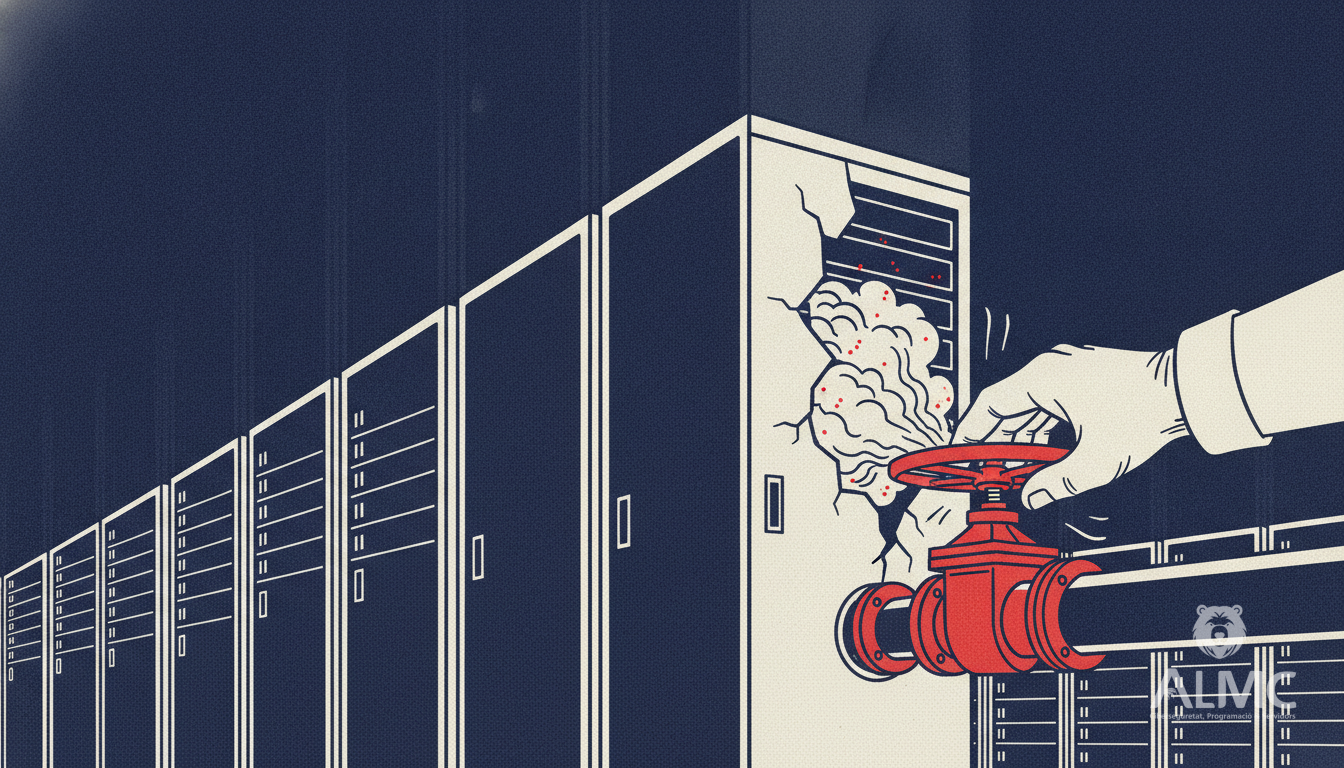
The issue is tracked as CVE-2026-111497 and rated high severity. It affects every branch still under official maintenance before the fix, and corrected builds are available for the current supported lines. If you run Node.js in production, this is not a theoretical item to file away for the next quarterly review.
Why compression bugs matter more than they look
It is tempting to dismiss a decoder flaw as an edge case. In practice, decompression sits on the boundary between your application and untrusted input, which is exactly where you least want a memory bug. Consider how often a Node.js service handles compressed content:
- An API client or upstream service sends a response with Content-Encoding: br and your code decodes it.
- A webhook, file upload or proxy layer accepts a compressed payload from a third party.
- A crawler, scraper or integration fetches external resources and inflates them inside the same process that holds your credentials.
- A shared library or internal microservice passes compressed blobs between services without re-validating their origin.
Each of these is a legitimate design pattern. Each also means that whoever can shape the bytes reaching the decoder is, in effect, talking directly to native code running with your application's privileges.
What to do first: inventory, then patch
The immediate priority is knowing where Node.js runs in your estate. That sounds trivial until you count container images, CI runners, build agents, staging environments and the developer laptop that quietly mirrors production. An outdated runtime in any of those points can reintroduce the problem into the delivery chain even after production has been updated.
Work through the following in order:
- Map the exposure. List every service that decodes Brotli content, and rank by whether the input can be influenced by an external party. Those are your first fixes.
- Update to a patched release. Move to the corrected build for your supported branch and redeploy. Do not assume a minor bump elsewhere covers it.
- Migrate off unsupported branches. Older lines outside official maintenance will not receive a fix. Staying there is a standing risk, not a temporary compromise.
- Check custom builds. If you compile the runtime against a system-provided Brotli library, confirm that the dependency includes the upstream correction. A patched Node.js linked to an unpatched system library can leave the hole open.
- Sweep the hidden layers. Rebuild container images from a clean base, refresh CI images and audit local environments so an old runtime does not creep back in on the next deploy.
The same release fixes more than Brotli
Brotli is the headline, but the same batch of patches also addresses other issues, including high-severity problems related to hostname validation in TLS. That matters for anyone terminating TLS in Node.js or validating certificates programmatically. Hostname validation bugs can undermine the trust assumptions your service makes about the peer it is talking to, which is a different class of risk but no less serious. Treat the whole release as mandatory rather than cherry-picking the single CVE that made the news.
Patching is necessary, not sufficient
Every incident of this shape carries the same lesson: the window between disclosure and exploitation is short, and the organisations that suffer are usually the ones that discover the problem late. A disciplined patch cycle reduces the window, but it does not eliminate the underlying exposure of running internet-facing services.
That is where layered defence earns its keep. If a host is compromised through an application flaw, the next question is how far the attacker can travel. Rate limiting, strict firewall rules and automated blocking of abusive sources limit the reconnaissance and brute-force traffic that so often precedes a real intrusion attempt. Centralising that protection across a fleet, rather than configuring each machine by hand, is what makes it survive contact with reality.
This is the problem Abuse Shield is built for. It brings managed fail2ban across multiple machines, automatic blocking of malicious IPs and a shared IP reputation feed between all your servers. When one host in your fleet sees an abusive source, the others learn about it, so an attacker probing your infrastructure from Barcelona to Girona does not get a fresh start on each machine. For system administrators, hosting providers and SMEs running their own servers in Catalonia and across Spain, that means fewer manual rules, fewer forgotten hosts and a consistent security posture that does not depend on someone remembering to check.
A practical checklist for this week
- Confirm the Node.js version on every production host and container image.
- Patch to the corrected release and redeploy; verify the version after deployment, not before.
- Audit services that decode third-party Brotli content and consider whether they need to.
- Review TLS hostname validation logic against the patched behaviour.
- Refresh CI runners and base images so old runtimes do not return.
- Document the update in your change log, as GDPR accountability and good operational hygiene both expect.
None of this is glamorous work. It is, however, the difference between a routine maintenance afternoon and an incident report. Patch the runtime, close the delivery-chain gaps, and put automated protection around the hosts that remain exposed by design.
Related
- How to Harden Your Servers with Fail2ban and IP Reputation Feeds
- Fail2ban: Your First Line of Defense Against Unauthorized Server Access
- Critical libssh2 flaw: urgent patch for SSH servers
- Desarrollo web
Put these ideas into practice
Talk to ALMC about a solution for your business. Explore your options or contact our team.