
Abuse Shield: Centralised Server Protection and Shared IP Reputation
Abuse Shield: Centralised Server Protection and Shared IP Reputation
Why protecting each server on its own no longer worksMost small and mid-sized infrastructures grow one machine at a time. A web server here, a mail se...
Why protecting each server on its own no longer works
Most small and mid-sized infrastructures grow one machine at a time. A web server here, a mail server there, a database node added during a busy quarter. Each one ends up with its own firewall rules, its own log files and, if you are lucky, its own fail2ban installation configured by whoever had ten spare minutes that week. The result is predictable: inconsistent thresholds, forgotten jails and a security posture that depends on which server an attacker happens to hit first.
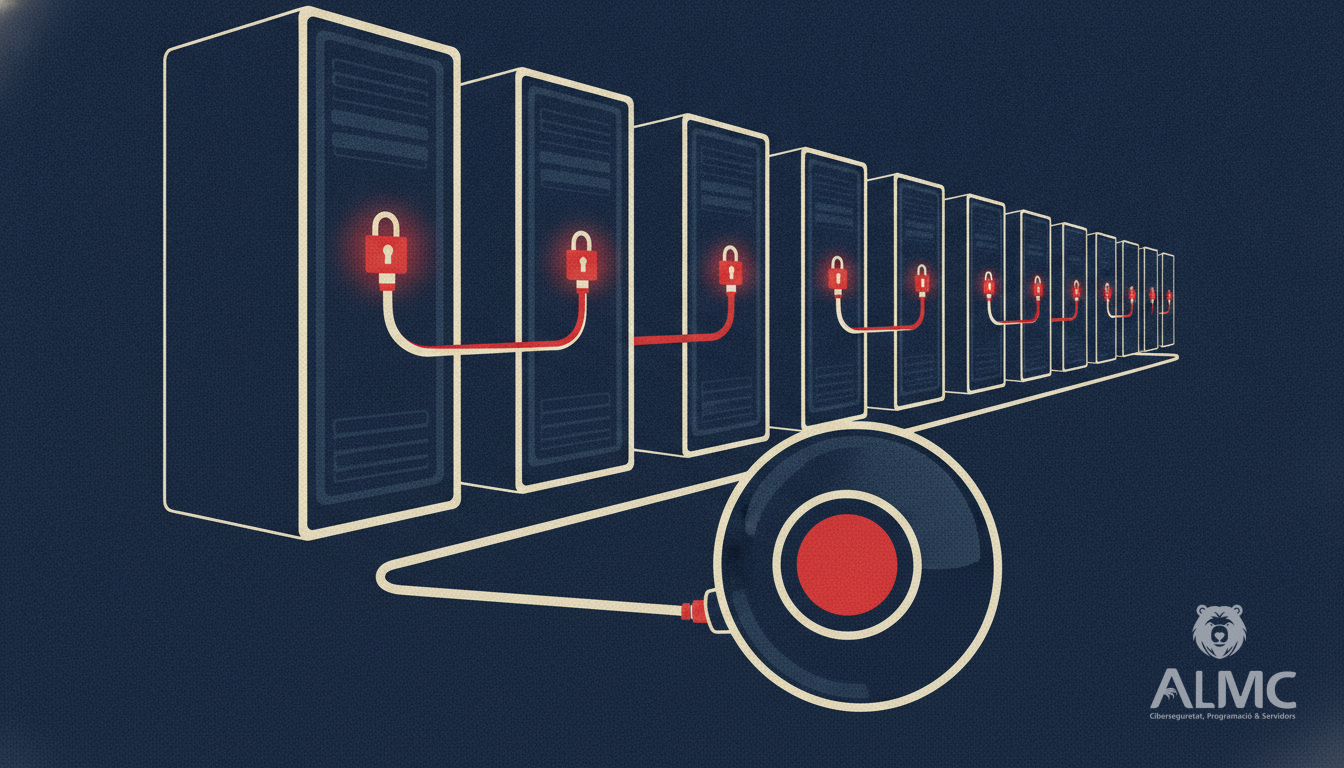
The problem is not that the tools are bad. fail2ban remains one of the most effective ways to react to brute-force attempts, credential stuffing and abusive scraping. The problem is that it is inherently local. A machine only knows what it has seen in its own logs. When an IP address spends an afternoon hammering SSH on your mail server and then moves to your web server, the second machine has no memory of the first attack. It starts from zero, and so does the attacker.
What Abuse Shield changes
Abuse Shield is ALMC's managed protection service for servers, built around three ideas that work together rather than as separate features.
- Automatic IP blocking. Malicious addresses are detected and blocked without waiting for someone to read an alert at nine in the morning. The reaction happens while the attack is still in progress.
- Managed fail2ban across multiple machines. We deploy, tune and maintain the jails for you, so every server in your fleet follows the same coherent policy instead of drifting apart over time.
- A shared reputation feed. When one of your servers identifies an abusive IP, that information is distributed to the rest. The next machine does not have to learn the same lesson again.
That third point is where the real difference lies. A single hardened server is useful; a fleet that shares what it learns behaves like a single organism. The cost of an attack against any one machine becomes an investment in the protection of all of them.
Built for the teams that actually run infrastructure
Abuse Shield is designed for three profiles that share the same underlying pain.
System administrators who manage a handful of servers and cannot afford to babysit log files. They want sensible defaults, clear visibility and the ability to adjust thresholds without rewriting configuration from scratch on every host.
Hosting companies running customer workloads across many machines, where a single compromised account can turn into a reputation problem for the whole platform. Shared intelligence between nodes is not a luxury here; it is the difference between containing an incident and watching it spread.
SMEs with their own servers, often in a rack in Barcelona, Lleida or Girona, with no dedicated security team. They need protection that works quietly in the background and does not require a specialist to interpret it every week.
How the pieces fit together in practice
The service sits on top of the infrastructure you already have. There is no need to migrate workloads or replace your stack. We install and configure the agents, define the jails that make sense for each role, and connect the machines to the shared reputation feed.
From that point on, the day-to-day experience is mostly silence, which is exactly what you want from a security layer. When something does happen, you get a clear picture of which addresses were blocked, on which machines and for what reason. If a legitimate partner or monitoring service gets caught by an overly aggressive rule, you can whitelist it once and have that decision respected across the fleet.
The tuning work matters more than it might seem. Default fail2ban configurations are a starting point, not an answer. A mail server and a public API endpoint receive very different traffic patterns, and a rule that protects one can easily annoy users of the other. Managed configuration means those distinctions are made deliberately, documented, and kept consistent as your infrastructure changes.
Security, GDPR and the data question
Any system that collects IP addresses and shares them between machines deserves a serious look under the GDPR. Abuse Shield is built with that in mind: the reputation feed carries the minimum information needed to identify abusive behaviour, retention is limited, and the legal basis for processing is the legitimate interest in protecting the infrastructure. For organisations operating in Spain and Catalonia, having a provider that understands these obligations locally is a practical advantage, not a footnote.
It is also worth remembering that IP reputation is a signal, not a verdict. Shared blocking should be reversible, auditable and scoped to the behaviour observed. A well-designed system distinguishes between an address that failed authentication repeatedly and one that simply appeared on a list somewhere.
When a single server is not enough
Automated attacks rarely respect the boundaries we draw between machines. A botnet does not care that your SSH endpoint and your admin panel live on different hosts; it will try both. The only sensible response is to make your infrastructure remember collectively.
If you are running more than one server and still treating each as an island, Abuse Shield is the simplest way to close that gap. Centralised protection, managed fail2ban and a shared reputation feed turn a collection of individually defended machines into a coherent defensive perimeter, one that gets stronger every time an attacker tries their luck.
Related
- How to Harden Your Servers with Fail2ban and IP Reputation Feeds
- Fail2ban: Your First Line of Defense Against Unauthorized Server Access
- Critical libssh2 flaw: urgent patch for SSH servers
- Desarrollo web
Put these ideas into practice
Talk to ALMC about a solution for your business. Explore your options or contact our team.