
Abuse Shield: centralised server protection against malicious IPs
Abuse Shield: centralised server protection against malicious IPs
Why scattered server defences stop workingMost companies that run their own infrastructure start with good intentions: fail2ban installed on the main...
Why scattered server defences stop working
Most companies that run their own infrastructure start with good intentions: fail2ban installed on the main server, a firewall rule here and there, maybe a few manual bans after a noisy night of failed logins. The problem appears later, when there are five, ten or thirty machines. Each one learns its own lessons in isolation, and none of them tells the others what it has just discovered.
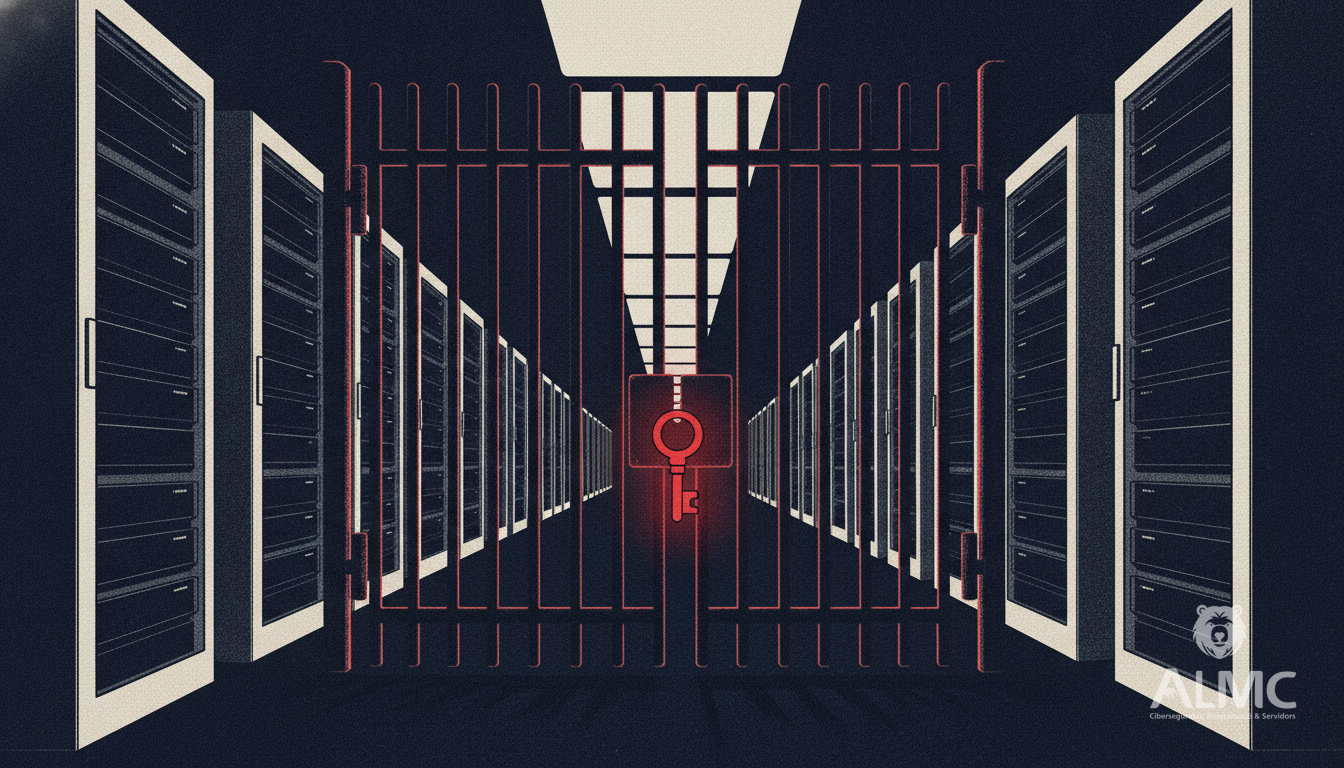
An attacker who is blocked on your web server after a few hundred failed SSH attempts is still perfectly free to try the database server, the mail relay or the backup node. From the attacker's point of view, every machine is a fresh opportunity. From yours, it is the same intruder knocking on every door of the same building while each door has its own private doorman.
This is the gap that Abuse Shield closes. Instead of managing protection machine by machine, it treats your whole fleet as one defended perimeter.
What Abuse Shield actually does
The service is built around three ideas that work together rather than as separate features:
- Automatic blocking of malicious IPs. Suspicious behaviour is detected and the offending address is blocked without waiting for someone to read an alert at nine in the morning.
- Managed fail2ban across multiple machines. The same protection policy is deployed and kept up to date on every server, so you are not maintaining a dozen slightly different configurations.
- A shared reputation feed. When one server identifies an abusive address, that knowledge is propagated to the rest. The fleet learns once and benefits everywhere.
The result is a defence that gets stronger as your infrastructure grows, rather than one that becomes harder to keep consistent with every new machine you add.
The shared reputation feed, explained plainly
Imagine a company in Lleida with a web front end, an application server and a separate mail server. A bot starts hammering the web front end with credential-stuffing attempts. Under a traditional setup, that front end blocks the address after a threshold of failures, and the other two machines remain unaware.
With a shared feed, the moment the address is classified as abusive, the other servers already know it. The attacker finds the door closed before knocking. This matters especially for small and medium businesses, where a single compromised mail server can mean a GDPR incident, a notification obligation and a reputational cost far larger than the technical fix.
The same logic applies to hosting providers managing dozens of customer machines. A reputation feed shared across the whole estate turns each individual server into a sensor for the others, which is a meaningful advantage when you are responsible for other people's data.
Managed fail2ban without the maintenance tax
fail2ban is a solid, well-understood tool, and that is precisely why it is so widely deployed. The difficulty is never the installation; it is everything afterwards. Rules drift, log paths change after an upgrade, a new service needs a new jail, and nobody remembers which server has which version of the configuration.
Abuse Shield takes that ongoing work off the administrator's plate. Policies are defined centrally and applied consistently, so a change made once reaches every machine. For a systems administrator in Barcelona or Tarragona juggling several clients, this removes a recurring source of silent failure: the server that was supposed to be protected but quietly was not.
Where this fits in a wider security posture
It is worth being honest about scope. Blocking malicious IPs and managing fail2ban does not replace patching, access control, backups or monitoring. What it does is remove a large volume of low-level noise — automated scanning, brute-force attempts, credential stuffing — before it reaches the parts of your stack that need human attention.
That distinction matters more than it used to. Attackers increasingly target the entry points that are cheap to probe and easy to automate, and they move on quickly when a door is closed. A fast, consistent, fleet-wide block is often the difference between an incident and a log entry nobody has to read.
Who benefits most
- Systems administrators who want one policy instead of a spreadsheet of per-server exceptions.
- Hosting companies that need consistent protection across many customer machines without multiplying the operational load.
- SMEs with their own servers that do not have a dedicated security team but do have data they are legally responsible for under GDPR.
Getting started
Protection works best when it is decided once and applied everywhere. If your servers currently defend themselves in isolation, the first useful step is to look at how many machines are running their own version of the rules, and how many would benefit from learning what the others already know.
Related
- How to Harden Your Servers with Fail2ban and IP Reputation Feeds
- Fail2ban: Your First Line of Defense Against Unauthorized Server Access
- Critical libssh2 flaw: urgent patch for SSH servers
- Desarrollo web
Put these ideas into practice
Talk to ALMC about a solution for your business. Explore your options or contact our team.