
Abuse Shield: Centralised Server Protection for Your Infrastructure
Abuse Shield: Centralised Server Protection for Your Infrastructure
Why scattered server defences stop working as you growMost small and mid-sized organisations in Catalonia start with a single server and a hand-tuned...
Why scattered server defences stop working as you grow
Most small and mid-sized organisations in Catalonia start with a single server and a hand-tuned firewall. It works. Then a second machine appears for the web application, a third for backups, perhaps a staging box in a Barcelona data centre and a mail relay in Lleida. Each one accumulates its own rules, its own logs and its own idea of who is attacking. The result is predictable: an IP that hammers the web server in Tarragona is blocked there, then moves to the mail relay in Girona and starts again from zero.
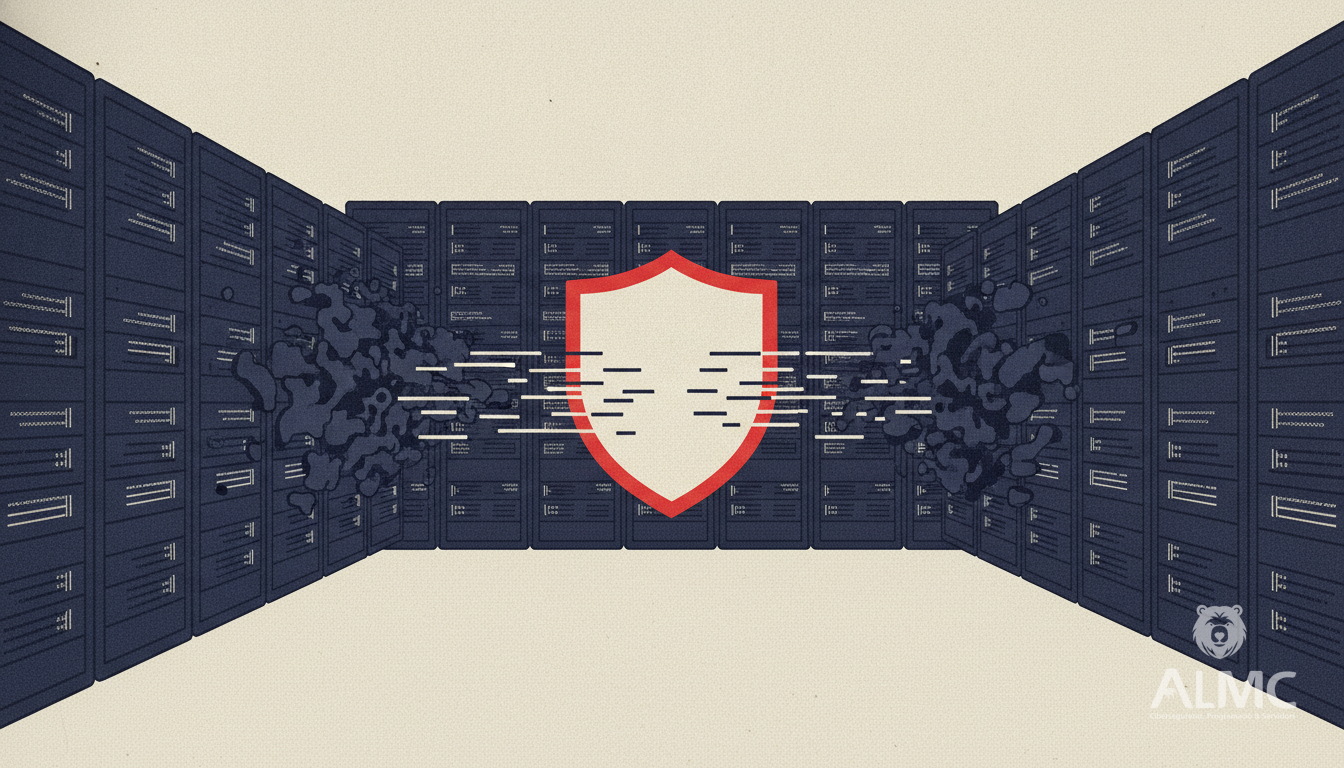
That fragmentation is the real cost of running infrastructure without centralised protection. It is not only the time spent repeating the same configuration; it is the blind spots that appear between machines. Abuse Shield was built around a simple premise: server security should be managed as one system, not as a collection of isolated boxes.
What Abuse Shield actually does
Abuse Shield is a managed protection layer for your servers. Instead of installing and babysitting fail2ban on every host, you connect your machines to a single control plane that handles the repetitive work for you.
- Automatic malicious IP blocking. Suspicious behaviour is detected and the offending address is blocked without waiting for someone to read a log at midnight.
- Managed fail2ban across multiple machines. The same policies apply everywhere, so a rule written once protects the whole fleet rather than a single host.
- A shared IP reputation feed. When one of your servers identifies an abusive address, that knowledge is distributed to the rest. The second machine does not have to learn the same lesson the hard way.
For system administrators this removes a large amount of routine toil. For hosting companies and SMEs running their own servers, it closes the gap between having a firewall and actually operating a coherent security posture.
The shared reputation idea, in practice
The most interesting part is the reputation feed. Traditional fail2ban is local: each server observes its own traffic and reacts on its own. Abuse Shield turns that into a collective signal. If a botnet probes your e-commerce server in Barcelona, the IP is flagged and the rest of your infrastructure can act on that information immediately.
This matters because attackers rarely target a single host in isolation. They scan ranges, try credentials on whatever answers, and move on. A shared feed shortens the window in which the same actor can try the same tricks against your other machines. It is a modest architectural change with a disproportionate effect on the noise your team has to deal with.
Built for teams that cannot afford downtime
Server protection has to be boring in the best sense: predictable, reversible and quiet. A badly configured blocklist can lock out legitimate customers or cut off your own remote access. That is why a managed approach matters. Policies are applied consistently, changes are visible, and the system is designed to protect without becoming the incident itself.
This also aligns with GDPR obligations. Under the regulation, organisations processing personal data are expected to apply appropriate technical measures to protect it. Centralised logging of blocked addresses and consistent enforcement across servers makes it easier to demonstrate that you take security seriously, and easier to investigate what happened if something does go wrong.
Where it fits in a Catalan infrastructure
A company in Lleida with three application servers, a hosting provider in Barcelona managing dozens of customer machines, or a professional services firm in Girona with a single on-premise box all face the same underlying problem: attacks are constant and attention is finite. Abuse Shield is designed to sit underneath your stack, not on top of it. It does not replace a well-configured firewall or a patching routine; it removes the repetitive burden of reacting to abuse on every machine individually.
If your team currently spends hours copying fail2ban jails between servers, or if you suspect that an address blocked on one host is quietly probing another, centralising that protection is a practical next step. The goal is not more tools. It is fewer places where security can fall through the cracks.
Related
- How to Harden Your Servers with Fail2ban and IP Reputation Feeds
- Fail2ban: Your First Line of Defense Against Unauthorized Server Access
- Critical libssh2 flaw: urgent patch for SSH servers
- Desarrollo web
Put these ideas into practice
Talk to ALMC about a solution for your business. Explore your options or contact our team.