
Atlassian Data Center Flaw: Why Patch Speed Is Not Enough
Atlassian Data Center Flaw: Why Patch Speed Is Not Enough
A critical flaw that moved from disclosure to exploitation in hoursWhen a proof of concept lands in public, the window between "we should patch" and "...
A critical flaw that moved from disclosure to exploitation in hours
When a proof of concept lands in public, the window between "we should patch" and "someone is already scanning us" collapses. That is exactly what happened with CVE-2026-21589, an arbitrary file access vulnerability affecting Atlassian Data Center deployments. Within hours of technical details circulating, exploitation attempts were being logged in the wild, and a ready-made scanning template lowered the barrier for anyone wanting to test the flaw at scale.
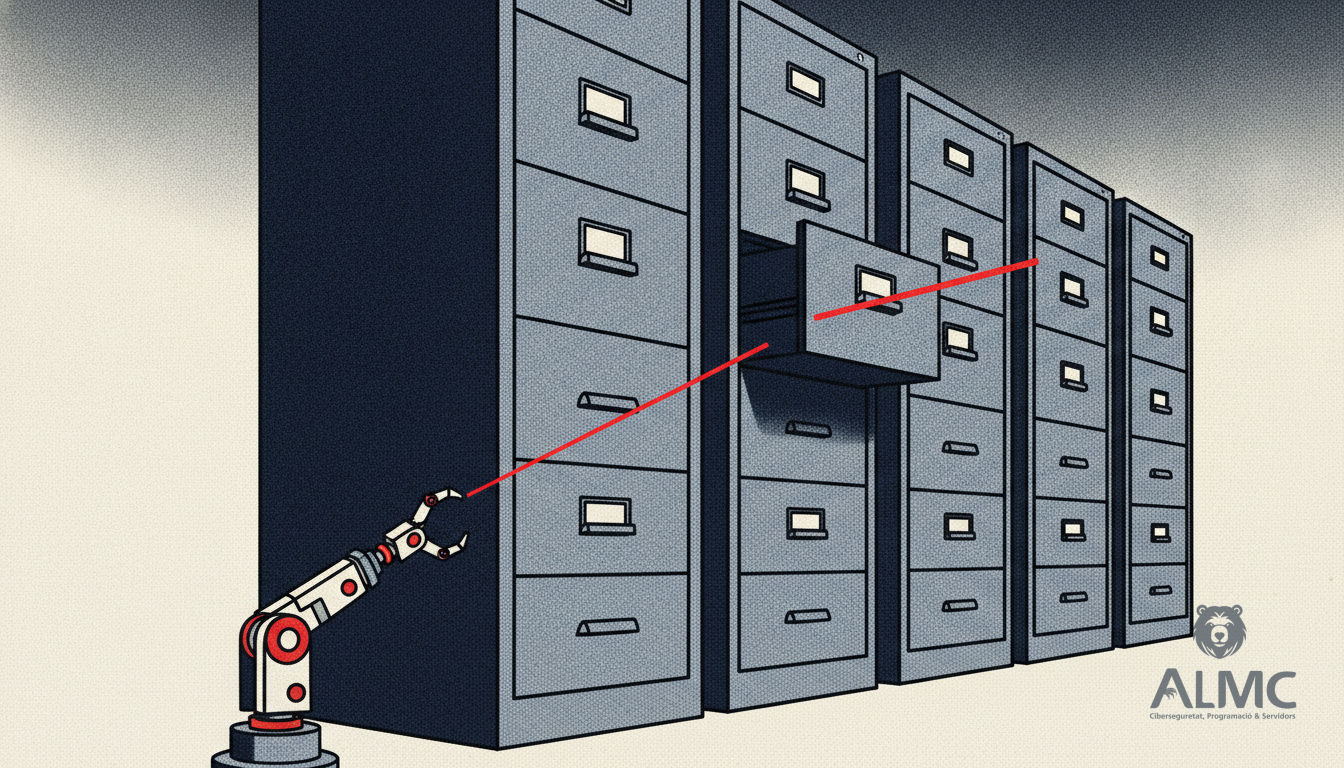
The severity is not in doubt: a CVSS v4.0 score of 9.3, rated critical by the vendor. The affected list is broad — Bitbucket Data Center, Confluence Data Center, Jira Software Data Center, Jira Service Management Data Center, Bamboo Data Center, Crowd Data Center, Crucible and Fisheye. If your organisation runs any of these on its own infrastructure, this is not a theoretical problem.
What the vulnerability actually allows
It is worth being precise, because the mechanics shape the response. The flaw does not expose a browsable directory of files. An attacker must already know the exact name and path of the target file, and directory enumeration is not possible. That sounds reassuring until you remember how predictable configuration paths are in these products.
The underlying issue sits in a shared web resource library that converts double-colon sequences into path separators, enabling path traversal requests against endpoints that serve plugin resources. In practice, an attacker who guesses the right path can read files they should never see.
The most dangerous scenario involves Jira integrated with Crowd. If an attacker manages to read WEB-INF/classes/crowd.properties, they may find credentials stored in plain text under certain configurations. With those credentials, and provided Crowd is reachable and permissions allow it, the attacker can abuse the Crowd API to create accounts and escalate to administrator privileges in Jira. A single readable file becomes a full compromise.
The uncomfortable question: were you already hit?
Atlassian has stated it cannot confirm whether specific customers have suffered compromises, which is a polite way of saying organisations should assume exposure and go looking for evidence. Atlassian Cloud products are already fixed and no exploitation signs were found there, so the pressure sits squarely on self-hosted Data Center environments.
This is where many teams stop too early. Patching closes the door; it does not tell you whether someone walked through it. Log review should come first, before the evidence rotates away.
A practical response plan
- Patch out of cycle. Apply the corrected versions immediately rather than waiting for your normal maintenance window. Treat this as an emergency change.
- Reduce exposure now. Take affected instances off the public internet where possible, or at minimum restrict external access to known networks.
- Block traversal patterns at the edge. Deploy WAF or reverse proxy rules using the regular expression published by Atlassian to deny requests containing the malicious sequences.
- Apply product-level mitigations. In Confluence, Jira, Jira Service Management, Bamboo and Crowd, enable Tomcat RewriteValve and add rewrite rules that reject those patterns. In Bitbucket Data Center, the equivalent change goes in urlrewrite.xml.
- Hunt through your logs. Decode URLs twice and search for .. sequences alongside /, \ or ::, or run the vendor's suggested search expression directly.
If your logs show hits, do not stop at the patch
Accesses to sensitive configuration files in your records mean the incident is not over. Rotate credentials and secrets once the immediate threat is contained, because anything that was readable should be considered compromised. Strengthen network controls around management interfaces, and where operationally viable, apply IP allowlists to Crowd so leaked credentials cannot easily be abused from outside.
Blocking observed indicators — scanning IPs in particular — buys time and reduces noise, but it is a stopgap. Attackers change addresses; the vulnerability does not change until you patch it.
Why centralised protection matters here
This incident illustrates a recurring pattern: a critical flaw appears, exploitation follows within hours, and administrators are left manually hunting through logs on every server they manage. For hosting companies and SMEs running several machines in Barcelona, Lleida, Tarragona or Girona, that manual effort does not scale.
Centralising protection changes the economics of response. Abuse Shield brings automatic blocking of malicious IPs, managed fail2ban across multiple machines and a shared reputation feed between all your servers. When one node detects a scanning campaign against a traversal pattern, the intelligence propagates, so the rest of your fleet is defended without waiting for an administrator to act on each host individually. Combined with prompt patching and credential rotation, that layered approach is what turns a critical CVE from a crisis into a managed event.
The lesson from CVE-2026-21589 is straightforward: assume you are a target, patch faster than your maintenance calendar suggests, verify rather than hope, and put infrastructure in place so the next disclosure does not start from zero.
Related
- How to Harden Your Servers with Fail2ban and IP Reputation Feeds
- Fail2ban: Your First Line of Defense Against Unauthorized Server Access
- Critical libssh2 flaw: urgent patch for SSH servers
- Desarrollo web
Put these ideas into practice
Talk to ALMC about a solution for your business. Explore your options or contact our team.