
Abuse Shield: Centralised Server Protection for SMEs
Abuse Shield: Centralised Server Protection for SMEs
Why SMEs Are Rethinking Server SecurityFor years, small and mid-sized organisations in Catalonia and across Spain treated cybersecurity as a problem t...
Why SMEs Are Rethinking Server Security
For years, small and mid-sized organisations in Catalonia and across Spain treated cybersecurity as a problem to solve later. That position is no longer tenable. Threat actors have industrialised their operations, and the barrier to entry for a serious attack has collapsed. A company in Lleida with three servers and a part-time IT administrator now faces the same automated scanning, credential-stuffing and exploitation attempts that once targeted only large enterprises.
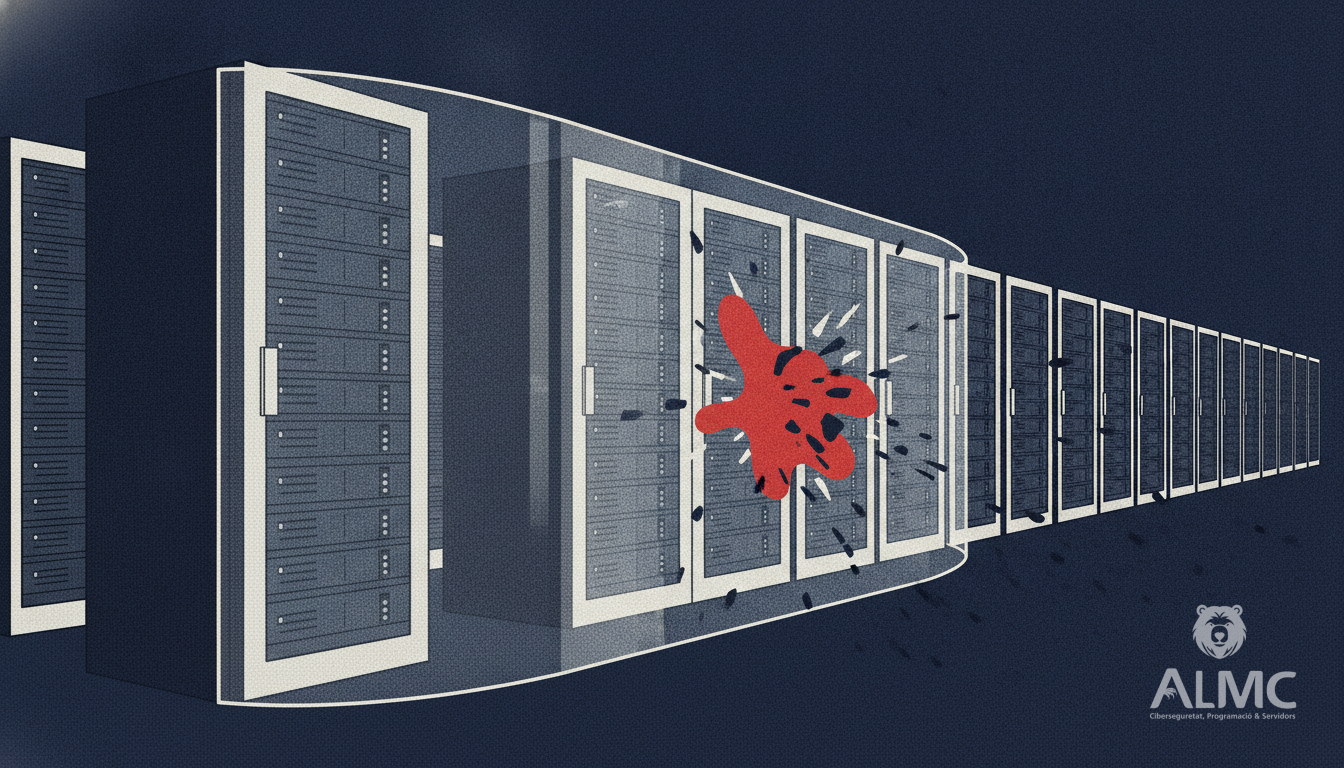
The uncomfortable truth is that most SMEs know this. What they lack is not awareness but bandwidth. Security tooling has multiplied faster than the teams available to run it, and the result is a familiar pattern: dozens of disconnected dashboards, hundreds of daily alerts, and nobody with the time to triage them properly.
The Real Problem Is Fragmentation, Not Lack of Tools
When we audit server estates for hosting companies and SMEs around Barcelona, Tarragona and Girona, the same issue appears again and again. Protection exists, but it is scattered. One machine runs a firewall rule set. Another has fail2ban installed and half-configured. A third logs suspicious activity that nobody reads. Each system makes its own decisions in isolation, and none of them learn from the others.
This fragmentation has three concrete costs:
- Repeated work. An IP that hammers one server is usually probing the rest of your fleet within hours. Without shared intelligence, every machine has to rediscover the same attacker independently.
- Alert fatigue. Isolated tools generate isolated noise. Administrators stop reading logs precisely when reading them matters most.
- Inconsistent policy. When configuration lives on each server separately, drift is inevitable. One machine is hardened, the next is not, and nobody can say which is which without logging in.
What Abuse Shield Does Differently
Abuse Shield is built around a simple premise: your servers should defend each other. Instead of treating each machine as an island, the service centralises protection across your entire estate and turns every server into both a sensor and a defender.
At its core, Abuse Shield delivers three capabilities that work together:
- Automatic malicious IP blocking. Suspicious sources are identified and blocked without waiting for a human to intervene. The window between detection and mitigation shrinks from hours to seconds.
- Managed fail2ban across multiple machines. Rather than installing and tuning fail2ban by hand on every host, you manage it centrally. Rules, thresholds and exceptions stay consistent across the fleet, and changes propagate without a maintenance window per server.
- A shared reputation feed. When one server identifies a hostile IP, that intelligence is shared with the others. A single detection protects the whole estate, which is exactly the opposite of how isolated tools behave.
Built for Teams Without a Security Department
The audience for this kind of protection is not the enterprise SOC. It is the systems administrator managing twenty VPS instances for a regional hosting provider. It is the SME in Lleida running its own invoicing, CRM and ecommerce stack on dedicated hardware. It is the internal IT generalist who is expected to handle networking, backups and security simultaneously.
These teams do not need another console full of jargon. They need protection that is guided, predictable and easy to reason about. Centralisation is what makes that possible: one place to see what is happening, one place to change policy, and one consistent standard applied everywhere.
Security and Compliance in a European Context
There is also a regulatory dimension that SMEs in Spain cannot ignore. Under the GDPR, a personal data breach carries notification obligations and potential fines that scale with turnover. Demonstrating that appropriate technical measures were in place is not optional when an incident occurs. Automated, documented and centrally managed protection is considerably easier to defend in that conversation than a patchwork of ad-hoc scripts installed years ago and since forgotten.
Centralised logging and consistent blocking policy also make incident response faster. When something does get through, you know where to look, and you can trace what your defences did and when.
Start With the Servers You Already Have
The reassuring part is that none of this requires replacing your infrastructure. Abuse Shield works with the servers you are already running, whether they sit in a rack in your office, in a data centre in Barcelona, or across several cloud providers. The goal is not to add another layer of complexity but to remove the fragmentation that makes existing protection ineffective.
For hosting companies, the shared reputation feed compounds in value with every machine added. For SMEs, it means a level of coordinated defence that would otherwise require a dedicated security team. Either way, the principle is the same: stop defending each server alone, and start defending the estate as a whole.
Related
- How to Harden Your Servers with Fail2ban and IP Reputation Feeds
- Fail2ban: Your First Line of Defense Against Unauthorized Server Access
- Critical libssh2 flaw: urgent patch for SSH servers
- Desarrollo web
Put these ideas into practice
Talk to ALMC about a solution for your business. Explore your options or contact our team.