
Cisco ISE Zero-Day: Why Patch Now and Harden After
Cisco ISE Zero-Day: Why Patch Now and Harden After
A maximum-severity flaw that is already being usedCisco has issued emergency fixes for Identity Services Engine (ISE) and ISE Passive Identity Connect...
A maximum-severity flaw that is already being used
Cisco has issued emergency fixes for Identity Services Engine (ISE) and ISE Passive Identity Connector (ISE-PIC) after confirming that a maximum-severity vulnerability is being exploited in the wild. Tracked as CVE-2026-76460 and rated CVSS 10.0, the flaw matters because ISE is often the gatekeeper that decides who joins a network, with which permissions and from which device. When that gatekeeper can be bypassed, the whole access model is called into question.
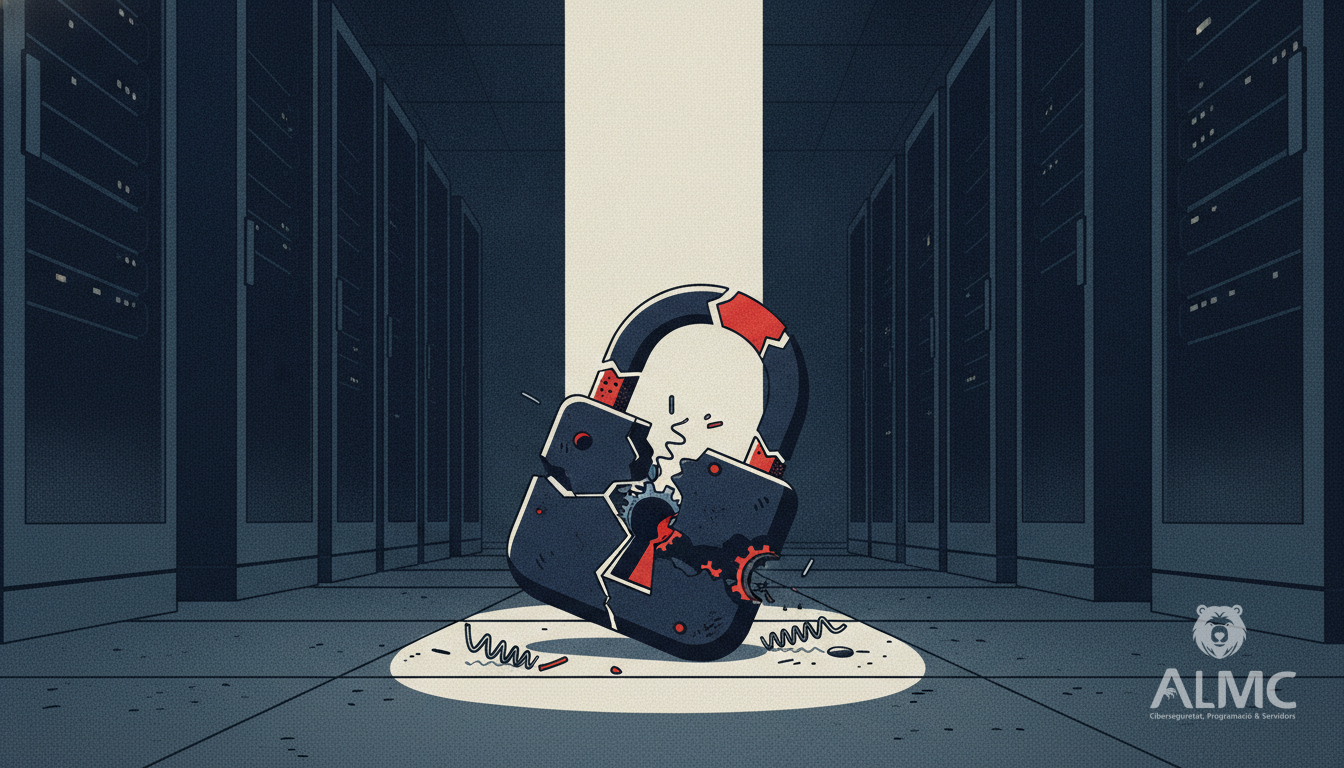
The root cause is insufficient authentication enforcement on an API endpoint. In practice, a remote attacker can reach the API gateway without valid credentials, slip past authentication and then work towards unauthorised access to the system, including the web administration interface. From there, chained actions could allow commands to run with root privileges, a level of control that makes it easier to erase traces, hide indicators of compromise and tamper with the platform itself.
No configuration trick will save you
One uncomfortable detail stands out for security teams: the issue affects ISE and ISE-PIC regardless of how they are configured. Cisco also makes clear that there is no workaround that removes the risk. The only genuine mitigation is to install a corrected release.
Patches are available across several branches: 3.1 Patch 12, 3.2 Patch 11, 3.3 Patch 12, 3.4 Patch 7 and 3.5 Patch 4. Organisations still running Cisco ISE 3.0 should note that the branch has reached end of software maintenance, so staying there is not an option; a migration to a supported branch that includes the fix needs to be planned without delay.
For teams in Barcelona, Lleida, Tarragona or Girona managing mixed estates, this is a good moment to review your asset inventory and confirm exactly which nodes are exposed. If a system is internet-facing or reachable from a guest or partner segment, treat it as urgent.
What to check while you patch
Updating is the destination, but verification is the journey. While the rollout is under way, Cisco recommends containment measures and, above all, evidence gathering. The starting point is the ise-kong access.log and the access.log on each node, looking for suspicious usernames in requests to the API gateway.
That review becomes far more useful when it is cross-referenced with external sources:
- Perimeter and firewall logs, to spot unexpected uploads or downloads towards external IP addresses.
- Authentication and VPN logs, to catch unusual session patterns or impossible travel.
- Backup and configuration change records, to detect tampering with platform settings.
If the evidence points to genuine exploitation, the response escalates. Reinstalling the affected nodes and restoring configuration from clean backups is the safer path, because a root-level compromise can leave persistence that a simple patch will not remove. Cisco also suggests applying infrastructure ACLs (iACLs) to restrict management and control-plane traffic to the minimum necessary, reducing the attack surface while patches are deployed in environments where taking services offline is not straightforward.
From emergency patching to everyday defence
Zero-days like this one are rare, but the pattern they expose is not: exposed management interfaces, weak authentication at the API layer and servers that are only as protected as their last patch. Most real-world intrusions do not rely on a CVSS 10.0 flaw; they come from brute-force attempts, credential stuffing and automated scanning that never stops.
That is where day-to-day hardening pays off. Centralising protection across your servers means a malicious IP blocked on one machine is blocked everywhere, and a reputation feed shared between nodes lets you act on a bad actor before it reaches the next host. Managed fail2ban across multiple machines, automatic blocking of malicious IPs and a common IP reputation layer turn dozens of isolated servers into one coordinated defensive perimeter.
For hosting companies and SMEs running their own infrastructure, this approach also simplifies compliance. Under GDPR, demonstrating appropriate technical measures is part of the accountability principle, and having consistent, auditable blocking rules across your estate is far easier to evidence than a patchwork of per-server scripts.
A practical checklist for the coming days
- Identify every ISE and ISE-PIC node and map its exposure.
- Apply the corresponding patch or plan a migration off end-of-maintenance branches.
- Review ise-kong access.log and per-node access.log for suspicious usernames.
- Correlate with firewall, perimeter and authentication logs.
- If compromise is confirmed, rebuild nodes and restore from clean backups.
- Apply iACLs to limit management and control-plane traffic.
- Reinforce ongoing protection with centralised blocking and shared IP reputation across all servers.
Reacting fast to a critical advisory is essential, but the organisations that suffer least are those that treat server security as a continuous discipline rather than a one-off emergency. Patching closes today's hole; consistent, centralised protection keeps the next one from becoming a breach.
Related
- How to Harden Your Servers with Fail2ban and IP Reputation Feeds
- Fail2ban: Your First Line of Defense Against Unauthorized Server Access
- Critical libssh2 flaw: urgent patch for SSH servers
- Desarrollo web
Put these ideas into practice
Talk to ALMC about a solution for your business. Explore your options or contact our team.