
New EU parcel levy: what it means for your online shop
New EU parcel levy: what it means for your online shop
A new layer of cost for cross-border parcelsBrussels is quietly assembling a set of measures that will change the economics of selling into the Europe...
A new layer of cost for cross-border parcels
Brussels is quietly assembling a set of measures that will change the economics of selling into the European Union from outside it. The most recent piece is a proposed market surveillance fee, sketched out in a leaked draft of the forthcoming European Product Act. Its purpose is straightforward: to fund the inspections and monitoring that keep non-compliant goods off the EU market, at a moment when customs authorities are overwhelmed by the sheer volume of low-value parcels arriving from third countries.
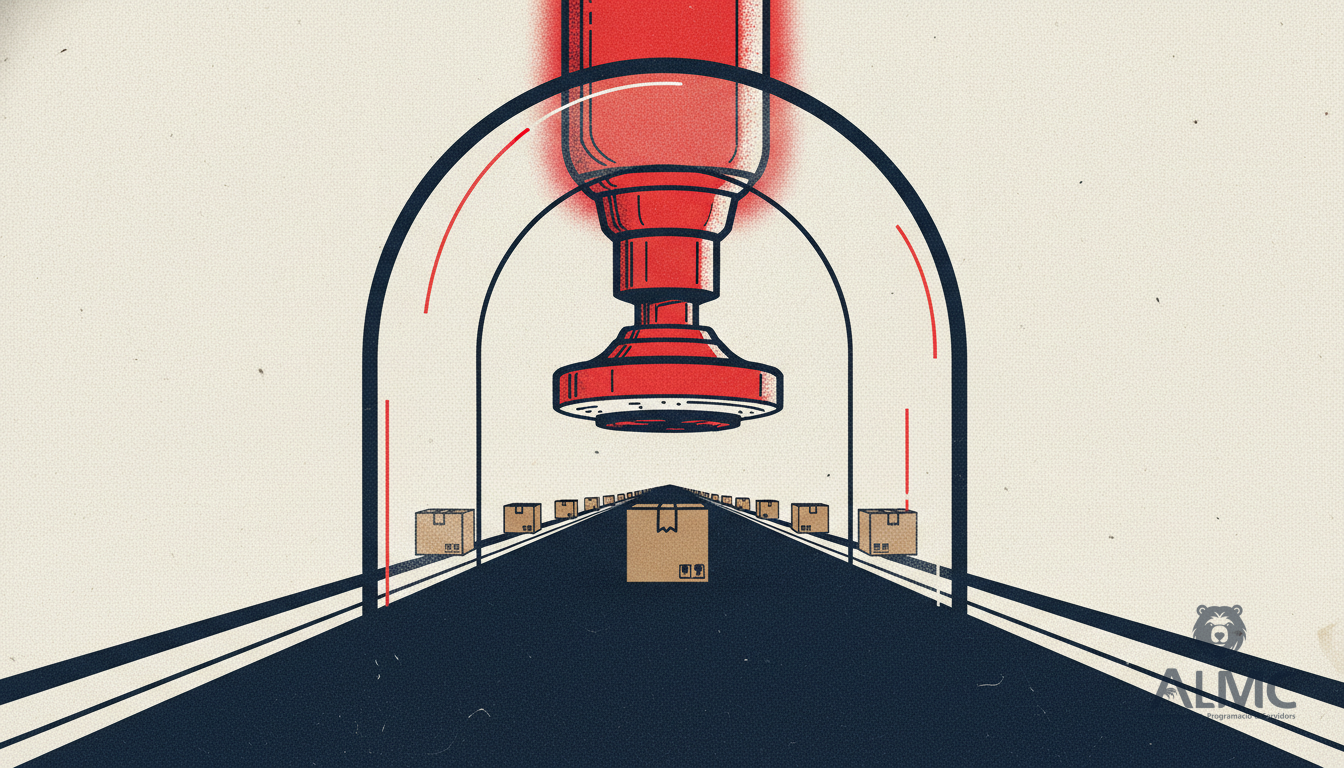
For anyone running an online store, the detail matters less than the direction of travel. Buying stock or dropshipping from outside the EU is about to become more expensive and more administrative, while selling from within the EU — from Lleida, Barcelona or anywhere else in Catalonia — starts to look considerably more attractive.
What the draft actually proposes
The market surveillance fee would sit alongside, not replace, the customs charges already scheduled. According to the information available, the levy would initially fall on importers, but its design has to account for the awkward case of parcels shipped directly from a non-EU platform to an individual consumer. That is precisely the flow that has grown fastest and that customs systems were never built to scrutinise one by one.
- The amount charged would be tied to the calculated cost of supervising the market, rather than set arbitrarily.
- Bulk imports would pay a proportionally lower rate than single parcels sent straight to a shopper's door.
- The fee is one element of a broader overhaul of how the EU polices imported goods.
Alongside it, the timetable already sketched out includes a fixed charge per product category contained in a parcel, applying from mid-2026, and a customs handling fee per declaration line from late 2026. From 2028, the expectation is that these interim arrangements give way to standard customs duties. None of this is final — the proposal still has to be negotiated — but the political intent is clear enough to plan around.
Why Brussels is doing this
The stated problem is capacity. Customs officers cannot physically examine every envelope that arrives, and the gap between the volume of goods and the resources to check them has become impossible to ignore. The result is an uneven playing field: European merchants carry the full cost of compliance, while some third-country sellers ship goods that never had to meet the same standards.
The draft also signals tougher enforcement. It contemplates penalties reaching a proportion of a company's worldwide turnover in serious cases — a figure designed to be large enough to change behaviour. For European sellers, the logic is that a stricter, better-funded regime narrows the advantage currently enjoyed by operators who cut corners.
What this means if you sell online from Spain
If your catalogue is sourced within the EU and your warehouse sits in Catalonia, you are largely a spectator to these changes. Your parcels do not cross an external border, so the new fees do not apply to your outbound shipments. That is a competitive position worth making explicit in your marketing: delivery without customs surprises, returns handled under EU consumer law, and invoices that comply with Spanish and European requirements.
If, on the other hand, part of your supply chain or fulfilment runs through non-EU suppliers, the arithmetic needs revisiting now rather than in 2027. A few practical steps:
- Model the landed cost. Add the expected per-category and per-declaration charges to your unit economics and see which products stop making sense.
- Check your product compliance. CE marking, labelling, safety documentation and GDPR obligations for customer data all fall on the seller established in the EU, not on the overseas factory.
- Reconsider fulfilment location. Holding stock inside the EU, even in a third-party logistics warehouse in Spain, removes the parcel-by-parcel exposure entirely.
- Be transparent at checkout. If duties or handling fees may apply, showing them before payment protects your conversion rate and your reputation for returns.
Conversion is where the real margin lives
Rising import costs squeeze margin, but so does a checkout that leaks customers. In our experience building ecommerce for shops across Lleida, Tarragona, Girona and Barcelona, the gains from a well-tuned storefront often outweigh the savings from haggling over supplier prices. A PrestaShop or WooCommerce store configured around your actual catalogue — fast product pages, clear shipping thresholds, local payment methods, structured data that search engines can read — turns more of the traffic you already have into orders.
That is the work we do at ALMC: bespoke online shops on PrestaShop and WooCommerce, conversion optimisation, and the full stack behind them, from hosting and backups to analytics and ongoing maintenance. When the regulatory ground shifts, the merchants who adapt fastest are the ones whose platform they actually control.
The takeaway
Nothing is law yet. The European Product Act is a draft, the fee is a proposal, and the calendar may slip. But the pattern across the last few years has been consistent: the EU is steadily tightening the rules around imported goods, and the cost of non-compliance is rising for everyone in the chain. European-based sellers should treat that as an opportunity rather than a threat — and make sure their online shop is ready to compete on service, speed and trust rather than on the cheapest possible parcel from outside the bloc.
Related
- WooCommerce vs PrestaShop: Which Ecommerce Platform Wins in 2025?
- CRO for Ecommerce: Turning WooCommerce and PrestaShop Templates into Sales Engines
- Agentic Commerce: How AI Agents Are Rewriting the Rules of Online Shopping
- Desarrollo web
Put these ideas into practice
Talk to ALMC about a solution for your business. Explore your options or contact our team.